Born in or Born On – Which Is Correct? (With Examples)
Born in or Born On are phrases we use to talk about when and where someone is born. Born in is used for years, months, seasons, or places. Born on is used for specific days or dates. These small words help make sentences correct and clear.
Many learners get confused about Born in or Born On. Using the wrong one can make sentences sound strange. Knowing the rules makes writing and speaking easier. You can sound confident if you learn the difference early.
We use Born in or Born On in many situations. Years, months, and places always use in. Days, full dates, and special occasions always use on. Learning these rules helps you avoid mistakes in English.
Understanding the Grammar of ‘Born in’ vs. ‘Born on’
Prepositions are small words, but they carry a lot of weight in English. When we talk about birth date grammar or time periods, using the correct preposition is crucial. Born in vs born on follows specific rules based on whether you are talking about a broad period, like a year, month, or season, or a specific day, date, or occasion.
The general rule is simple: use “in” vs “on” depending on the time frame. Think of it this way: “in” is for longer periods or locations, and “on” points to an exact moment or day. Misusing these prepositions can lead to common errors in everyday English. For example, saying “She was born on 1995” sounds unnatural because the year is a broad time frame and requires born in. Learning these rules will help you avoid English writing mistakes and communicate more clearly.
Using ‘Born in’ for Time
Years
When you mention the year of birth, you should always use born in. Saying “I was born in 1990” is correct, while “I was born on 1990” is a mistake. The same applies to decades and centuries. For example, “Many famous scientists were born in the 19th century” or “She was born in 1985.” Knowing how to say birth year correctly is an essential part of calendar date expressions in English.
Examples of born in 1990 / born on Monday show the clear distinction: the year uses in, and the specific day uses on. Using in with years follows the natural flow of prepositions of time in English.
Months
Months are also considered broad time periods, so you should always say born in May or born in December. Many people make the mistake of saying “Born on July,” which is incorrect. Correct usage requires born in when referring to months. This is an important part of grammar for birthdays and ensures your sentences sound correct in formal and informal English.
For example, “The famous actor was born in October” is correct, while “The famous actor was born on October” is a common English writing mistake that learners often make.
Seasons
Seasons are also long time spans, so the preposition in is always used. For example, “They were born in summer” or “Many people are born in spring.” Saying “Born on winter” would be incorrect because a season is not a specific day. Remember, specific day vs time period is the key difference that guides which preposition to use.
Using ‘Born on’ for Specific Dates
Days of the Week
When you want to talk about a specific day of the week, you must use born on. For example, “She was born on Monday” or “He was born on Friday, just before the weekend.” Using born on in this context helps clearly indicate the exact day, following English grammar rules and avoiding common mistakes.
Full Dates
If you are mentioning a specific date, such as the month and day together with the year, you also use born on. For instance, “Barack Obama was born on August 4, 1961” or “Princess Diana was born on July 1, 1961.” Incorrect usage would be “Born in July 4, 1961,” which does not follow standard prepositions in English.
Special Occasions
Special days, like holidays, also require born on. Examples include “He was born on Christmas Day” or “She was born on New Year’s Eve.” Anytime you can point to a day on a calendar, born on is the correct preposition. This is a crucial point for birth date grammar and helps avoid common preposition mistakes.
Using ‘Born in’ for Places
For locations, the preposition in is used when referring to countries, cities, or broader regions. For example, “Born in the United States,” “Born in Paris, France,” or “Born in the Midwest.” Using at vs in for locations depends on how specific the place is.
Regional Clarifications
When the place is a small, specific location like a hospital or building, English uses at. For example, “Born at St. Mary’s Hospital” is correct. However, for general locations, the preposition in is appropriate: “Born in London.” This distinction is an important part of place vs date grammar, and knowing it will help you avoid English writing mistakes.
Contextual Nuances in Usage
English is flexible, and context sometimes changes which preposition feels natural. In casual speech, some people may bend the rules slightly, but formal writing requires precision. For example, “I was born on summer” is informal and incorrect, while “I was born in summer” is correct.
Similarly, “She was born in July 4, 2000” is wrong, while “She was born on July 4, 2000” is correct. Understanding these nuances is key to mastering prepositions of time and grammar for birthdays.
Common Mistakes and Misconceptions
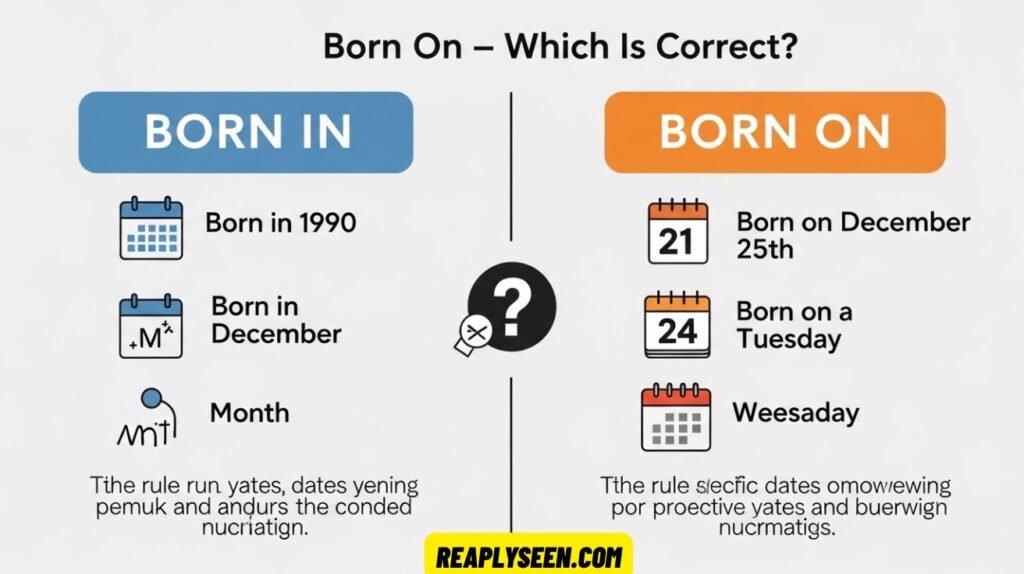
Even advanced speakers often confuse born in vs born on. The most frequent errors include using on for months or seasons and using in for specific days or dates. Some people also confuse at vs in for locations, which leads to awkward or incorrect sentences.
Table of Common Errors
| Mistake | Correct Usage | Explanation |
| Born on July | Born in July | Months are broad time periods, not specific days |
| Born in Monday | Born on Monday | Days require “on” |
| Born at Paris | Born in Paris | Cities use “in” for general locations |
| Born on winter | Born in winter | Seasons require “in” |
Real-Life Examples and Case Studies
Celebrity Biographies
Celebrities often provide clear examples of correct usage. For instance, Taylor Swift was born on December 13, 1989, in Reading, Pennsylvania. Saying “born on December 1989, at Reading” would be incorrect. Using born in vs born on correctly ensures your writing sounds professional and follows English grammar rules.
Social Media Misuse
On platforms like Instagram, TikTok, or Facebook, casual users often drop prepositions or use them incorrectly. A common post might read: “I was born on July” instead of the correct “I was born in July.” Being aware of these errors will improve your grammar for birthdays and prevent English writing mistakes in digital communication.
Case Study
A newspaper once published: “The famous artist was born on 1972 in New York.” The corrected version should read: “The famous artist was born in 1972 in New York.” Here, the year is a broad time period, so born in is correct, and the location still uses in. This example highlights the importance of prepositions in English and proper birth date grammar.
Influence of Popular Culture
Movies, biographies, and social media often influence how people use born in vs born on. Informal captions might say “Born July 4” without a preposition. While casual English may allow it, formal writing always follows the rules.
For clarity, always use born in for years, months, and seasons, and born on for specific days and dates. Understanding this distinction is part of mastering prepositions of time and place vs date grammar.
Tips to Remember the Rules Easily
A simple mnemonic helps: “In for long, on for exact.” Years, months, and seasons always use born in. Days of the week, full dates, and holidays always use born on. For locations, countries, cities, and regions use born in, while small, specific places like hospitals use born at. Remembering this rule will help you avoid common preposition mistakes in both formal vs informal English.
Quick Checklist
To make it simple, ask yourself three questions: Is it a year, month, season, or general location? Use born in. Is it a specific day, full date, or holiday? Use born on. Is it a specific building or hospital? Use born at. Following this quick checklist ensures your sentences are grammatically correct and professional, and it will make your English writing mistakes a thing of the past.
See Also : Input or Imput: Which One Is Actually Correct?
The Basics of Born In vs Born On
Understanding the difference between born in vs born on is essential for correct English. Born in is used for broader time frames like years, months, and seasons, while born on refers to specific days or dates. Misusing them can make sentences sound awkward or confusing. Clear understanding improves both spoken and written communication.
Grammar experts often explain that prepositions are small words with a big role in English grammar rules. Using the right preposition with birth dates is not just about formality—it affects clarity. For example, saying “born on 1990” is incorrect, while “born in 1990” is perfect for correct birth date grammar.
Using Born In for Years and Months
When you talk about a year, always use born in. For example, “She was born in 1995” is correct, while “born on 1995” is wrong. Years are considered broad periods, not exact moments, so “in” fits naturally. This rule is a key part of grammar tips for dates and general prepositions of time.
Similarly, months require born in. Saying “He was born in March” is correct, but “born on March” is not. Months are also broad time periods, and using in shows you understand English writing mistakes learners often make. Correct use sounds natural and professional.
Seasons and Their Correct Usage
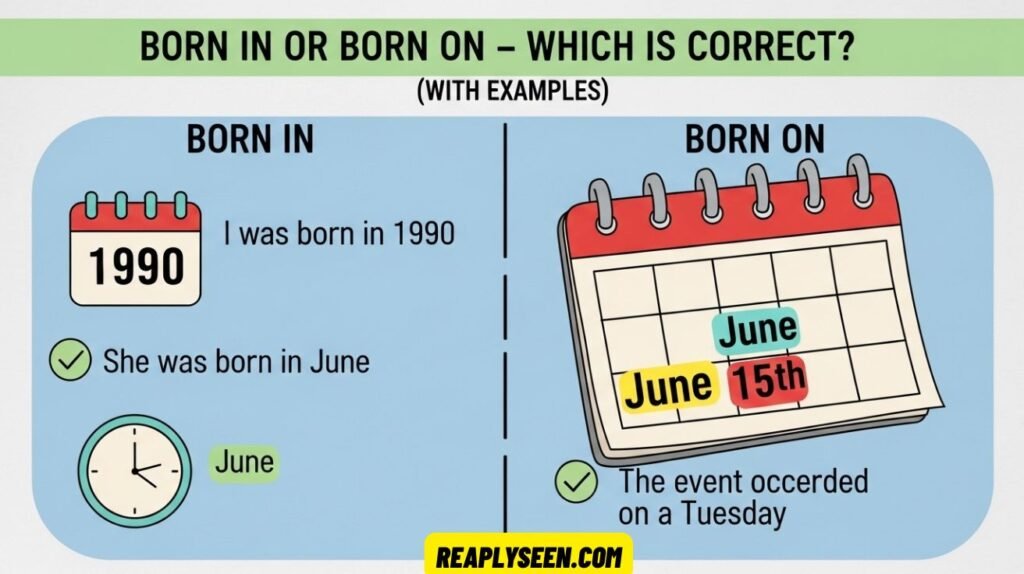
Seasons are long spans of time, so born in is the proper choice. “They were born in summer” or “Many people are born in spring” are correct examples. Saying “born on winter” is a common common preposition mistake, because seasons aren’t specific dates. Seasons fit naturally with prepositions in English.
Using seasons properly shows mastery of place vs date grammar. It’s also helpful in storytelling or biographies. When you write “He was born in autumn,” it gives the reader clear context without confusion. Seasons represent longer periods, which is why using ‘in’ vs ‘on’ matters.
Born On for Days and Dates
For specific days of the week or exact dates, born on is always correct. For example, “She was born on Monday” or “He was born on Friday” are natural sentences. Days are precise, and “on” points exactly to that day. This is an important rule for calendar date expressions.
Full dates also use born on. For example, “Barack Obama was born on August 4, 1961.” Incorrect usage like “born in August 4, 1961” confuses readers. Using born on properly ensures correct English grammar rules in formal and informal writing.
Special Occasions and Holidays
When a birth coincides with a holiday or special day, born on is necessary. Examples include “Born on Christmas Day” or “Born on New Year’s Eve.” It highlights the exact day and follows grammar tips for dates. Omitting the preposition is a common English writing mistake.
Special occasions are memorable moments. Correct usage of born on adds clarity and shows understanding of specific day vs time period. Even informal captions like “Born on Halloween” should maintain this structure for proper birth date grammar.
Using Born In for Places
Locations usually use born in for countries, cities, or broad regions. “Born in the United States,” “Born in Paris,” and “Born in the Midwest” are correct. Using in makes your writing clear and natural. Confusing at vs in for locations is a frequent mistake in English.
For very specific locations like hospitals, “born at” is used. For example, “Born at St. Mary’s Hospital” is correct. Understanding place vs date grammar ensures that sentences describing birth locations follow standard prepositions in English rules.
Common Mistakes Learners Make
Even advanced learners confuse born in vs born on. Common errors include saying “Born on July” or “Born in Monday.” These mistakes violate basic grammar for birthdays rules and can make sentences unclear. Paying attention to these details is crucial for correct English.
Another frequent error is confusing at vs in for locations, like “Born at Paris” instead of “Born in Paris.” Proper usage avoids English writing mistakes and helps you write biographies, social media captions, or official documents with confidence.
See Also : On Friday or In Friday – Which Is Correct?
Quick Memory Tips for Correct Usage
Remembering simple mnemonics can help: “In for long periods, on for exact dates.” Years, months, and seasons always use born in, while days and full dates always use born on. These tips simplify prepositions of time.
Also, remember the rule for places: broad locations use born in, small buildings or hospitals use born at. Following these tips prevents common preposition mistakes and ensures that your writing about birth dates, years, and locations is clear and professional.
FAQs
Which is correct, born in or born on?
Use born in for years, months, seasons, and places, and born on for specific days or dates.
Was it born in July or on July?
The correct form is born in July because a month is a broad time period.
Is it proper to say “I was born”?
Yes, “I was born” is correct and the standard way to talk about your birth.
Is it born at or born on?
Use born at for specific buildings or locations (like hospitals) and born on for exact days or dates.
Conclusion
Born in or Born On is very important for writing and speaking English correctly. We use born in for years, months, seasons, and places, and we use born on for specific days and dates. Using the right preposition helps sentences sound clear and natural. It also makes your writing correct and easy to understand. Learning these rules now will help you in school, in homework, and when you talk about birthdays or special events.
Following the rules of Born in or Born On makes your English strong and confident. Always remember to use born in for long time periods or locations and born on for exact dates or days. Practicing these examples will help you avoid mistakes and write better sentences every time.