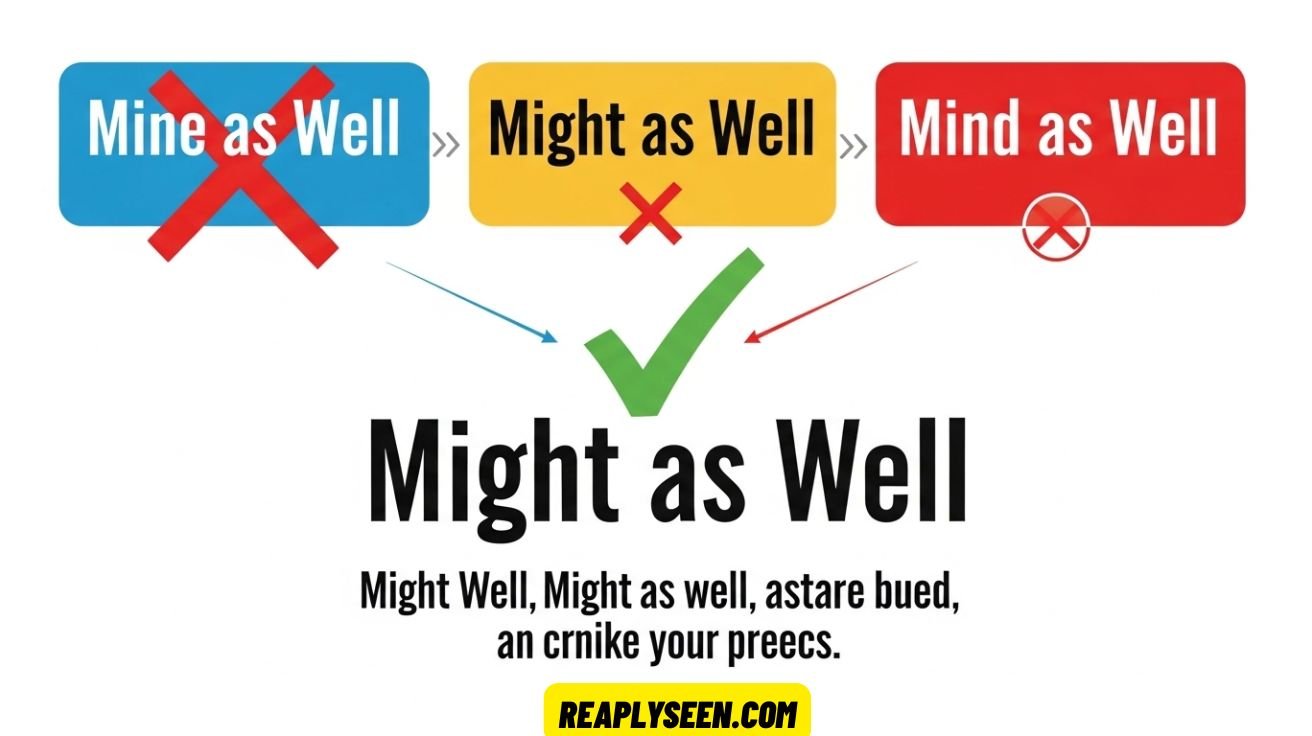
Mine as Well, Might as Well, or Mind as Well? Which Is Correct?
Mine as Well is a phrase we use to show that something belongs to us too. It means “also mine” or “my thing too.” We use it when talking about things we own, not when we suggest actions.
Many people confuse Mine as Well with Might as Well or Mind as Well. This mistake happens because the words sound very similar. Learning the correct use can help you speak and write clearly.
Mine as Well is correct only in possession contexts. You can say, “I brought my book, and I brought mine as well.” Using it correctly shows good understanding of English and avoids confusion in conversations.
What Does “Might as Well” Mean?

Might as well is the only phrase among the three that is grammatically correct when you are suggesting something or accepting a situation with little resistance. The phrase usually conveys a sense of practicality or resigned acceptance. In other words, it is used when there is no strong reason not to do something, and it often reflects indifference or resigned acceptance phrases. For example, if it is raining and you were planning to go for a walk anyway, you might say, “We might as well stay inside.”
This idiom is widely accepted in both casual and formal English and is part of proper English phrases that are important for English language learning. Its meaning is tied to the idea of choosing the most reasonable or practical option when no better alternative exists. Synonyms such as “may as well” or “could just as easily” can often replace it, which is helpful for practical suggestions in English. Understanding might as well meaning is essential because it helps distinguish it from similar-sounding expressions that can be grammatically incorrect.
Common Examples
To understand might as well meaning in real life, it helps to see examples. In everyday conversations, people often use the phrase when they see no harm in taking a particular action. A few examples are: “We’re already at the restaurant, so we might as well eat here,” or “There’s nothing on TV tonight, so we might as well read a book.” In work environments, it might be used like this: “The project is half done. We might as well finish it today.” These examples show how the phrase suggests a practical choice or resigned acceptance phrases, often when there are no better options.
Using these examples also helps learners avoid common conversational errors that occur due to misheard English expressions or slurred speech. By recognizing the proper use of might as well, you can improve both your spoken and written English, making your communication clear and effective in both casual vs formal English contexts.
Why People Confuse the Phrases
People often confuse mine as well, might as well, or mind as well because they sound similar. This is a common problem related to homophones in English. When spoken quickly, “might” can sound like “mine” or “mind,” leading many to write the wrong phrase. Regional accents, fast speech, and lack of attention to written form contribute to these mistakes. This confusion is part of English idioms confusion and common English mistakes, especially for learners who rely more on listening than reading.
Slurred pronunciation or casual conversation makes it difficult to distinguish between these expressions. Even native speakers sometimes make errors, especially when texting or writing emails in haste. Understanding the root of this confusion is essential to improve English grammar tips, English writing clarity, and overall communication skills.
Let’s Break Down the Phrases
Breaking down these three phrases shows that each serves a different function in English. Only one of them works correctly as a suggestion in conversation or writing, while the others either indicate possession or are always incorrect. Understanding the context, meaning, and grammatical rules behind each phrase helps avoid mistakes and improves correct phrase usage.
“Mine as Well” — Is It Ever Correct?
Mine as well can be correct, but only when it refers to possession. The word “mine” is a possessive pronoun, meaning something belongs to the speaker. When combined with as well, it means “also mine” or “my item too.” This phrase is used to show agreement or similarity in ownership, not as a suggestion. For example, if someone says, “I brought my book,” you can respond, “I brought mine as well.”
This usage is part of English grammar rules and helps learners understand how to combine possessive pronouns with “as well” usage examples. The correct application of this phrase ensures proper communication in both written and spoken English.
Example Where It Is Correct:
If your friend says, “I brought my umbrella,” you can correctly respond, “I brought mine as well.” Here, it clearly refers to ownership, not suggestion. This is an example of mine as well meaning in the right context.
Why It’s Often Wrong
Many people mistakenly say, “I mine as well go,” thinking they are suggesting an action. This is incorrect because “mine” cannot replace “might” in a suggestion. Such errors are classic misheard English expressions and show how easily common English mistakes occur when relying on sound alone.
✅ Correct Alternative:
The correct phrase would be, “I might as well go.” Using might as well ensures proper grammar and idiomatic correctness, which is essential for proper English phrases in both casual and formal settings.
“Mind as Well” — Is It Ever Correct?
The phrase mind as well is always incorrect in standard English. It has no grammatical or idiomatic support, and using it will confuse listeners or readers. While “mind” can be a verb or noun related to attention or thoughts, it cannot replace “might” in a suggestion. For example, “You mind as well come” is wrong because it does not make sense grammatically or logically.
❌ Incorrect:
“You mind as well come.”
✅ Correct:
“You might as well come.”
Why It’s a Mistake
People often confuse “might” and “mind” because of fast speech or mishearing. This is a common example of English idioms confusion, homophones in English, and common conversational errors. Avoiding this mistake improves English grammar tips and ensures your sentences are clear in both casual vs formal English.
See Also : Of Course or Ofcourse: Which One Should You Use?
How to Tell Which Phrase to Use
A simple way to determine which phrase is correct is to understand the meaning and context. Here is a useful table that clarifies the differences:
| Phrase | Correct? | Meaning | Example |
| Might as well | ✅ Yes | Suggestion or resigned acceptance | “We might as well leave now.” |
| Mine as well | ⚠️ Sometimes | Possessive: mine too | “I brought mine as well.” |
| Mind as well | ❌ No | Incorrect | Avoid using |
By referring to this table, learners can quickly distinguish the proper usage. This approach reinforces English grammar rules, idioms vs phrases, and correct phrase usage.
How “Might as Well” Is Used in Real Life

In Casual Speech
In everyday conversations, people use might as well to suggest an action when there is no better alternative. For example, “There is nothing to do today. We might as well take a nap,” or “We missed the bus. We might as well walk.” These are examples of practical suggestions in English and show how idioms convey relaxed or resigned attitudes.
In Professional Contexts
In the workplace, might as well can be used professionally: “We’ve invested this much in the project, so we might as well finish it today,” or “The team is already present, so we might as well start the meeting.” These examples show that proper use of might as well improves English writing clarity and maintains professionalism.
In Literature & Media
Authors and screenwriters use might as well to convey a character’s resigned acceptance or practical choice. For example, Suzanne Collins wrote in The Hunger Games, “If we’re all going to die, we might as well enjoy what time we’ve got.” Literary examples help learners see the idiom in context and understand its meaning deeply.
Real-World Case Study: A Common Email Mistake
Situation:
An HR representative sent an email saying, “You mine as well send over your updated resume.”
How it was perceived:
The recipient was confused and questioned the professionalism of the message. Misusing phrases in written English can impact credibility, showing the importance of proper English phrases and English writing clarity.
Corrected:
The correct version is, “You might as well send over your updated resume.” This small change clarified the suggestion and maintained a professional tone.
Quick Memory Hacks
🧠 Think “Might” = Possibility or Suggestion
Whenever you are suggesting something or accepting a situation, use might as well. Only use mine as well when referring to possession. Avoid mind as well entirely. Associating the word “might” with possibility helps reinforce correct usage.
🔁 Replace the Phrase
A good trick is to replace might as well with “could just as easily” or “may as well” in a sentence. If the sentence still makes sense, might as well is correct. For example, “We might as well go now” can be replaced with “We could just as easily go now.” This technique strengthens understanding of idiomatic expressions explained and prevents common English mistakes.
Understanding the Common Confusion
Many English speakers, including learners in the USA, often confuse mine as well, might as well, or mind as well. The confusion usually happens because these phrases sound almost the same when spoken quickly. Mispronunciation and fast speech lead to common English mistakes that affect clarity in both casual conversations and professional emails.
This confusion is also a result of homophones in English, where words sound alike but have different meanings. When people hear the phrase instead of reading it, they sometimes replace “might” with “mine” or “mind,” creating errors in correct phrase usage. Awareness of this helps improve English writing clarity.
What “Might as Well” Really Means
The phrase might as well is used to suggest a practical or logical choice when there is no better alternative. It shows resigned acceptance phrases, implying, “There is no reason not to do this.” For example, when plans change unexpectedly, you can say, “We might as well stay indoors.”
Understanding might as well meaning is important because it distinguishes the phrase from similar-sounding expressions. Learners can apply it in casual vs formal English, in conversations or emails, to indicate suggestions, opportunities, or situations where going with the flow is the easiest option.
The Misuse of “Mine as Well”
Mine as well is only correct when talking about something you own, like “I brought mine as well.” Here, “mine” is a possessive pronoun, and as well usage examples show it means “also mine.” It does not work for suggestions or actions, so using it in place of “might as well” is a common conversational error.
Many people misuse it, for example, “I mine as well go to the store.” This mistake arises from misheard English expressions and shows a lack of understanding of English grammar rules. Recognizing the difference helps improve proper English phrases and communication clarity.
See Also : Envolved or Involved – Which Is Correct?
Why “Mind as Well” Is Always Wrong

The phrase mind as well is never correct in standard English. It does not make grammatical sense or convey any logical suggestion. People often write it because of the similarity in pronunciation, but it remains a common English mistake. Using it can confuse listeners and reduce English writing clarity.
Unlike “might as well,” which expresses a practical choice, “mind as well” has no idiomatic meaning. Avoiding this mistake is a key English grammar tip for learners. Focusing on idiomatic expressions explained ensures you communicate ideas accurately in casual vs formal English.
Recognizing Misheard Phrases in English
Many learners fall into the trap of writing what they hear rather than the correct phrase. Misheard English expressions often lead to using “mine as well” or “mind as well” incorrectly. Awareness of homophones in English helps prevent these errors and teaches learners to recognize the proper context for each phrase.
Practicing listening and reading together strengthens understanding. By paying attention to English grammar tips and proper English phrases, learners can distinguish subtle differences, improving both spoken and written English. This reduces common conversational errors in emails, meetings, or casual chat.
Practical Tips for Using “Might as Well”
To use might as well correctly, imagine it as a phrase suggesting the best or easiest option. If no better alternative exists, it fits naturally. For example, “It’s raining, so we might as well watch a movie indoors.” These tips are part of English grammar rules for idiomatic phrases.
Another practical method is to replace it with synonyms like “could just as easily” or “may as well.” If the sentence still makes sense, you are using it correctly. This strengthens practical suggestions in English and ensures your sentences are accurate in casual vs formal English.
Common Mistakes in Emails and Writing
Many mistakes occur in professional emails when people misuse these phrases. For instance, writing “You mine as well send the report” instead of “You might as well send the report” creates confusion. Misusing phrases can appear unprofessional and reduce English writing clarity.
Correct use of idioms improves readability and demonstrates knowledge of English grammar tips. Professionals should focus on correct phrase usage and avoid common conversational errors in both internal and external communication. This is particularly important for English language learning and workplace writing.
Memory Hacks to Remember Correct Usage
One effective hack is to link might with possibility or suggestions. Always think, “If I am suggesting something, I use might as well.” Use mine as well only when talking about possessions, like objects that belong to you. Avoid mind as well completely to prevent mistakes.
Another memory trick is to replace might as well with “could just as easily” in a sentence. If it works, you are correct. This approach reinforces idiomatic expressions explained, English grammar rules, and practical usage in casual vs formal English conversations, making learning easier and faster.
FAQs
Is “mine as well” grammatically correct?
Yes, it is correct only when referring to possession, as in “I brought mine as well.”
Do people say “mine as well”?
Yes, but only in contexts showing ownership, not when suggesting an action.
Which is correct, “as well” or “aswell”?
The correct form is “as well”; writing it as “aswell” is incorrect.
What does it mean by “might as well”?
It means doing something because there’s no better option or reason not to do it.
Conclusion
Mine as Well is a phrase that people often confuse with Might as Well and Mind as Well. The correct use of Mine as Well only works when talking about something you own. For example, you can say, “I brought my pencil, and I brought mine as well.” Using it correctly shows that you understand English grammar rules and can speak and write clearly.
It is important to remember that Might as Well is the phrase to use when you suggest something or accept a situation. Avoid saying Mind as Well because it is always wrong. Learning the difference between these phrases helps you communicate better and improves your English writing clarity.