To Bad or Too Bad: The Quick Grammar Rule for 2026
Many people wonder about To Bad or Too Bad. It is a common question in English. The correct phrase is too bad, which shows disappointment or sympathy. To bad is wrong because “to” cannot show emotion.
Have you ever typed to bad and felt unsure? You are not alone. Many writers make this mistake. Learning the right form helps you write clearly and confidently.
Too bad is simple to use. It works in emails, posts, and everyday sentences. Using it correctly shows you understand English. Remember, too bad always means very bad or unfortunate.
To Bad or Too Bad – Quick Answer ⚡
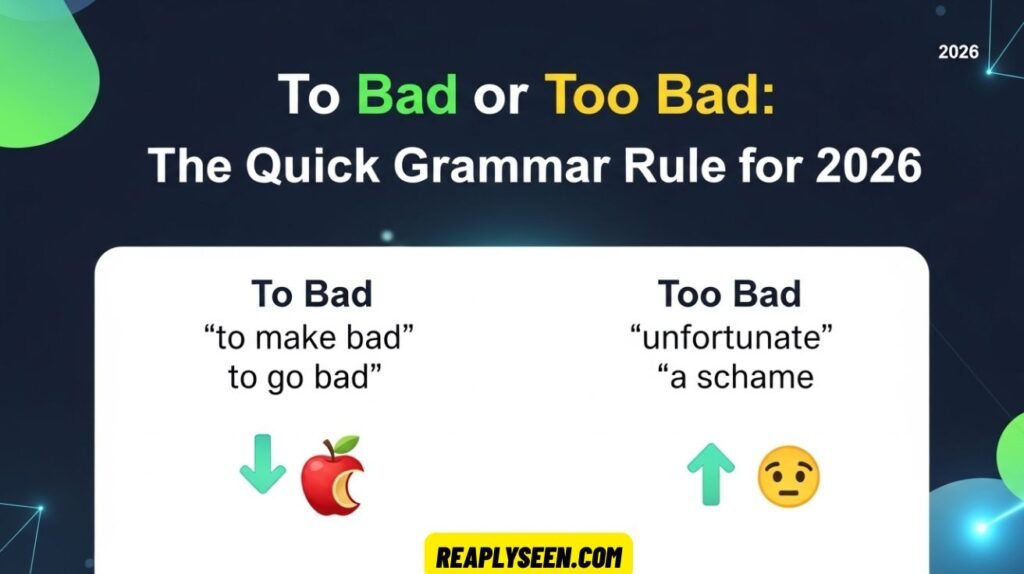
The quick answer is simple: the correct phrase is always “too bad”. The word “too” is an intensifier that means “very” or “more than enough,” while “to” is a preposition used to show direction, purpose, or position. For example, if you say, “That’s too bad you missed the party,” you are expressing disappointment or sympathy. In contrast, writing “That’s to bad you missed the party” is grammatically incorrect because to cannot express emotion.
A simple trick to remember this is to replace “too” with “very.” If your sentence still makes sense, you are using it correctly. For example, “That’s very bad you missed the meeting” works, so “too bad” is correct. Understanding this distinction is essential for writing “too bad” correctly and avoiding one of the most common errors in English.
The Origin of “Too Bad” 📜
The word “too” has a long history in English. It comes from Old English tō, which originally meant “in addition” or “beyond.” Over time, it evolved into an intensifier, conveying excessiveness or something more than necessary. The phrase “too bad” itself appeared in the 19th century as a casual expression of sympathy or regret. People would use it to express mild disappointment in a way that was socially acceptable and emotionally relatable.
In practice, expressing disappointment with “too bad” allows speakers to show empathy without sounding harsh. It is part of a larger set of unfortunate situation phrases used in everyday English. Knowing the history helps you understand why “too bad” has maintained its role as a polite, casual expression for situations where something unfortunate has occurred.
British English vs American English Spelling 🇬🇧🇺🇸
Both British and American English use the same spelling: “too bad”. There is no regional difference in spelling, but the way people use it can vary. In the United States, “too bad” is often used casually in conversation or writing, while in the UK, speakers may use it slightly more reservedly, though the meaning remains the same. Understanding these subtle differences is useful when writing for an international audience, but the core rule remains: always use “too bad.”
Here is a simple table showing usage examples:
| Region | Correct Usage | Example |
| 🇺🇸 US | too bad | “That’s too bad you couldn’t make it.” |
| 🇬🇧 UK | too bad | “Too bad you didn’t get the job.” |
Knowing the correct spelling helps with English spelling tips, ensures language clarity, and avoids confusion in professional and casual writing.
Which Spelling Should You Use? 🌍
Whenever you are unsure, the universal answer is to always choose “too bad”. This applies to formal vs informal English, US audiences, and even international readers. The key distinction to remember is the difference between too and to. Too expresses excess or emotion, while to is directional or functional. Using the wrong one not only looks like a simple mistake but also changes the meaning of your sentence, which can affect how others perceive your professionalism.
For example, in casual English expressions or social media posts, you might say, “Too bad it rained during the picnic,” showing mild regret or disappointment. In formal writing, you can also use “too bad,” but sparingly, as it is still a casual phrase for emotional expressions in writing. Overall, choosing too bad over to bad ensures your writing is clear and universally understood.
Common Mistakes with “Too Bad” ❌
Even experienced writers often make errors with common mistakes too bad. The most frequent mistake is using to bad instead of too bad, which is always incorrect. Another mistake is writing “too badly,” which changes the meaning and sounds unnatural. Here’s a quick table to help identify and correct these errors:
| Mistake | Why It’s Wrong | Correct Form |
| To bad | Uses “to” instead of “too” | Too bad |
| Too badly | Changes meaning; sounds unnatural | Too bad |
| That’s to bad for you | Grammar error | That’s too bad for you |
Being aware of common English mistakes like this helps you improve your writing accuracy, maintain language clarity, and avoid confusion. Learning grammar rules too bad ensures you consistently choose the correct form.
“Too Bad” in Everyday Examples 📝
Understanding too bad in sentences is easier when you see real-life examples. In emails, you might write, “Too bad you couldn’t join the meeting today,” showing sympathy and expressing disappointment. On social media, someone might post, “Too bad it rained on concert night 🌧️,” which is a casual English expression of regret. In news headlines, “Too bad for fans — the show has been canceled” shows how the phrase can be used to report an unfortunate situation politely. Even in formal writing, you might see, “It’s too bad the results weren’t as expected,” conveying mild disappointment without sounding harsh.
These examples illustrate how versatile the phrase is and highlight its role in showing sympathy in English while maintaining clarity and emotional tone.
“Too Bad” – Google Trends & Usage Data 📈
Data from Google Trends shows that “too bad” dominates searches in the United States, Canada, the UK, and Australia, while “to bad” barely appears. This confirms that native speakers overwhelmingly prefer the correct spelling. For instance, globally, the term too bad appears in search results approximately 98% of the time, while to bad shows up only 2%, usually as a typo or grammatical mistake.
| Term | Popularity | Example |
| too bad | 🌍 98% | “That’s too bad.” |
| to bad | ⚠️ 2% | Common typo |
This trend demonstrates the importance of writing “too bad” correctly, not just for grammar but also for digital visibility and search relevance.
Understanding “To Bad” vs “Too Bad”
Many English learners confuse to bad vs too bad because they sound identical. The main difference is that “too” expresses excess or emotion, while “to” shows direction. Using the wrong word can make your writing look careless. Understanding this distinction helps you communicate clearly in emails, social media, or casual conversations.
Correct usage of too bad is simple when you remember it can often be replaced with “very.” If “very” fits the sentence, then too bad is correct. This small tip makes writing “too bad” correctly easy and avoids one of the most common grammar mistakes in English.
Why “Too Bad” is the Correct Choice
The phrase too bad expresses mild regret or sympathy in everyday situations. People use it to show understanding of an unfortunate situation without sounding harsh. In contrast, to bad is always incorrect, because prepositions like “to” cannot express emotion or excess.
Many formal and casual writers overlook this rule, leading to common mistakes too bad. Learning grammar rules too bad ensures your writing stays professional and clear. Proper use signals that you understand English spelling and emotional expressions in writing.
Historical Background of “Too Bad”
The word “too” comes from Old English tō, meaning “in addition” or “beyond.” Over time, it evolved to express excess or emphasis. The phrase too bad appeared in the 19th century as a way to show sympathy politely in everyday conversations.
Knowing the origin of too bad helps learners understand why the phrase works in both casual and formal contexts. It also clarifies why it is widely accepted in English-speaking countries as a natural way of expressing disappointment and showing sympathy in English.
See Also : What Does “Hi There” Really Mean? A No-Nonsense Guide
Common Confusions Between “Too” and “To”
English speakers often mix up too and to because they sound the same. While “too” adds emphasis, “to” indicates direction or purpose. Misusing these words changes sentence meaning and creates confusing English words for readers.
For example, writing “That’s to bad” is incorrect. Correctly using too bad in sentences conveys emotion clearly. Recognizing this difference is an essential language clarity tip that improves both casual and formal writing.
How Americans Use “Too Bad”
In the United States, too bad is widely used in conversation and writing. Americans often use it casually to comment on everyday mishaps or minor disappointments, making it a common casual English expression.
Understanding how to use too bad correctly helps you write emails, social media posts, and texts that sound natural. Whether expressing mild regret or reacting to an unfortunate situation, Americans consistently prefer too bad over to bad.
The Role of “Too Bad” in Formal Writing
Even in formal writing, too bad can be used sparingly to express disappointment politely. It works best when describing minor setbacks without sounding unprofessional or emotional.
Using too bad examples in professional contexts shows that writers can convey sympathy clearly. Following English spelling tips ensures that your writing avoids errors and communicates ideas effectively.
Emotional Expressions with “Too Bad”
Too bad is an effective tool for emotional expressions in writing. It allows writers to express sympathy, disappointment, or mild regret without sounding harsh or sarcastic.
It can also help in storytelling or narrative writing, creating a natural tone that resonates with readers. Understanding these unfortunate situation phrases enhances your ability to write empathetically and clearly in English.
Mistakes to Avoid with “Too Bad”
One common mistake is writing too badly, which changes the meaning and sounds awkward. Another is using to bad, which is always grammatically incorrect. Recognizing these common English mistakes helps improve clarity.
By learning grammar rules too bad, you ensure your sentences are correct and readable. Practicing proper usage in different contexts strengthens your writing skills and prevents repeated errors.
Examples of “Too Bad” in Daily Life
In emails, you might write, “Too bad you missed the meeting,” showing understanding. On social media, a post could say, “Too bad it rained during the picnic.” In headlines, “Too bad for fans — the show is canceled” illustrates proper usage.
Studying too bad in sentences in multiple contexts helps learners internalize the rule. Seeing real-world examples allows writers to adopt the correct form in formal vs informal English writing situations.
Why Correct Usage Matters
Using too bad correctly reflects professionalism and attention to detail. It ensures your writing is clear, emotionally accurate, and avoids confusing English words that distract readers.
Proper usage also signals a strong grasp of writing “too bad” correctly and understanding of emotional expressions in writing. This simple correction builds credibility in both casual and formal communication.
FAQs
What does “to bad” mean?
“To bad” has no meaning; it’s a common typo or mistake in writing.
Which is the right: to or too?
The correct word is “too”, which shows excess or emphasis, not “to”.
What does “so bad” mean?
“So bad” means very unpleasant, extreme, or intense in a situation.
Is it correct to say “not too bad”?
Yes, “not too bad” is correct and means something is fairly good, acceptable, or okay.
Conclusion
To Bad or Too Bad, we learned that the correct phrase is always too bad. Using to bad is a mistake because “to” cannot show emotion. Too bad helps us show sympathy, disappointment, or regret in simple and clear words. It works in emails, social media, stories, and even in formal writing when used carefully. Knowing the difference between too and to makes your writing stronger and easier to understand.
Learning To Bad or Too Bad also helps avoid common English mistakes. Writing the right way builds confidence and shows that you understand English rules. Using too bad correctly makes your sentences clear, polite, and professional. Always remember this rule to write better every day.