What Does “Hi There” Really Mean? A No-Nonsense Guide
Hi There Really Mean is a phrase people use to greet others in a friendly way. It shows politeness and warmth. It works in texts, emails, or face-to-face conversations.
Many people use greetings every day. Hi There Really Mean is simple but powerful. It can make people feel welcome and comfortable quickly.
This phrase is casual and easy to use. It is not too formal or too personal. Using Hi There Really Mean helps start conversations smoothly and politely.
The Real Origin of “Hi There”
The phrase “Hi there” did not appear out of nowhere. It evolved naturally from traditional greetings like “hello” and “hi.” Linguists trace the rise of informal greeting phrases like “hi there” to the early 20th century, when English started moving toward friendlier, more casual ways of speaking. Unlike the more formal “hello”, “hi there” carried warmth without being overly intimate, which made it perfect for both social and professional situations.
In American media from the 1950s onward, hi there greeting became common in movies and TV shows. It was used by characters to sound friendly and approachable without appearing too formal. British English, in contrast, leaned more toward greetings like “Hello” or “Hiya,” but thanks to global pop culture, “hi there” has gained popularity worldwide. The phrase became a symbol of casual friendliness, bridging the gap between strangers and acquaintances.
What Does “There” Actually Mean in “Hi There”?
When you hear “hi there”, the word “there” might seem like a filler, but it actually plays an important role. Linguistically, “there” softens the greeting. It slightly distances the speaker, making the greeting feel less intrusive or demanding. Essentially, it is a subtle way of saying, “I acknowledge you without overwhelming you.”
Here’s a quick table to show how the addition of “there” changes the tone and formality of greetings:
| Greeting | Tone | Degree of Formality |
| Hi | Neutral, straightforward | Casual |
| Hi there | Friendly, slightly distant | Casual, approachable |
| Hello there | Polite with warmth | Slightly more formal |
| Hey there | Relaxed, sometimes playful or flirty | Very casual |
As this table shows, hi there meaning is not just about a word choice—it’s about how you create approachable greetings that feel natural in conversation. It acts like a gentle wave from across the room, inviting a response without pressure.
“Hi There” in Real Conversation: Usage by Age, Culture & Region
The use of hi there greeting varies depending on age, culture, and region. Younger generations, like Gen Z and Millennials, often use hi there in texts playfully or ironically. You might even see it stretched out as “Hiiiii there” to add humor or exaggerate friendliness. Older generations tend to use it in a polite, easygoing manner without sarcasm or playfulness.
Regionally, American English speakers frequently use hi there in casual emails, texts, and social interactions. In the UK, people historically preferred “Hello” or “Hiya”, but hi there has gained ground, especially online. In Australia and Canada, the phrase appears regularly in informal conversation.
Cultural differences also play a role. In some cultures, adding “there” signals warmth, while in others, it can feel slightly distant. Understanding these nuances is part of proper greeting etiquette in different cultures and helps you adapt your tone appropriately in online communication greetings and in-person interactions.
When (and When Not) to Use “Hi There”
Knowing when to use hi there greeting can prevent awkward or unprofessional situations.
Use “Hi There” When:
You are sending casual emails or hi there in emails to someone you don’t know well. It works well to start light conversations or informal chats. Friendly greetings like this are perfect for social media, forums, or casual texts where a warm but relaxed tone is appropriate. Hi there can be an icebreaker that feels approachable without overstepping boundaries.
Avoid “Hi There” When:
You are sending a formal business email, applying for a job, or greeting someone in a serious context like interviews. It’s also best avoided when a personal or direct greeting is expected, such as addressing a close colleague by name. Using hi there in these contexts can make you seem too casual or distant, so choosing a more formal or personalized greeting is better. Casual vs formal greetings matter more than you might think in professional settings.
Is “Hi There” Professional or Too Casual? Let’s Set the Record Straight
Hi there greeting can be professional in the right context but too casual in others. The key is understanding the setting. For example, in a casual work email to a colleague, hi there is acceptable. In customer service, it feels friendly and welcoming. However, in job applications, interviews, or first-time professional emails, it can seem vague and informal.
Here’s a comparison table to clarify:
| Setting | “Hi There” Use Case | Recommended Alternative |
| Casual work email | Acceptable | Hi [Name], Hello |
| Customer service reply | Friendly, welcoming | Hi there! Hello, how can I help? |
| Job application / interview | Too casual | Dear [Name], Hello [Name] |
| LinkedIn connection | May seem impersonal | Hi [Name], Hello [Name] |
As this table shows, using hi there depends on context. Understanding email greeting etiquette ensures that your tone is appropriate and professional.
Does “Hi There” Sound Flirty, Distant, or Friendly?
The tone of hi there greeting depends heavily on how it is said. A cheerful “Hi there!” with an exclamation can come across as warm and friendly, while a flat “Hi there.” might feel distant or disinterested. If drawn out slowly, like “Hii there…”, it could hint at flirtation or sarcasm. Psychologists note that greetings act as social signals, revealing mood and intention before words even come into play.
Friendly greetings like hi there are a subtle form of non-verbal communication. Your audience can detect warmth, distance, or playfulness simply from tone, body language, and context.
Examples
Sample Conversations & Scenarios
Text Message:
Friend: Hi there! How’s your day?
You: Hey! Pretty good, you?
Email Opening:
Too casual: Hi there, I wanted to check in about the project…
Better: Hi Sarah, I hope you’re doing well. I wanted to check in about the project…
In-Person Greeting:
Casual: “Hi there, long time no see!”
Professional: “Hello, good to meet you.”
These examples show how hi there in texts, emails, and in-person settings can be adapted depending on formality, tone, and audience.
Responding to “Hi There”: What’s the Right Move?
How you respond to hi there greeting can set the tone for the rest of the conversation. In casual contexts, match the tone with a friendly “Hey! How are you?”. In professional settings, it’s best to upgrade the greeting with a name: “Hello, nice to meet you. I’m [Name].” Avoid responding with just “Hi”, as it can come across as abrupt or disengaged. Being mindful of polite ways to greet someone ensures smoother interactions and strengthens communication.
Alternatives to “Hi There” Based on Situation
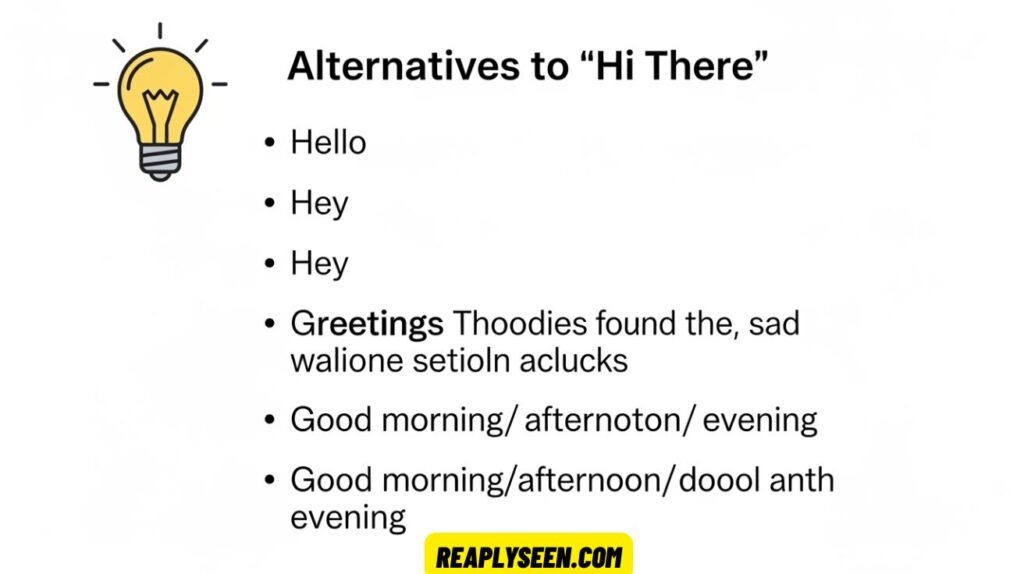
Depending on the context, there are many alternatives to hi there greeting. For casual text or chat, phrases like Hey, Hi, Yo, What’s up? work well. In semi-formal emails, you can use Hello [Name], Greetings, Hi there. For formal communication, options like Dear [Name] or Good morning/afternoon are more suitable.
In customer service, Hello! How can I assist you today? provides warmth and professionalism. These variations help maintain friendly ways to say hello while matching the tone to your audience.
Understanding the Meaning of “Hi There”
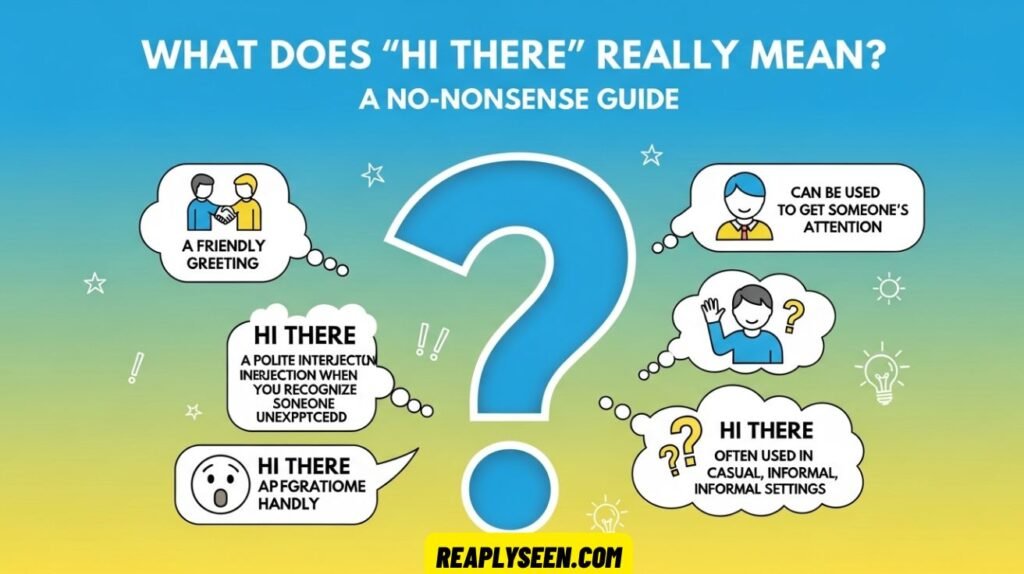
Hi there meaning goes beyond a simple greeting. It is a phrase that signals friendliness and approachability. Unlike formal salutations, it balances warmth with casual distance, making it perfect for texts, emails, and face-to-face interactions. Learning the meaning of hi there helps you communicate clearly without sounding intrusive or too formal in social or professional settings.
People often underestimate its power. A well-timed hi there greeting can create an instant sense of connection. It acts as a subtle social cue, showing that you are open and polite. From casual texts to informal emails, understanding how to use hi there effectively ensures your interactions are smooth, friendly, and appropriate for the audience.
The History Behind “Hi There”
The phrase hi there developed naturally from older greetings like “hello” and “hi.” It became popular in the United States during the mid-20th century, appearing frequently in movies and TV shows. Linguists classify it as an informal greeting phrase that combines friendliness with slight social distance, making it universally approachable in casual conversation.
American English speakers have embraced hi there as a standard way to start conversations. British English originally preferred “Hello” or “Hiya,” but hi there greeting is gaining popularity globally. Its adaptability across cultures and generations shows why it remains a reliable phrase for social greetings in English, whether online or in person.
The Role of “There” in the Phrase
The word “there” in hi there greeting is more than just filler. Linguists describe it as a softener that subtly distances the speaker, making the greeting less direct. This slight separation adds a sense of politeness, ensuring the recipient feels acknowledged without being pressured, which is key for friendly greetings in casual or semi-formal situations.
Using “there” changes the tone dramatically. Compared to plain “hi,” hi there signals warmth without over-familiarity. This small addition makes it ideal for emails, texts, and in-person conversations, especially when learning how to use hi there effectively to create approachable and polite interactions.
“Hi There” Across Ages and Cultures
Different generations use hi there in texts differently. Younger people often use it playfully or ironically, stretching it as “Hiiiii there” to signal humor. Older generations typically keep it polite and straightforward. Understanding these generational differences ensures that your hi there greeting feels natural and appropriate in any context.
Culture also plays a role in tone. In the U.S., it is widely accepted in casual emails and online communication. In Britain, Australia, and Canada, hi there is gaining traction, though some may still prefer more traditional greetings. Recognizing greeting etiquette in different cultures helps you adapt your message to suit any audience.
When to Use “Hi There”
You can use hi there greeting in informal settings such as casual emails, quick texts, and social media interactions. It’s ideal for situations where you want to appear approachable and friendly without sounding overly formal. This flexibility makes hi there one of the most versatile informal greeting phrases in English.
Using hi there in emails or text message greetings works well when you are addressing someone you don’t know well. It sets a welcoming tone, making the other person feel acknowledged. By understanding how to use hi there properly, you can maintain smooth communication in both social and professional casual contexts.
When Not to Use “Hi There”
Avoid using hi there greeting in formal business emails, job applications, or official meetings. In these settings, it can appear too casual or vague, potentially weakening your professionalism. Choosing casual vs formal greetings appropriately ensures your communication is clear, polite, and respected.
When a more personal or direct approach is needed, it’s better to address someone by name. Relying on hi there in emails or texts in serious contexts may make your message feel distant or impersonal. Understanding proper email greeting etiquette is key to striking the right tone.
Tone and Perception of “Hi There”

The tone of hi there greeting greatly affects how it is received. A cheerful “Hi there!” signals friendliness and warmth, while a flat “Hi there.” may feel cold or distant. Psychologists note that greetings communicate emotion before words even take effect, making tone essential in every interaction.
Flirtation or sarcasm can be subtly conveyed through stretching the phrase, such as “Hii there…”. Recognizing the tone in greetings helps you manage how your message is interpreted. Whether in person, in texts, or emails, friendly ways to say hello can establish positive communication instantly.
Alternatives and Adaptations for “Hi There”
Depending on the situation, alternatives to hi there greeting can be more appropriate. In casual chats, use Hey, Hi, Yo, What’s up? For semi-formal emails, Hello [Name], Greetings, Hi there works well. In formal communication, Dear [Name] or Good morning/afternoon is best.
Customer service scenarios benefit from Hello! How can I assist you today? Using different phrases ensures your online communication greetings are polite, clear, and context-appropriate. Knowing these alternatives is an essential skill when learning how to use hi there effectively across all types of conversations.
FAQs
Is it right to say “hey there”?
Yes, “hey there” is casual and friendly, suitable for texts, chats, or informal conversation.
How do I reply to Hey There?
Reply with a similar friendly tone, like “Hey! How’s it going?” or “Hi there!”
What does it mean if a guy says “hey there”?
It usually signals friendliness, interest, or casual attention; tone and context determine if it’s flirtatious.
What can I say instead of “hey there”?
You can use Hi, Hello, Hey, Yo, What’s up, or Greetings depending on formality and context.
Final Thoughts
Hi There Really Mean is a simple phrase that helps people start conversations in a friendly and polite way. It shows that you are open and approachable without being too formal or too personal. You can use it in texts, emails, or when meeting someone in person. The words are short, but they carry warmth and friendliness. Learning how to use Hi There Really Mean properly makes your communication smoother and more pleasant for everyone.
Using Hi There Really Mean in the right way helps you connect with people easily. It works for friends, classmates, or even new people you meet. Saying it with a smile or a kind tone makes it even better. This small phrase can make conversations feel welcoming and respectful. Practicing it will help you communicate clearly and confidently every day.