Nosey or Nosy – Which Spelling Is Correct with Examples in 2026
Nosey or Nosy means someone who is too curious or too interested in other people’s business. It is used to describe people who ask questions they should not. The word comes from “nose,” because curious people stick their nose into other matters.
Many people get confused about Nosey or Nosy when writing. They do not know which spelling to use. This small difference can make a big mistake in emails, blogs, and school work.
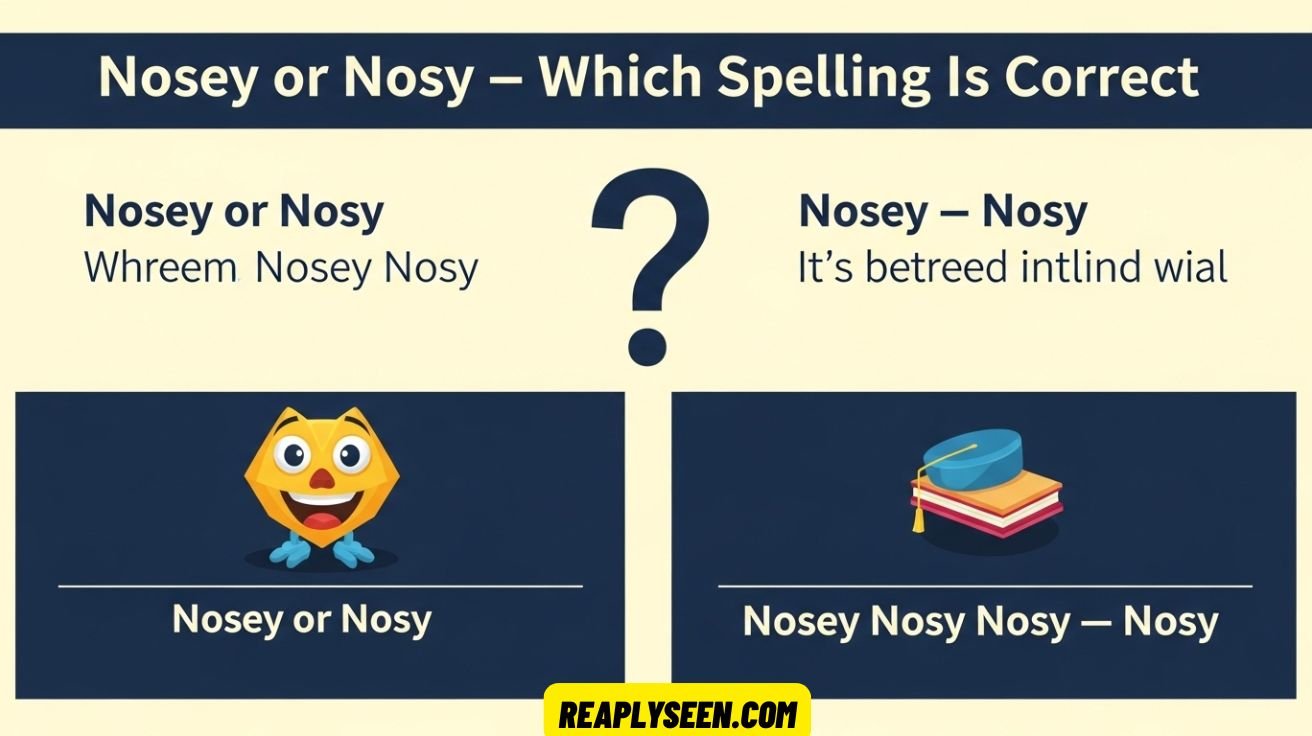
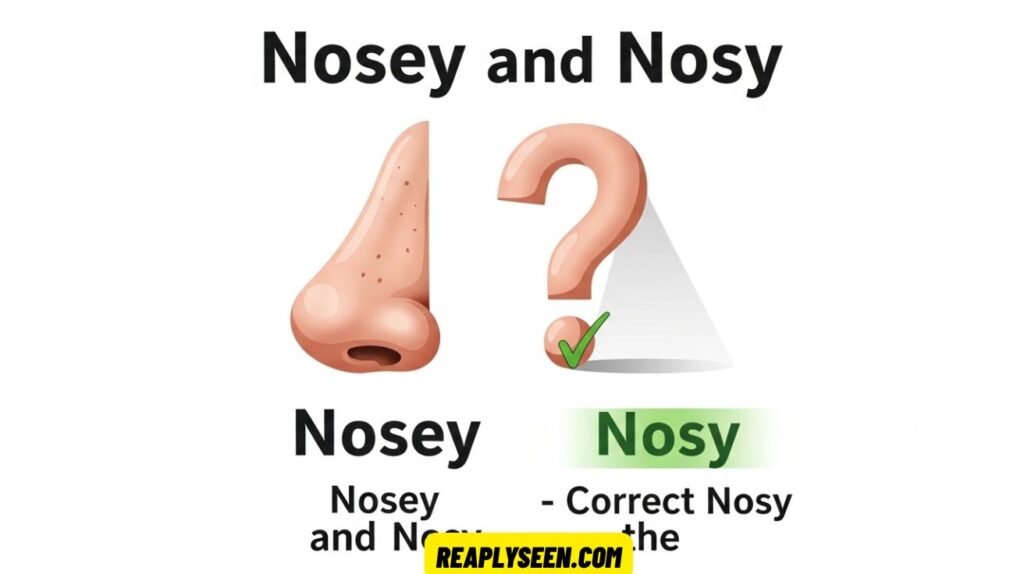
The spelling depends on where you are. In the U.S., people use nosy. In the UK, people use nosey. Both spellings are correct, but you must choose one and stay consistent.
Quick Answer
The quick answer to the question “Nosey or Nosy” is that both spellings are correct, but usage depends on where you are. In American English, the spelling nosy is preferred, while in British English, nosey is more common.
This distinction is part of the larger picture of British vs American spelling rules, where Americans often simplify words by dropping unnecessary letters. Knowing which spelling to use can help you avoid common spelling mistakes and make your writing look professional.
Nosey or Nosy – Quick Answer
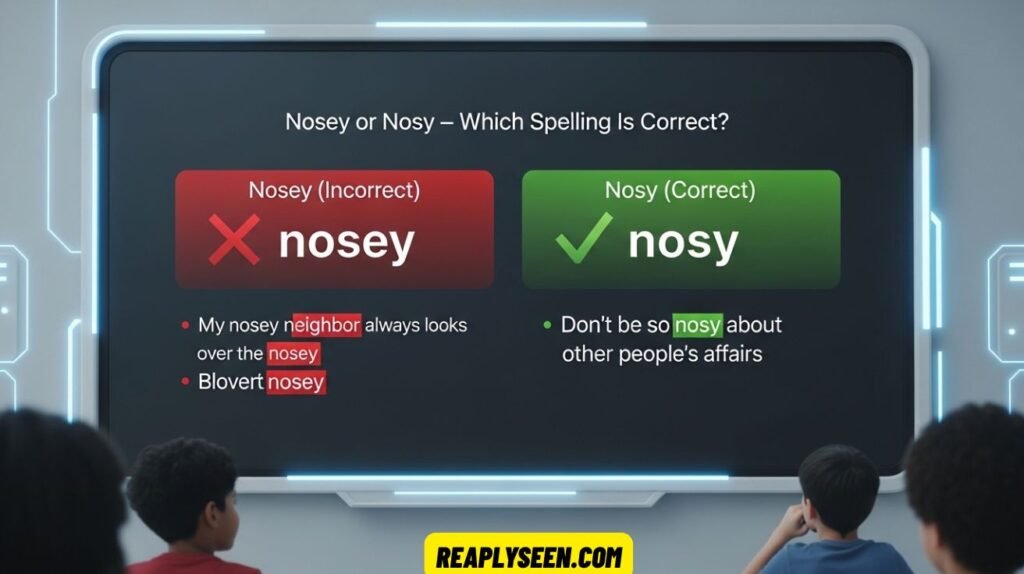
For a U.S. audience, the spelling nosy is always the correct choice. For example, in the United States, you might write, “She’s so nosy, always asking about my personal life.” In the UK, however, it is perfectly normal to see: “Stop being nosey and mind your own business.
When you are writing for US audience, it is better to stick with nosy because it is widely recognized in American English. Choosing the right spelling ensures your writing follows audience-specific spelling rules and appears consistent, especially in emails, blogs, and social media.
The Origin of Nosey/Nosy
The words nosey and nosy come from the English word “nose,” the body part used for smelling. Figuratively, it refers to someone who is too interested in others or has curious or inquisitive behavior. This idea of “sticking your nose into someone else’s business” has existed for centuries. Historically, both spellings were used in English texts from the 19th century, reflecting 19th-century English spelling habits. Over time, American English simplified the spelling to nosy, while British English kept the traditional nosey.
Interestingly, early dictionaries listed both spellings as correct, which means there has never been a “wrong” way to spell it. The difference is mostly a matter of language variation UK vs US, which writers need to understand.
British English vs American English Spelling
The difference between British English nosey and American English nosy reflects broader patterns in spelling. British English often mirrors pronunciation and keeps extra letters, while American English favors simplicity. Here’s a simple comparison table:
| Variant | Region | Example Sentence | Notes |
| Nosey | UK, Australia, New Zealand | He’s always nosey about the neighbors. | Traditional British spelling |
| Nosy | US, Canada | She’s too nosy for her own good. | Simplified American spelling |
This table shows that knowing your audience is crucial. If you mix nosy vs nosey spelling in the same text, it can confuse readers and look unprofessional. Following English spelling rules for your audience ensures clarity and credibility in writing.
Which Spelling Should You Use?
For writing for US audience, always use nosy. If you are writing for UK readers or Commonwealth countries, nosey is perfectly fine. For global audiences, nosy is often safer because of the influence of U.S. media and American English online.
Writers should maintain a consistent writing style throughout their articles, blogs, or emails to avoid common spelling mistakes.
Choosing one form and sticking to it demonstrates professionalism and attention to detail. Bloggers and content creators especially should decide on a style and adhere to audience-specific spelling rules for clarity.
Common Mistakes with Nosey/Nosy
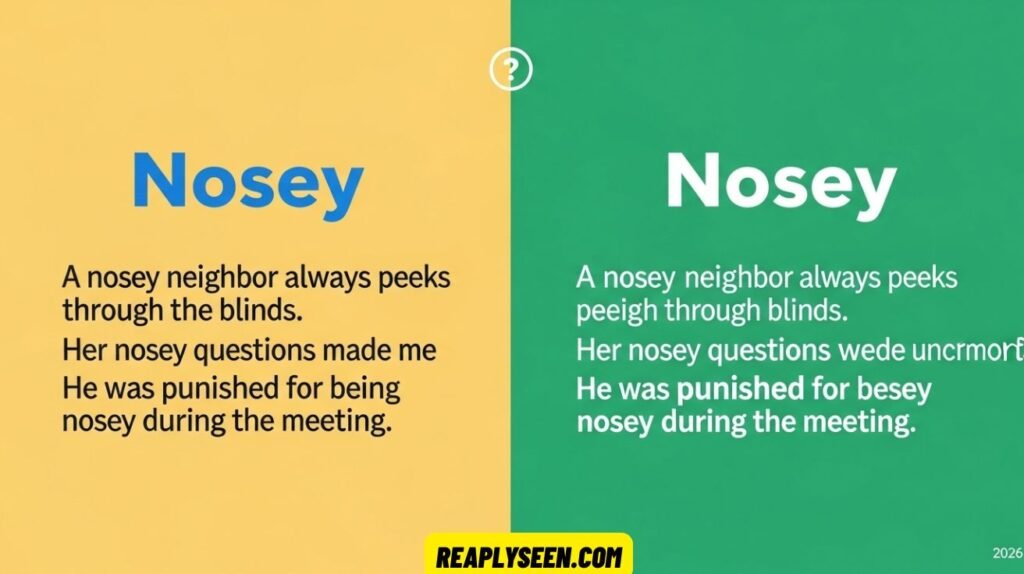
Many writers make errors when using these words. Writing Nozy or Noseey is incorrect, and mixing both spellings in one document looks unprofessional. The best practice is to pick one version and be consistent.
Other informal English vocabulary mistakes often occur alongside nosy/nosey, such as confusing words like “effect” and “affect,” or misusing “curious” versus “inquisitive.” Understanding the difference between overly curious behavior and too interested in others helps writers choose the right term and spelling.
To That Effect or Affect: Quick Answer with Examples in 2026
While this might seem unrelated, writers often confuse effect and affect just like they confuse nosey vs nosy spelling. The word “effect” is usually a noun, meaning a result, while “affect” is a verb, meaning to influence something. For example, “The new policy had a positive effect on productivity” is correct, whereas “The new policy had a positive affect on productivity” is incorrect.
Paying attention to grammar and vocabulary tips ensures your writing stays professional and reduces errors in informal and formal English writing.
Nosey/Nosy in Everyday Examples
Using nosy or nosey correctly in everyday sentences helps clarify the meaning. In emails, you might write, “I don’t want to sound nosy, but how is the project going?” On social media, a post could say, “My neighbor is so nosy, she knows what time I take out the trash.
In news articles, it might read, “The press was accused of being nosey about the actor’s private life.” For formal writing, however, using inquisitive or “overly curious” is better, since informal writing terms like nosy or nosey are rarely used in academic contexts.
Nosey or Nosy – Google Trends & Usage Data
Search data and Google Trends show that nosy dominates in the U.S. and Canada, while nosey is more common in the UK, Ireland, and parts of the Commonwealth. Globally, nosy often has higher search volume due to American influence online.
This trend demonstrates how audience-specific spelling impacts recognition and readability. If you want your writing to reach an American audience or an international one familiar with U.S. English, sticking to nosy is the safest choice.
Kill or Be Killed? The Psychology Behind the Ultimate Choice (2026)
Curiosity is a fundamental human trait. Psychologists explain that people are naturally drawn to be overly curious and sometimes exhibit intrusive behavior. This is why so many readers and audiences are drawn to news, gossip, and social media updates about others. Understanding the psychology behind being too interested in others can help writers explain why the terms nosy and nosey are used so frequently in everyday language.
Writing clearly with the correct spelling of nosy helps communicate your point without distraction, allowing readers to focus on content rather than errors.
See Also : Cosy or Cozy – Which Spelling Is Correct and When to Use Each (USA Guide)
Understanding Nosey or Nosy in American English
The spelling of nosey or nosy often confuses writers in the U.S. While both forms are technically correct, American English nosy is preferred. This reflects a trend where American spelling simplifies words, dropping unnecessary letters. Using nosy ensures your writing is consistent, professional, and easy for U.S. readers to understand.
People often search for the correct spelling of nosy because of its frequent use in informal writing. Whether in emails, blogs, or social media, knowing when to use nosy vs nosey spelling prevents mistakes. Writers who understand audience-specific spelling rules avoid common spelling mistakes and maintain clarity across texts.
The Meaning of Nosy and Nosey
Both nosy meaning and nosey meaning refer to someone who is overly curious or too interested in others. Figuratively, it describes people who stick their nose into other people’s matters, often without invitation. Understanding this can improve both writing and comprehension in social contexts.
In everyday communication, using the correct term helps convey tone accurately. For example, writing “She’s so nosy” in the U.S. immediately signals that the person is curious or inquisitive, without sounding offensive. This aligns with informal English vocabulary standards and makes your writing relatable.
Historical Origins of Nosey and Nosy
The words nosey and nosy originate from the English word “nose,” representing curiosity. Historically, both spellings were seen in 19th-century English spelling, reflecting variations in usage across regions. American English gradually simplified the word to nosy, while British English retained nosey, following pronunciation patterns.
Understanding these historical roots helps writers grasp why British vs American spelling differs. It also highlights the importance of consistent writing style, particularly for professionals, bloggers, and students. Recognizing the language variation UK vs US ensures accurate, audience-focused writing.
Differences Between British and American Usage
In the UK, nosey is common, whereas in the U.S., nosy dominates. British English often preserves traditional spelling, while American English favors simplification. This distinction is crucial when writing for US audience, as using nosey might confuse some readers or appear informal.
For American readers, sticking to nosy aligns with English spelling rules and improves readability. By understanding nosy vs nosey spelling, writers can tailor their content to regional norms, avoiding common spelling mistakes and maintaining a professional tone in informal writing terms.
Using Nosey or Nosy in Everyday Writing
When composing emails, blogs, or social media posts, using nosy correctly communicates your message clearly. For example, “I don’t mean to be nosy, but how is the report coming along?” demonstrates curiosity politely while following U.S. conventions.
Similarly, in news articles or storytelling, nosey examples in sentences are used in British English. Adapting your word choice based on audience ensures accuracy and clarity. Writers who follow audience-specific spelling guidelines strengthen their credibility and avoid confusing readers.
Common Mistakes to Avoid
Writers often make errors like Nozy or Noseey, which are incorrect forms. Mixing nosy and nosey in the same text also appears unprofessional. Being aware of these pitfalls helps writers maintain a consistent writing style and adhere to grammar and vocabulary tips.
Another mistake is misusing the word in formal contexts. In academic or professional writing, using alternatives like “inquisitive” or “overly curious” is preferable. This ensures informal English vocabulary doesn’t conflict with the tone while preserving the meaning of nosy.
The Psychology Behind Being Nosy
People are naturally drawn to curiosity, often exhibiting overly curious or intrusive behavior. This explains why so many stories, posts, and emails include observations about others. Understanding the psychology helps writers contextualize why nosy or nosey is a relevant and relatable term.
Incorporating this knowledge in writing allows authors to express curiosity accurately without sounding judgmental. Knowing the difference between too interested in others and polite curiosity improves communication and helps maintain proper tone for writing for US audience.
See Also : Natzi or Nazi – The Correct Spelling Explained Simply for 2026
Tips for Consistent Spelling and Usage
Consistency is key when deciding between nosy and nosey. For U.S. readers, always choose nosy, and avoid switching spellings within the same document. Using a single spelling demonstrates attention to detail and helps readers focus on content rather than errors.
Writers should also consider context and audience. Academic or professional writing may require replacing informal writing terms with words like “inquisitive” or “curious.” Following English spelling rules and maintaining audience-specific spelling ensures clarity, accuracy, and credibility.
FAQs
Which is correct, nosey or nosy?
Both are correct; nosy is preferred in the U.S., while nosey is common in the UK.
Is nosey the correct spelling?
Yes, it is correct in British English, but nosy is standard in American English.
What does “I’m nosey” mean?
It means “I am overly curious or too interested in other people’s business.”
How do you spell nosy in the UK?
In the UK, it is usually spelled nosey.
Conclusion
The difference between Nosey or Nosy depends on where you are writing. In the United States, the correct spelling is nosy, and it is the best choice for all American readers. In the United Kingdom and other Commonwealth countries, nosey is more common and widely accepted. Both words mean someone who is too curious or too interested in other people’s private matters. Using the right spelling shows that you pay attention to audience-specific spelling and helps your writing look professional.
Choosing one spelling and using it consistently makes your writing clear and easy to read. Writers should follow English spelling rules and stay careful about common spelling mistakes. When you write about curiosity or behavior, using Nosey or Nosy correctly helps people understand your sentences quickly. This small detail improves your overall writing and shows that you know how to communicate well.