Is It Correct to Say “It Was A Pleasure Meeting You”? – Complete Guide
The phrase “correct to say pleasure meeting you” means using polite words to show you enjoyed meeting someone. It is a way to be respectful and friendly. People use it after meeting someone for the first time.
Saying this phrase can make people like you more. It helps you sound kind and professional. Many people use it in school, work, or social events.
Using correct to say pleasure meeting you shows good manners. It works in emails, chats, and in-person talks. Saying it leaves a positive impression and builds better connections.
What Does “It Was a Pleasure Meeting You” Really Mean?
The phrase “It was a pleasure meeting you” is more than just a polite farewell. It combines three elements. The first part, “It was a pleasure”, expresses that the meeting or interaction brought enjoyment, satisfaction, or appreciation. The word “meeting” refers to the act of getting acquainted, especially for the first time. Finally, “you” directly addresses the person or people involved, making the expression personal. Together, this phrase serves as a way to acknowledge and appreciate the time and attention of the other party.
Saying this phrase reflects a deeper social purpose. It is a polite meeting phrase that shows respect and gratitude. It is also a tool for building trust and rapport, which is crucial in professional and social settings. In the United States, using this phrase is often associated with professional communication tips and courteous conversation endings, as it leaves a positive impression and opens the door for future opportunities. Essentially, it signals that you value the connection and are interested in maintaining it.
Is It Grammatically Correct to Say “It Was a Pleasure Meeting You”?
Yes, “It was a pleasure meeting you” is grammatically correct. This phrase follows the structure: It + was + a pleasure + [gerund] + you. Here, the word “meeting” functions as a gerund, which is a verb acting as a noun. Using the base form of the verb, like “meet,” would make the sentence incorrect. The past tense “was” appropriately refers to a completed interaction, making it perfect for meetings that have already happened.
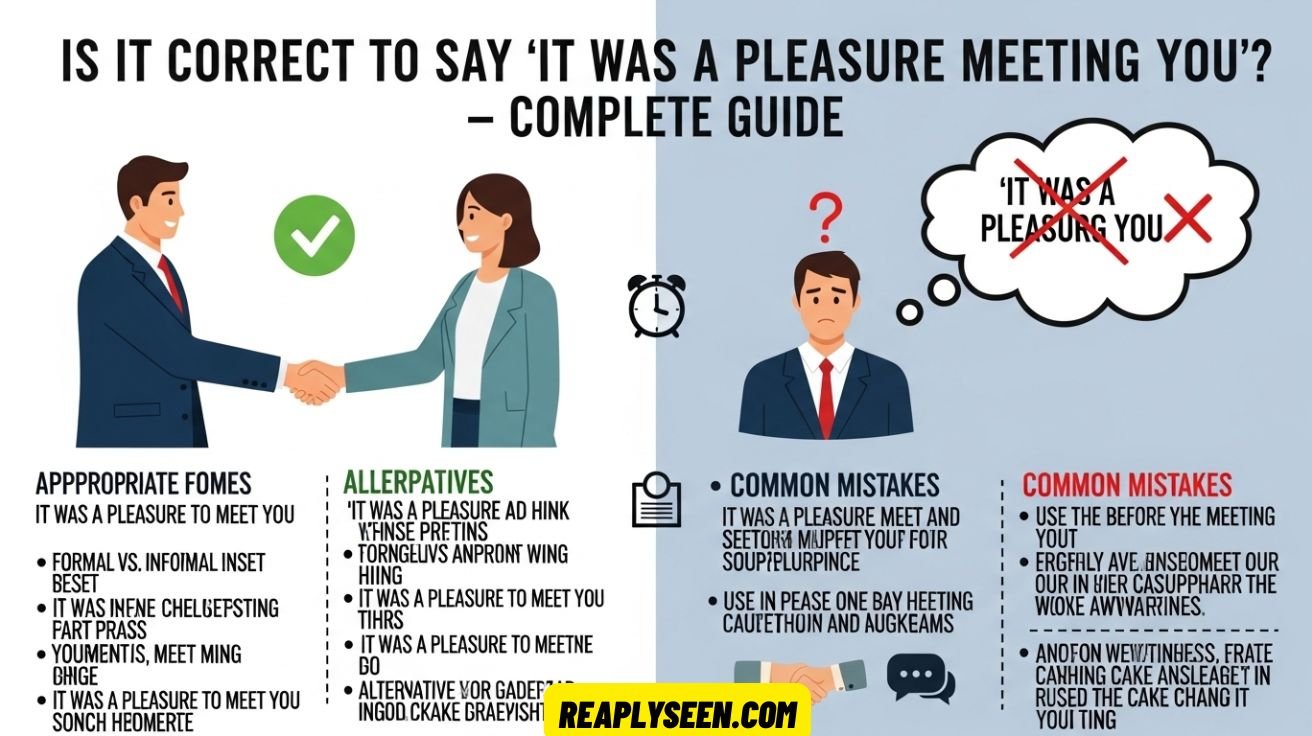
Common mistakes include saying “It was pleasure meeting you”, which omits the article “a” and sounds awkward, or “It was a pleasure to meet you”, which is slightly more formal and often better suited for emails. Understanding this subtle grammar ensures you sound polished in both spoken and written communications. For instance, saying “It was a pleasure meeting you at the conference” sounds professional and natural, whereas “It was pleasure meeting you at the conference” sounds incomplete. Using the correct grammar is a small change but demonstrates excellent professional communication tips.
When and Where to Use This Phrase (With Real-Life Examples)
Knowing when and where to use “It was a pleasure meeting you” is important for getting the tone right. This phrase works well in first-time meeting expressions, making the other person feel appreciated and valued. In professional settings, such as interviews, client meetings, and conferences, it signals politeness and professionalism. In informal or social situations, it can convey warmth and friendliness.
For example, after a job interview, you could write, “It was a pleasure meeting you and discussing the role. I appreciate your time and insights.” In a client meeting, saying, “It was a pleasure meeting you and your team today,” shows respect for both the client and their colleagues. Even in casual coffee chats, a simple “It was a pleasure meeting you! Let’s stay in touch” leaves a positive impression.
| Scenario | Example Phrase | Tone |
| Job Interview | “It was a pleasure meeting you to discuss the [Position] role.” | Professional, formal |
| Client Meeting | “It was a pleasure meeting you and your team today.” | Business formal |
| Networking Event | “It was great meeting you at the event.” | Semi-formal, warm |
| Casual Social Meeting | “Nice meeting you! Let’s keep in touch.” | Friendly, casual |
Using this phrase in the right context helps create positive first impressions, shows respect, and strengthens professional relationships.
Formal vs Informal: Matching the Tone to the Situation
Matching the tone of your message to the situation is key to effective communication. In formal scenarios like corporate meetings, interviews, or client negotiations, using “It was a pleasure meeting you” or similar formal meeting sign-off phrases is appropriate. In casual scenarios, such as coffee catch-ups, social networking events, or friends-of-friends introductions, simpler phrases like “Nice meeting you” or “Pleasure connecting with you” sound more natural.
The difference between formal and informal usage often comes down to phrasing and context. A formal message might read: “It was a pleasure meeting you and discussing potential collaboration opportunities.” An informal version might say: “Great chatting with you today, looking forward to staying in touch!” Understanding this distinction prevents awkward moments where the tone might feel too stiff or too casual for the occasion.
Professional Variations for Business and Corporate Settings
Sometimes, saying “It was a pleasure meeting you” can feel repetitive, especially in professional correspondence. There are many alternatives that maintain a polished and sincere tone. Examples include: “It was a pleasure speaking with you”, “Thank you for your time today”, “I appreciated our discussion”, or “I enjoyed learning more about your work”. Using these alternatives not only avoids repetition but also reinforces your professionalism and shows attentiveness.
These variations are particularly effective in networking follow-up emails, client communications, and post-interview messages. For instance, after a sales meeting, you might write: “Thank you for your time today. I look forward to the opportunity to work together.” These phrases are widely accepted in the U.S. and align with professional email closings and email thank-you phrases.
Casual and Friendly Alternatives for Everyday Use
In informal situations, you can use friendly alternatives that still convey appreciation without sounding overly formal. Phrases like “Nice meeting you!”, “Great chatting with you”, “It was great to connect”, or “Had a fun time meeting you” are perfect for casual networking events, social gatherings, or everyday interactions. These phrases are simple, approachable, and create a positive emotional connection. They also function as polite farewell expressions that help maintain warmth in relationships.
Even in informal emails, you can use these phrases to make your messages feel personal. For example, “Hey John, it was great to connect yesterday at the meetup. Looking forward to keeping in touch!” This demonstrates attentiveness and leaves a lasting impression.
How to Follow Up: Email Templates & Messaging Etiquette

Following up after a meeting is a critical step in professional communication. Sending a thoughtful message shows appreciation and keeps connections alive. Here are examples of effective follow-ups:
Job Interview Follow-Up:
Subject: Thank You for the Opportunity
Dear [Name],
It was a pleasure meeting you yesterday to discuss the [Position] role. I appreciate your time and insights, and I look forward to any next steps. Please let me know if you need further information.
Best regards,
[Your Name]
Client Meeting Follow-Up:
Subject: Great Connecting Today
Hi [Name],
Thank you for taking the time to meet with me. I enjoyed our conversation about your goals and how we might collaborate. I look forward to next steps.
Best,
[Your Name]
Informal Networking Follow-Up:
Subject: Nice Meeting You!
Hey [Name],
It was great meeting you at the event last night. I really enjoyed our chat and hope we can stay in touch.
Cheers,
[Your Name]
These examples incorporate interview follow-up message, client meeting etiquette, and networking event phrases, showing how to combine courtesy with action.
See Also : Admitted vs. Accepted – Difference Explained
How to Respond to “It Was a Pleasure Meeting You”
When someone says “It was a pleasure meeting you”, your response can reinforce the relationship. Classic responses include: “The pleasure was mine”, “Likewise, I enjoyed our meeting”, “Thank you—I look forward to working together”, or “It was great meeting you as well”. Avoid simply repeating the phrase back, as this can feel robotic.
Adding a personal note or referencing the conversation shows attentiveness and thoughtfulness. Responding appropriately is an essential part of professional conversation closure and courteous conversation endings.
“It Was a Pleasure Meeting You and Your Team”: Group Etiquette
Meeting multiple people requires tact. You can say “It was a pleasure meeting you and your team” to acknowledge everyone present. Following up with “Thank you all for your time and insights” or mentioning specific contributions shows attentiveness and respect.
In emails, it is also polite to address the group collectively while highlighting key individuals if appropriate. This practice demonstrates client meeting etiquette and aligns with professional email closings in group contexts.
Adding Time References: “It Was a Pleasure Meeting You Yesterday”
Adding temporal markers to your phrases clarifies context and makes your communication more precise. For example, “It was a pleasure meeting you yesterday”, “I enjoyed our conversation last week”, or “Thanks for meeting with me earlier today” all provide clarity. Be careful not to overuse time references, as they can feel forced. In professional emails, this small detail adds a touch of personalization and helps reinforce the memory of the interaction.
Reconnection Strategy: Reviving Conversations After Time Has Passed
Sometimes, you may need to reconnect after days or weeks. Thoughtful references to previous meetings help maintain relationships. Phrases like “I hope you’re well. It was a pleasure meeting you at [event]”, “Following up after our conversation last month…”, or “I wanted to reconnect after our recent meeting…” signal professionalism without sounding random.
This technique ensures that connections remain strong, demonstrates follow-through, and emphasizes the value of prior engagement. Combining this with networking follow-up email and expressing gratitude after meeting ensures your outreach feels genuine and respectful.
Understanding the Power of “It Was a Pleasure Meeting You”
The phrase “It Was a Pleasure Meeting You” is more than a polite farewell. It conveys respect, gratitude, and warmth after a first-time encounter. Whether in a job interview, networking event, or casual meeting, this phrase leaves a positive impression. Using it correctly can strengthen relationships, improve professional reputation, and make the other person feel valued.
In the U.S., etiquette experts emphasize the importance of polite meeting phrases and courteous conversation endings. Saying this phrase demonstrates thoughtfulness and emotional intelligence. It also helps bridge initial unfamiliarity with friendliness. Mastering such expressions is a key part of professional communication tips, and it can make the difference between a forgettable encounter and a memorable one.
Grammar Behind “It Was a Pleasure Meeting You”
“It Was a Pleasure Meeting You” is grammatically correct because it follows a clear structure: “It + was + a pleasure + [gerund] + you.” The gerund “meeting” acts as a noun, while “was” correctly references a completed event. Using just “meet” or omitting the article “a” would sound awkward. Proper grammar ensures your message is polished and professional.
Understanding grammar helps avoid mistakes in both spoken and written contexts. For instance, writing “It was pleasure meeting you” is incorrect. The correct usage aligns with formal meeting sign-off expectations in business emails. Mastering such nuances is essential for professional email closings and maintaining credibility in corporate or networking settings.
When to Use This Phrase for Maximum Impact
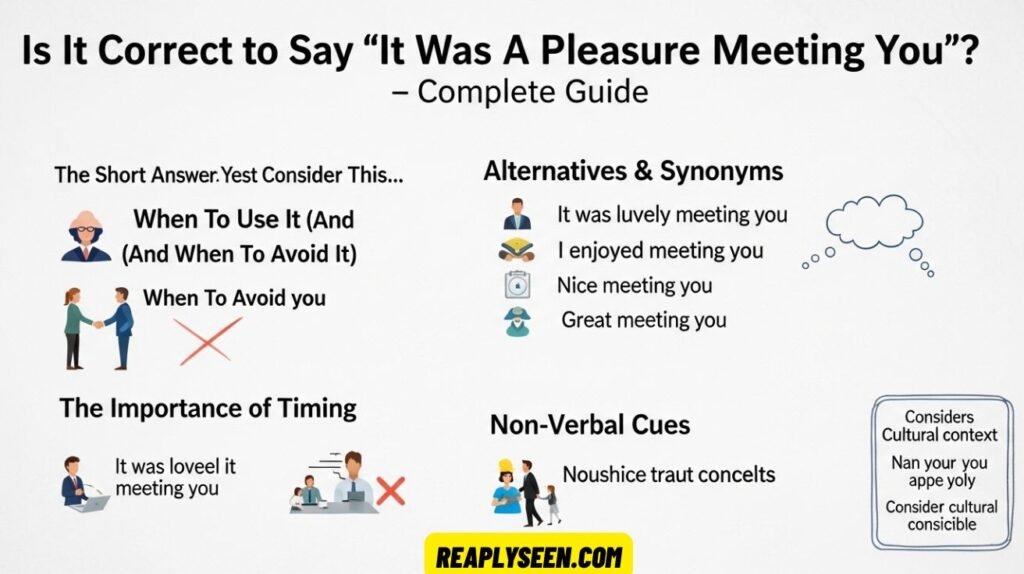
Timing is everything. Saying “It Was a Pleasure Meeting You” immediately after a first encounter reinforces politeness and professionalism. It works well after interviews, client meetings, networking events, or even informal coffee chats. In the U.S., people value clear and respectful communication, so this phrase can create lasting impressions.
Using it in the right moment signals attentiveness. Pairing it with email thank-you phrases in follow-up messages adds depth. It also supports networking follow-up email strategies, ensuring your connections feel appreciated. Understanding situational appropriateness is crucial for business etiquette phrases and maintaining a professional image.
Formal vs Informal Usage Explained
This phrase can adapt to both formal and casual situations. In interviews, corporate meetings, or client discussions, a formal tone works best. Saying “It Was a Pleasure Meeting You” conveys respect, professionalism, and attentiveness. Adding context or details enhances clarity and leaves a positive impression.
For casual scenarios like networking events or social gatherings, alternatives like “Nice meeting you” or “Pleasure connecting with you” feel more natural. Using the right tone avoids awkwardness and shows social awareness. Recognizing formal vs informal goodbyes is a key professional communication tip, helping maintain authenticity while leaving a memorable impression.
See Also : Too Many or To Many? Grammar Explained (With Examples for Clear
Professional Alternatives for Business Emails
Sometimes repeating “It Was a Pleasure Meeting You” feels generic. Alternatives include “It was a pleasure speaking with you,” “I appreciated our discussion,” or “Looking forward to future collaboration.” These phrases suit business emails, client correspondence, or post-interview follow-ups. Using these enhances clarity and professionalism.
Incorporating these variations helps avoid redundancy and improves email sign-off examples. They also align with professional conversation closure norms, making interactions more engaging. By diversifying your language, you strengthen credibility and build trust, essential in networking and client meeting etiquette.
Friendly Alternatives for Informal Meetings
For casual encounters, phrases like “Great chatting with you,” “It was great to connect,” or “Had a fun time meeting you” feel approachable and genuine. They work well at networking events, coffee meetings, or social introductions, keeping the tone light yet appreciative.
These friendly alternatives enhance polite farewell expressions without sounding stiff. They are useful in emails, text messages, or in-person conversations. Using such phrases also demonstrates awareness of first-time meeting expressions, showing that you value both professionalism and warmth in social interactions.
Following Up Professionally After a Meeting
Sending a follow-up after saying “It Was a Pleasure Meeting You” strengthens connections. A professional follow-up can include a thank-you email, a LinkedIn message, or a call summarizing the discussion. It demonstrates attentiveness, reliability, and interest in ongoing collaboration.
Combining interview follow-up message and networking follow-up email strategies helps maintain relationships. Including expressing gratitude after meeting in your follow-ups reinforces courtesy and respect. Timely and thoughtful messages also reflect professional communication tips, which increase chances of positive outcomes in both social and business settings.
Responding Gracefully When Someone Says It
When someone says “It Was a Pleasure Meeting You,” responding thoughtfully strengthens rapport. Replies like “The pleasure was mine,” “Likewise, I enjoyed our meeting,” or “It was great meeting you as well” show politeness and attentiveness. Simply repeating the phrase may feel mechanical.
Adding personalization, such as mentioning a topic from the conversation, makes the interaction memorable. This practice reflects professional conversation closure and courteous conversation endings. It also helps in reinforcing trust, which is critical for networking, business relationships, and effective client meeting etiquette.
Meeting Groups or Teams: Proper Etiquette
When meeting multiple people, saying “It Was a Pleasure Meeting You and Your Team” acknowledges everyone’s presence. Following up with “Thank you all for your insights” or referencing specific contributions shows attentiveness and respect. This approach strengthens group dynamics and demonstrates professionalism.
In emails, addressing the group collectively while highlighting individual contributions works well. Using these strategies aligns with business etiquette phrases and formal meeting sign-off practices. Recognizing group members’ efforts ensures lasting impressions and encourages positive interactions in both social and professional contexts.
See Also : Is It Correct to Say “You Are Missed”? A Complete Guide
Adding Time References to Your Farewell
Adding temporal markers like “It Was a Pleasure Meeting You Yesterday” or “I enjoyed our conversation last week” provides clarity. It situates your message in time, making your communication precise and memorable. Time references are especially useful in follow-up emails or casual check-ins.
Using them carefully enhances professional email closings and makes your messages feel personal rather than generic. Pairing temporal references with email thank-you phrases and expressing gratitude after meeting improves follow-ups and maintains connections. Proper timing ensures your messages leave a professional and thoughtful impression.
FAQs
Has been meeting pleasure a it you sentence?
No, this is not a correct sentence; the proper structure is “It was a pleasure meeting you.”
How to reply “It was a pleasure meeting you”?
You can say “The pleasure was mine”, “Likewise, I enjoyed our meeting”, or “It was great meeting you as well.”
Is it correct to say it was pleasure meeting you?
No, it is incorrect; you must include the article “a”: “It was a pleasure meeting you.”
Is it better to say “pleasure to meet you”?
Use “Pleasure to meet you” during the meeting, and “It was a pleasure meeting you” after the meeting for correct timing and tone.
Final Thoughts
it is always correct to say pleasure meeting you after you meet someone for the first time. This simple phrase shows respect, kindness, and appreciation. Using it makes people feel valued and creates a good first impression. Whether you meet someone at school, a job interview, or a casual event, saying this phrase helps start a positive relationship. It works in emails, in-person conversations, and even online meetings.
Saying correct to say pleasure meeting you also helps you sound polite and professional. It makes your words clear and friendly. Pairing it with a short follow-up message or a thank-you note strengthens your connection. Using this phrase regularly can improve your communication skills and show that you care about others.