Puting or Putting: Which Spelling Is Correct in 2026?
Puting or Putting is about the correct way to spell the word when adding -ing to put. Putting is correct. Puting is wrong. It means placing or moving something.
Many people make mistakes with puting or putting. They forget to double the “t.” This is a common spelling error. You can avoid it easily by learning the rule.
Puting or Putting is used in school, work, and everyday writing. Always use putting. It works in British and American English. Using it correctly makes your writing clear and professional.
Puting or Putting – Quick Answer
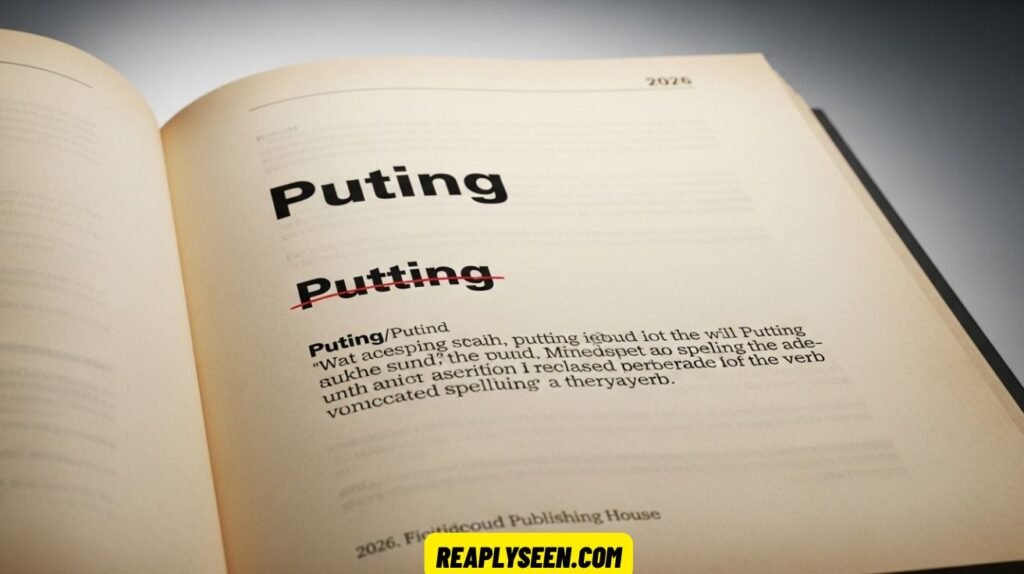
The correct spelling is putting, while puting is always incorrect. Putting meaning refers to the action of placing or moving something from one spot to another. It is the present participle of put, used in continuous tenses and to indicate ongoing actions. For example, you might write, “She is putting the books on the shelf,” or “He was putting extra effort into his project.”
The mistake of writing puting often happens because people forget the doubling consonants rule, which states that when a single-syllable verb with a short vowel ends in a consonant, you must double the final consonant before adding -ing. In simpler terms, put + ing = putting, not puting. Dropping the second “t” is a frequent common spelling mistake that is caught by most spellcheck errors in word processors or online editors.
The Origin of Puting/Putting
The verb put comes from the Old English word putian, which means to place or set something down. Over time, English spelling developed a set of rules to make words easier to read and pronounce. One of these is the doubling consonants rule, which applies to single-syllable verbs + -ing.
For example, verbs like run become running, sit becomes sitting, and put becomes putting. The doubling ensures the short vowel sound is preserved and clearly shows the addition of -ing. Forgetting this rule is common, especially in casual writing, texting, or fast typing. Even though some might see putin’ in informal texts, music, or social media, this is a colloquial shortening and not acceptable in educational writing or professional contexts. Understanding the history of put helps writers grasp why putting is the only correct form and why puting should never appear in formal English.
British English vs American English Spelling
Many writers wonder if spelling differs between British and American English. Fortunately, in the case of puting vs putting, both variants use the same correct form: putting. There is no regional variation, making it easier for global audiences to recognize and use the word correctly.
| Region | Correct Spelling | Example | Notes |
| 🇺🇸 American English | Putting | She is putting files on the desk. | Standard usage |
| 🇬🇧 British English | Putting | He was putting chairs in the hall. | Standard usage |
| ❌ Common Mistake | Puting | I am puting the groceries. | Incorrect globally |
This table clearly shows that whether you are writing for an American or UK audience, the proper usage is always putting. Using puting can harm your credibility and make your writing appear careless, especially in professional documents, essays, or online articles.
Which Spelling Should You Use?
If you are unsure which form to use, the rule is simple. In American vs British English spelling, always use putting. It is universally correct and recognized across all formal and informal contexts. Whether you are drafting emails, writing academic papers, or creating content for a blog, putting is the standard.
For online audiences, consistency is key. Avoid shortcuts like putin’ in professional writing, even if it may appear in texts or casual messages. Following English spelling rules ensures clarity, shows mastery of grammar rules, and strengthens your ability to write confidently.
Common Mistakes with Puting/Putting

Many common mistakes arise from misunderstanding how to spell putting. Writers often forget to double the “t,” leading to puting, which is always wrong. Below is a table showing frequent errors and how to correct them:
| ❌ Incorrect | ✅ Correct | Explanation |
| I am puting the files in the folder. | I am putting the files in the folder. | The final “t” must be doubled. |
| She is puting on her coat. | She is putting on her coat. | Present participle of “put” always doubles “t.” |
| They were puting chairs in the hall. | They were putting chairs in the hall. | Short vowel + consonant requires doubling before -ing. |
Following these simple guidelines ensures your writing adheres to proper English spelling guides and reduces errors flagged by spellcheck errors.
Puting or Putting in Everyday Examples
Using putting correctly in different contexts can improve clarity and professionalism. In schools, a teacher may say, “She is putting her homework in the folder.” In the workplace, a manager might note, “He was putting the documents on my desk.” Even at home, you could write, “I am putting the groceries away.” Sports commentary might include, “He is putting the ball in position for the shot.”
These everyday examples of putting show that whether in educational writing, professional settings, or casual messaging, putting is always correct. Avoid puting completely, as it is recognized as a typo and undermines clear communication.
Google Trends & Usage Data
Popularity data shows a clear trend in the use of these terms. Putting is overwhelmingly more popular and recognized globally, whereas puting only appears as a typo. Even informal variants like puttin’ are casual and mostly used in music, text messages, or social media. The following table highlights this usage:
| Term | Popularity | Region | Notes |
| Putting | 🌎 Very high | US, UK, Global | Standard usage in writing and speech |
| Puting | ⚠️ Moderate | Global (mostly typos) | Always flagged by spellcheck |
| Puttin’ | ⚠️ Casual | US (informal) | Colloquial in text, music, and speech |
From this data, it is clear that putting dominates in educational writing, professional contexts, and formal content. Avoid puting at all costs to maintain credibility.
See Also : Girlie or Girly – Which Spelling Is Correct with Examples (2026)
Understanding Puting vs Putting
Many people struggle with puting vs putting, especially when writing quickly or texting. The main issue comes from forgetting the doubling consonants rule, which requires a single consonant at the end of a short-vowel verb to be doubled before adding -ing. This ensures clarity in writing and prevents common spelling mistakes.
Using putting correctly shows you understand grammar rules and professional writing standards. In contrast, puting is flagged in almost every spellcheck error tool. Even in casual messages, avoiding typos helps maintain credibility in emails, schoolwork, and online content, making your writing more polished and reliable.
The Correct Spelling of Putting
The correct spelling of putting is straightforward: always double the “t” when adding -ing. This aligns with English conventions for single-syllable verbs + -ing, such as run → running and sit → sitting. Following this rule preserves the short vowel sound and prevents confusion between words.
Remember that putting meaning refers to placing or moving something. It is the present participle of put. Using it correctly in sentences like “She is putting the books on the shelf” demonstrates attention to writing professionally and avoids mistakes that could appear sloppy in school, office, or online writing.
Why People Write Puting
People often write puting by mistake because they are unaware of the doubling consonants rule. Many learners drop the second “t” when adding -ing, assuming the single “t” is enough. This creates a common spelling mistake that appears frequently in casual writing.
Another reason is fast typing, texting, or informal notes, where shortcuts like puttin’ are used. While acceptable in informal messages, it is not suitable for educational writing or professional contexts. Understanding why puting vs putting errors happen helps prevent them in formal content.
Examples in Everyday Writing
Using putting in daily sentences ensures clarity and correctness. For instance, in school, “She is putting her homework in the folder” is correct, while “She is puting her homework” is wrong. Teachers and editors always expect the proper spelling.
In the workplace, sentences like “He is putting the documents on my desk” highlight the correct usage in professional settings. Even casual emails or notes benefit from accurate spelling, reflecting attention to English spelling rules and writing tips that improve readability and credibility.
American vs British English
Both American vs British English spelling use putting correctly. There is no regional variation, so writers worldwide can confidently use this spelling. Differences in English spelling usually affect words like color vs colour, but puting is incorrect everywhere.
Using putting consistently across regions shows mastery of English spelling guides and avoids confusion for international readers. It also aligns with verb conjugation rules, ensuring that your writing is universally correct, professional, and easy to understand, regardless of where your audience is located.
Common Mistakes to Avoid

A frequent error is typing puting instead of putting. This happens when writers forget to double the “t,” violating the doubling consonants rule. Spellcheck usually catches this, but relying solely on technology is risky.
Another mistake is using puttin’ in formal documents. While casual texting or social media may accept it, texting abbreviations (puttin’) are inappropriate in educational writing and professional content. Avoiding these mistakes strengthens your writing, prevents typo correction issues, and builds credibility.
See Also : Atleast or At Least: What is the Difference?
Tips for Remembering Putting
One way to remember the correct form is to think of single-syllable verbs + -ing patterns. Words like run → running, sit → sitting, and put → putting all double the final consonant before adding -ing. This trick makes spelling easy to recall.
Practicing everyday examples of putting in sentences helps reinforce memory. Writing sentences like “I am putting the groceries away” or “He is putting extra effort into his project” makes the rule stick. Following writing tips and grammar rules improves overall accuracy and avoids common spelling mistakes.
Importance of Correct Spelling
Correct spelling is essential for writing professionally. Using putting correctly demonstrates attention to detail and understanding of English spelling rules. Errors like puting can make work look careless or unprofessional.
Additionally, correct spelling improves readability and comprehension. Whether for school essays, emails, or blogs, following English spelling guides and avoiding spellcheck errors ensures your message is clear. Consistency in puting vs putting usage shows mastery of verb conjugation and creates polished, credible writing.
FAQs
What is the meaning of puting?
“Puting” is incorrect; it has no proper meaning in English.
Is the word “putting” correct?
Yes, putting is correct; it is the present participle of put.
How do you spell putting as in putting something away?
The correct spelling is putting with a double “t.”
Is it right to say “putting”?
Yes, saying putting is correct in all formal and informal contexts.
Conclusion
The correct spelling is always putting, and puting is wrong. Knowing this rule helps you write clearly and correctly. Puting or Putting is a common question, but now you can remember the double “t” rule. Using putting shows that you understand basic English spelling rules and follow grammar rules in your writing. This small change makes your work look neat and professional, whether you write for school, emails, or reports.
Learning the right spelling is very important. By practicing putting in sentences every day, you will never make the mistake of writing puting again. Following writing tips and using spellcheck errors carefully helps you become a better writer. Always choose putting in all your writing.