Thumb In or Thumb Out: 2026 Guide👊
The Thumb In or Thumb Out rule shows how to place your thumb when making a fist. Thumb out means your thumb wraps over your fingers. Thumb in means your thumb is tucked inside the fist, which can cause injury.
Many people get confused about thumb position when punching or lifting weights. Using the wrong thumb can hurt your hand. Learning the right way keeps you safe and strong.
The Thumb In or Thumb Out rule is important in boxing, MMA, and gym exercises. Thumb out makes your fist stable and strong. Beginners should always practice this to avoid thumb strain.
Thumb In or Thumb Out – Quick Answer 🩵
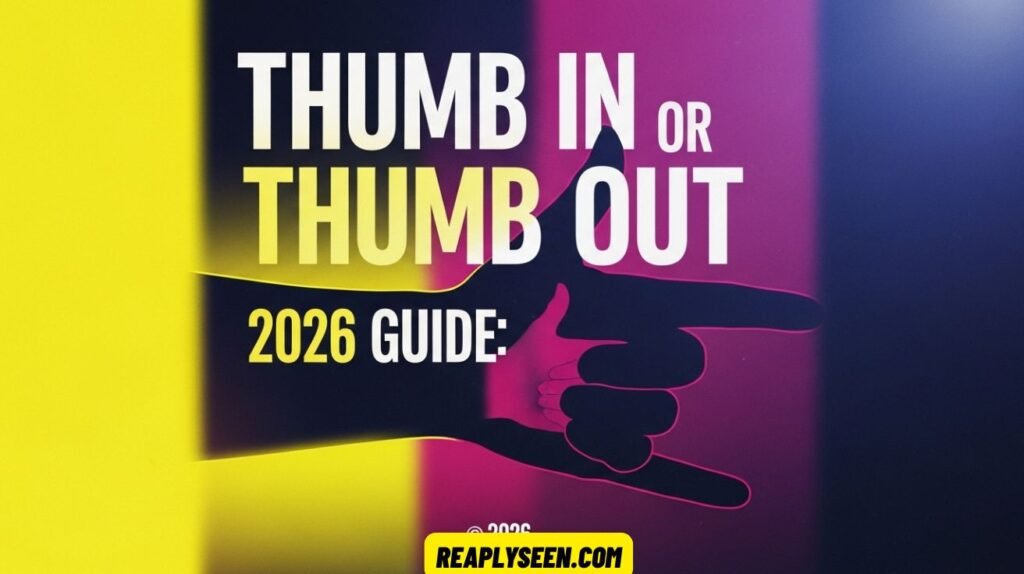
When making a fist, the correct thumb position is outside, wrapped around your fingers. Wrap thumb over fingers to ensure strength and stability during punches. Many beginners make the mistake of tucking the thumb inside the fist, which can easily lead to thumb strain, sprains, or even fractures.
Imagine you are punching a heavy bag with your thumb inside. The force of the impact travels directly to your thumb joint, which is not built to absorb strong hits. By keeping the thumb out and wrapped securely over the fingers, you create a proper fist formation that distributes the force evenly and reduces the risk of injury. In other words, correct hand alignment in combat sports is as important as the punch itself.
For push-ups, the principle is similar. Your push-up thumb position should allow your hand to be stable. Keeping your thumb tucked under can make your wrist and fingers strain unnecessarily. Always visualize a proper fist and don’t tuck your thumb. This is the simplest rule to prevent injury and maintain control.
The Origin of “Thumb In or Thumb Out” ✨
The phrase “thumb in or thumb out” has roots in combat history. Ancient fighters, including Roman gladiators, learned early that fighter hand positioning was critical for both offense and defense. Tucking the thumb inside the fist often led to broken thumbs, so soldiers and fighters naturally developed a technique that emphasized thumb-out martial arts hand form.
Boxing coaches, martial arts instructors, and self-defense trainers adopted this principle centuries later, using it as a simple cue for beginners. Modern boxing thumb rules are directly connected to these early teachings, ensuring correct punching form while avoiding thumb injury. Today, this advice has expanded beyond combat, becoming a metaphor for decision-making or approval, but its origin is firmly rooted in safety and efficiency in combat.
British English vs American English Spelling 🇬🇧🇺🇸
The phrase “thumb in or thumb out” is spelled the same in both British and American English. The difference lies mostly in context. In the UK, it is commonly used in self-defense techniques and boxing, while in the US, it is frequently associated with gym and MMA training, weightlifting grip, and mixed martial arts.
| Country | Common Context | Example Phrase |
| UK | Boxing, Self-defense | “Keep that thumb out when you strike.” |
| US | MMA, Gym, Fitness | “Don’t tuck your thumb in — you’ll hurt it.” |
Even though spelling is identical, understanding cultural and practical usage ensures your instructions or advice are contextually accurate. For instance, a British audience might relate more to boxing safety tips, while an American audience might think of grip strength exercises in the gym.
Which Spelling Should You Use? 🌍
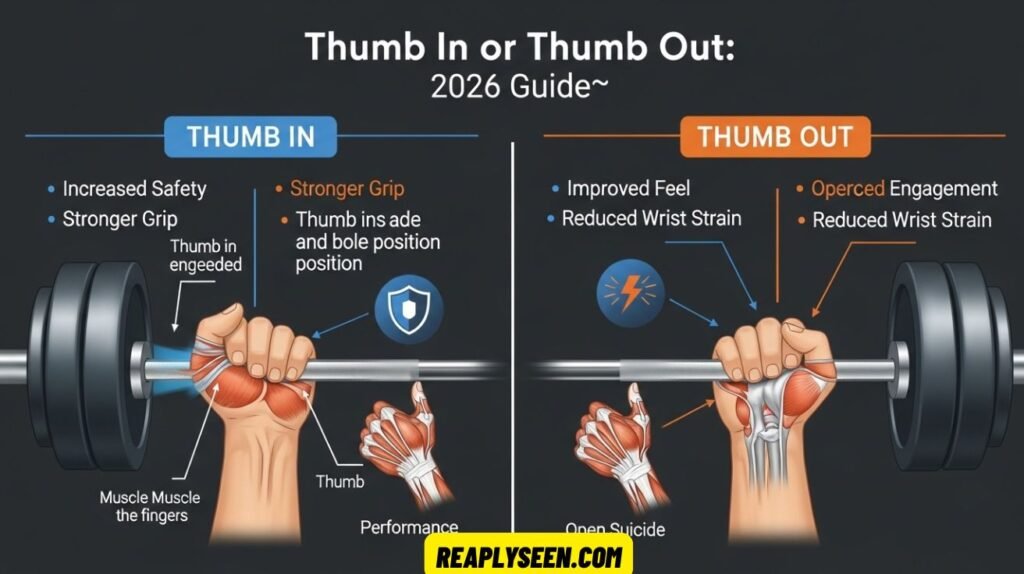
Since thumb in or thumb out is spelled the same worldwide, your focus should be on context rather than spelling. For a US audience, emphasize gym and MMA training and sports safety. Explain thumb positioning in the context of punching safety, weightlifting grip, or push-up thumb position. For a UK or global audience, you can reference self-defense techniques or boxing thumb rules.
When writing for international readers, it’s useful to describe both contexts. Doing so shows that the thumb rule is not just a cultural quirk but a universal guideline for strength and stability in the hands.
Common Mistakes with “Thumb In or Thumb Out” ⚠️
One of the most common mistakes is tucking the thumb inside the fist. This error can lead to thumb strain, sprains, and even broken bones. Beginners often overlook the importance of finger alignment in proper fist formation, focusing only on punching power.
Another mistake is keeping the thumb loose. Even if it is outside, a loose thumb reduces grip strength and weakens punches. Some people also misuse the phrase metaphorically, forgetting its physical origin. While it’s fine to use “thumb out” to indicate approval, overusing metaphors can dilute the practical meaning. Finally, writing it incorrectly, such as “thumbs in or out,” creates confusion. Always visualize a real fist to stay accurate in both writing and training.
Etc or Ect: The Correct Spelling with Examples in 2026
While discussing thumb in or thumb out, it’s worth noting a common English spelling mistake: “etc” vs “ect.” The correct spelling is etc., short for et cetera, meaning “and other things.” For example, “Bring gloves, wraps, etc.” is correct, while “Bring gloves, wraps, ect.” is wrong.
Proper spelling in writing helps maintain clarity, just as correct thumb positioning ensures safety in training.
“Thumb In or Thumb Out” in Everyday Examples 💬
The phrase has both literal and metaphorical uses. In training, coaches might say, “Thumb out if you love your fingers!” to emphasize correct fist technique. On social media, a thumbs-up represents approval, while a tucked thumb could humorously indicate hesitation.
In professional settings, you might ask, “So, what’s your thumb — in or out — on this proposal?” to gauge agreement. This shows how a simple rule in hand alignment in combat sports can become a versatile communication tool in everyday life.
Too Bad or To Bad – Learn the Right Spelling in 60 Seconds
English learners often confuse “too bad” and “to bad.” The correct form is too bad, expressing regret. For instance, “It’s too bad you missed the gym class today.” Using the wrong spelling, to bad, is incorrect. Just as improper thumb positioning leads to injury, improper spelling leads to confusion. Remembering simple rules ensures clarity and effectiveness in both training and communication.
See Also : Puting or Putting: Which Spelling Is Correct in 2026?
Thumb In or Thumb Out – Google Trends & Usage Data 📊
Google Trends data shows that thumb in or thumb out remains highly searched in the US, especially among fitness enthusiasts, MMA practitioners, and boxing fans. Interest is also rising in countries like India, Canada, and Australia. Usage peaks during sports seasons, indicating a strong connection between real-world training and online search behavior.
| Country | Popularity | Context |
| United States | High | Gym, MMA, Boxing |
| United Kingdom | High | Boxing, Self-defense |
| Canada | Moderate | General Training |
| India | Rising | Martial Arts Learning |
| Australia | Moderate | Fitness Blogs |
This data confirms that the question of thumb in vs thumb out debate is not only common in gyms but also a topic people actively research online, showing its relevance for training, safety, and technique.
Understanding the Thumb In or Thumb Out Debate
When learning combat sports or gym exercises, one of the first questions is thumb in or thumb out. This simple adjustment affects punching safety, grip, and overall hand performance. Beginners often overlook proper fist formation, risking injury while trying to increase power. Understanding the correct thumb position is the foundation of safe training and confidence in your technique.
Correct thumb positioning ensures your fist technique is effective and stable. By keeping your thumb outside, wrapped over the fingers, you prevent thumb strain and accidental sprains. This small adjustment supports strength and stability in both punches and push-ups. Following this rule consistently will help improve your hand alignment in combat sports or weightlifting exercises.
Why Thumb Position Matters in Punching
The way your thumb is positioned can make the difference between a strong, safe punch and an injury. When the thumb is tucked inside the fist, force is directed toward delicate joints, often causing thumb strain or breaks. Boxing thumb rules emphasize keeping the thumb outside to absorb impact and maintain finger alignment.
Proper martial arts hand form improves not only safety but also effectiveness. A thumb-out fist allows better hand alignment in combat sports, distributing force evenly across the knuckles. For MMA training tips and boxing, this ensures each strike is stable and powerful without risking unnecessary injury.
Common Mistakes Beginners Make
Many beginners make the mistake of tucking the thumb inside the fist, thinking it increases strength. This often leads to thumb injury, sprains, or broken bones. Ignoring punching safety can turn a simple exercise into a serious setback, especially during heavy bag workouts or sparring sessions.
Another frequent error is leaving the thumb loose or unaligned. A relaxed thumb reduces strength and stability, weakens punches, and affects weightlifting grip. Visualizing a correct fist with wrap thumb over fingers technique ensures consistent training without risking hand problems.
The Historical Roots of Thumb Rules
The “thumb in or thumb out” principle is not new. Ancient soldiers and gladiators learned early that fighter hand positioning was crucial for survival. Martial arts hand form and boxing thumb rules evolved over centuries to prevent injuries during combat, becoming standard in modern training and self-defense techniques.
Today, coaches still teach thumb-out fists in gym and MMA training. Following these boxing safety tips ensures every beginner can perform proper fist formation while protecting joints and muscles. History shows that safe hand alignment in combat sports is timeless advice.
Thumb Position Beyond Boxing
While commonly associated with boxing or MMA, the thumb in vs thumb out debate also applies to everyday fitness exercises. For push-ups, your push-up thumb position can prevent wrist strain and improve grip strength exercises. Keeping the thumb aligned outside the palm ensures stability and efficiency.
Even weightlifting requires attention to thumb positioning. A strong weightlifting grip depends on wrapping the thumb over the fingers, which reduces the risk of dropping weights and maintains strength and stability. Training safely is just as much about form as it is about power.
See Also : Girlie or Girly – Which Spelling Is Correct with Examples (2026)
Thumb Metaphors in Daily Life
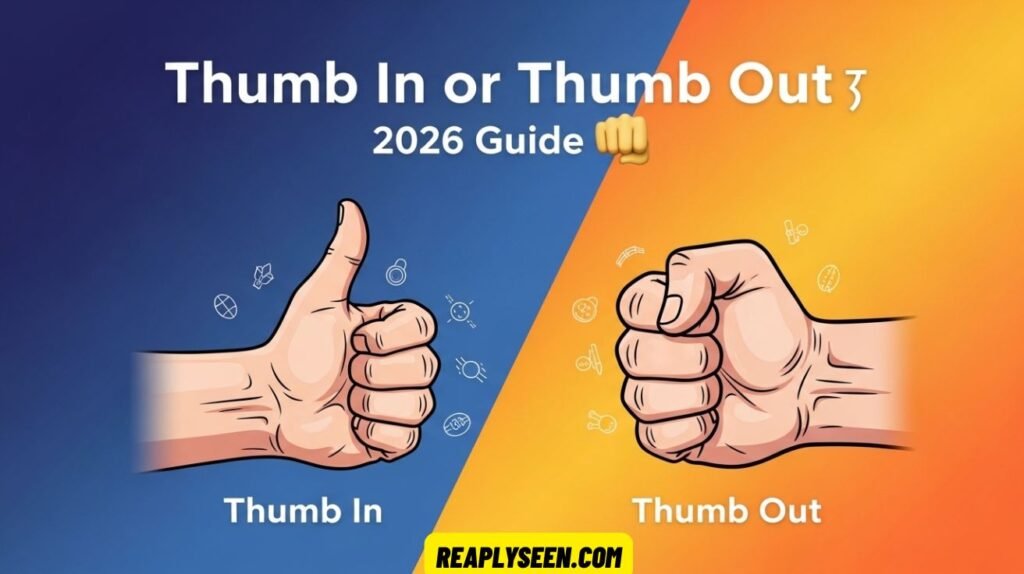
Beyond physical training, “thumb in or thumb out” has metaphorical use. For example, giving a thumbs-up symbolizes approval, while hiding your thumb may indicate hesitation. Understanding this metaphor can improve communication in social media, work, or casual conversation.
Even in emails or feedback, you can apply the concept. Asking “What’s your thumb — in or out?” can gauge agreement or commitment. This demonstrates how fighter hand positioning principles can extend beyond the gym, turning a simple martial arts hand form lesson into a versatile life tool.
Thumb Safety Tips for All Athletes
Protecting your thumbs during training is crucial. Always keep your thumb outside when punching or gripping equipment. This ensures proper finger alignment and reduces thumb strain, a common injury in boxing, MMA, and weightlifting. Even during bodyweight exercises, correct push-up thumb position protects your wrists and palms.
Using boxing safety tips and consistent form helps beginners avoid common mistakes. Visualizing the thumb wrapping over fingers strengthens grip strength exercises and improves stability. This simple adjustment supports strength and stability, preventing injuries while maximizing training efficiency.
Training Habits to Keep Your Thumb Safe
Developing good habits ensures safe, effective training. Always start exercises with proper thumb positioning and hand alignment in combat sports. Coaches recommend practicing slow punches to reinforce fist technique before increasing power.
Regularly checking your form prevents mistakes like tucking the thumb inside. Practicing wrap thumb over fingers during gym and MMA training reinforces correct technique. Proper thumb positioning enhances strength and stability, allowing athletes to train harder, longer, and safer.
FAQs
What is the thumb thing for couples?
The thumb thing for couples usually means linking pinkies or thumbs as a cute, affectionate gesture.
What does “thumbs up” mean in slang?
“Thumbs up” in slang represents approval, agreement, or giving a positive response.
How do you use thumb in a sentence?
You can say: “He gave a thumbs-up after finishing the task.”
Do I punch with my thumb in or out?
You should always punch with your thumb out, wrapped over your fingers for safety.
Conclusion
The Thumb In or Thumb Out rule is very important for safety and strength. Keeping your thumb outside when making a fist helps protect it from injury. It also makes your hand stronger and more stable. Whether you are punching a bag, doing martial arts, or lifting weights, the right thumb position keeps your fingers safe. Following this simple rule improves your fist technique and prevents pain in your thumb.
Learning the Thumb In or Thumb Out rule helps in everyday training and exercises. Practicing the correct thumb position builds confidence and keeps your hands healthy. Always wrap your thumb over your fingers and avoid tucking it inside. This habit makes all your punches and grips safer and more powerful.