Relieving vs Reliving Explained with Simple Examples in 2026
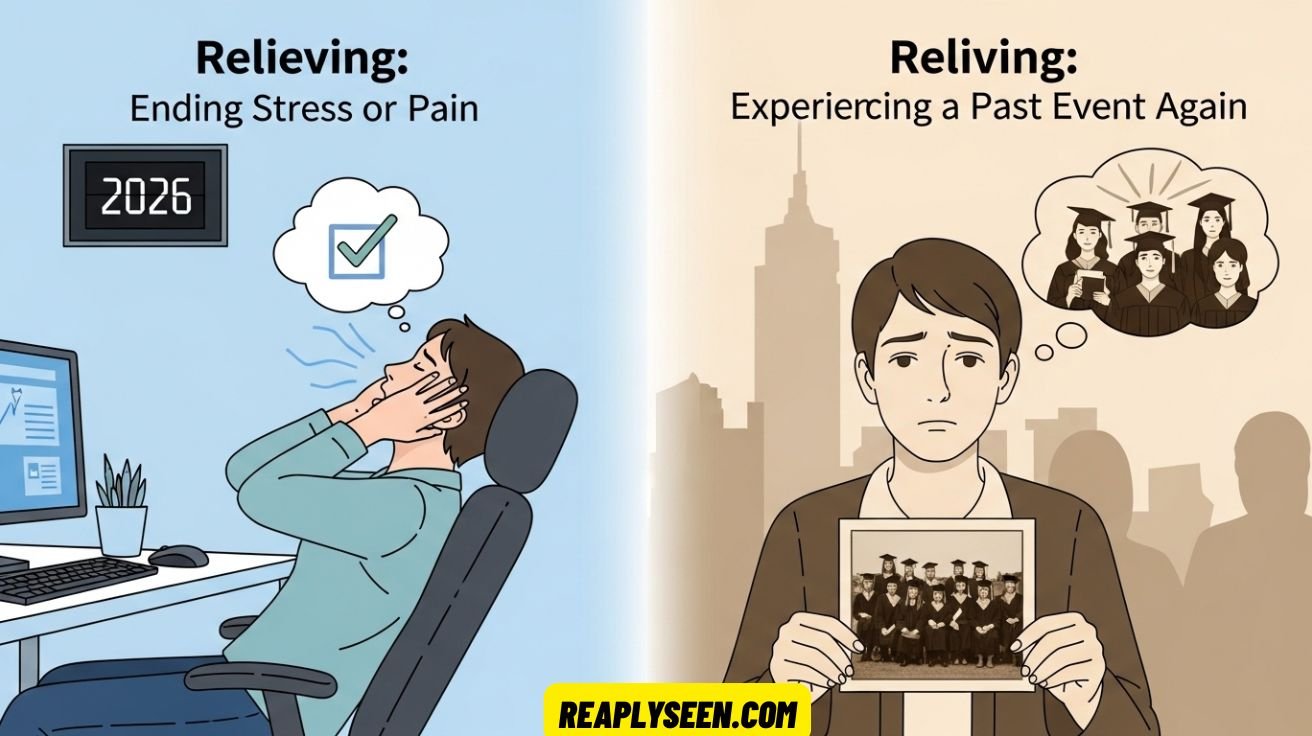
Many people confuse Relieving vs Reliving because they sound similar. Relieving means making stress or pain go away. Reliving means experiencing a memory or event again. These words are different, and using the wrong one can change your sentence.
Have you ever typed a word and stopped, unsure if it is right? This happens with Relieving vs Reliving. Using the correct word makes your writing clear. It also helps readers understand exactly what you mean.
Relieving vs Reliving appears in emails, essays, and social media posts. Relieving shows comfort and ease. Reliving shows memory or past events. Knowing the difference improves your writing and helps avoid mistakes.
Relieving or Reliving – Quick Answer
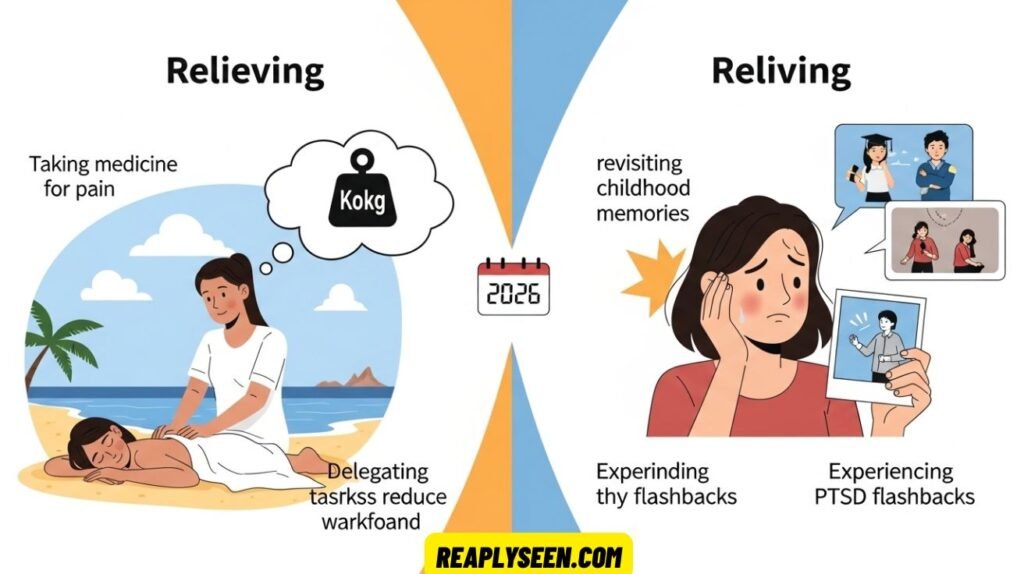
The simplest way to remember the difference between relieving and reliving is to focus on their meanings. Relieving is all about reducing pain, stress, or discomfort. It is about comfort and emotional relief. For example, a warm bath after a long day can be relieving, helping your body and mind feel relaxed. On the other hand, reliving means experiencing something again, usually a memory or past event. When you think back to your childhood birthday parties or relive a moment of success, you are experiencing that memory in your mind again.
A quick trick to avoid confusion is this: feel better = relieving, remember again = reliving. Understanding this distinction is the first step toward mastering correct English word usage and avoiding common English mistakes.
Examples
To understand relieving vs reliving better, consider these examples in real-life situations.
If you are talking about comfort or easing stress, you would say, “Taking a break after the exam was very relieving.” Here, the focus is on reducing tension. Similarly, “A long walk in the park was relieving for her after a stressful day at work,” highlights emotional relief.
In contrast, when talking about memories or past experiences, reliving is correct. For instance, “She was reliving her high school graduation day in her mind,” shows her mentally experiencing the event again. Another example is, “Watching old videos of her childhood made her relive joyful moments,” which emphasizes experiencing events again and recalling memories.
These examples make it clear that comfort vs memory is the main difference between relieving meaning and reliving meaning.
The Origin of Relieving and Reliving
Understanding the origin of these words can also help with correct usage. Relieving comes from the verb relieve, which has roots in Latin relevare, meaning “to lift up or lighten.” This explains why the word is linked to comfort, easing stress, and providing emotional relief. On the other hand, reliving comes from the combination of re- (again) and live.
This formation highlights the idea of experiencing a situation again, especially through memories. Knowing the origins helps writers remember that reducing stress vs experiencing memories is the central difference.
British English vs American English Spelling
If you are writing for a USA audience, you might wonder whether British and American English differ for these words. Fortunately, there is no difference. Both relieving and reliving are spelled the same in British and American English. The confusion is purely about meaning rather than spelling.
| Word | British English | American English | Meaning |
| Relieving | ✔ Same | ✔ Same | Reducing stress or pain |
| Reliving | ✔ Same | ✔ Same | Experiencing again, memory recall |
This table shows that you don’t need to worry about spelling, but focusing on grammar and word choice is essential.
Which Spelling Should You Use?
Choosing between relieving and reliving depends entirely on context. If your sentence is about comfort, ease, or emotional relief, use relieving. For example, “The meditation session was relieving after a long day of work.” If your sentence refers to memories, experiences, or past events, choose reliving. For instance, “Reading the old diary made him feel like he was reliving his teenage years.”
For writers in the USA and globally, the key is to focus on meaning first. Using the correct word improves writing clarity and helps avoid confusing words in English.
Audience Advice
For students preparing for exams, it is crucial to remember that relieving vs reliving mistakes often come from relying on sound rather than meaning. Always ask yourself, “Am I talking about comfort or a memory?”
Professional writers should double-check sentences to ensure readers clearly understand whether the text refers to emotional relief or experiencing events again. For a global audience, both words are standard, but misusing them can reduce clarity and professionalism. Learning vocabulary tips for writers such as these improves overall writing quality.
Common Mistakes with Relieving or Reliving
A very common mistake is using relieving when you actually mean reliving. For example, saying “She was feeling relieving her childhood memories” is incorrect because memories are being experienced, not stress being reduced. Similarly, using reliving to describe comfort is wrong: “Taking a hot shower was reliving after a long day” should be “relieving.”
Writers can avoid these mistakes by keeping a mental checklist: comfort = relieving, memory = reliving. Recognizing the difference between relieving and reliving ensures correct English word usage and avoids common English mistakes.
Relieving or Reliving in Everyday Examples
Emails
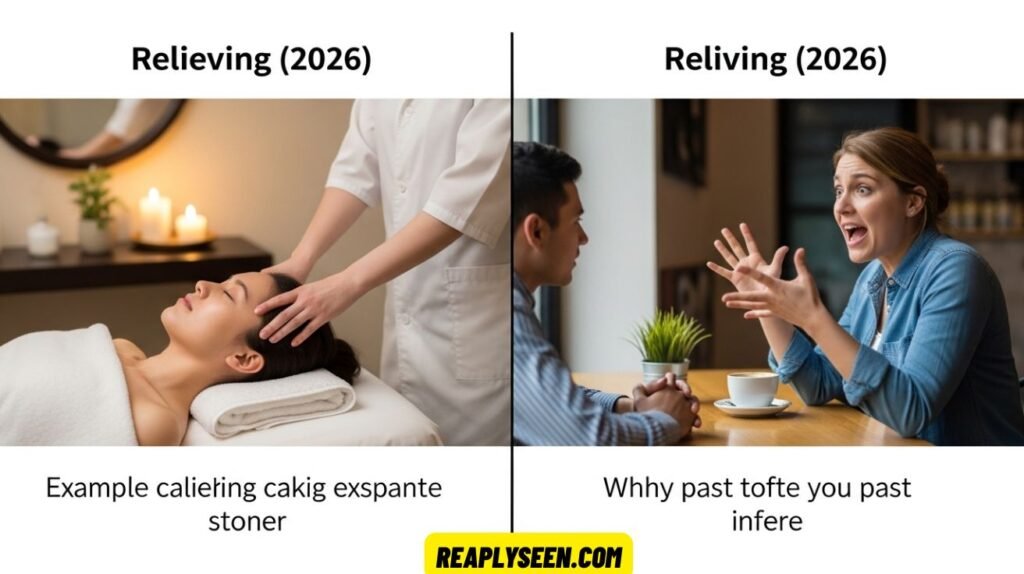
In professional emails, you might write, “Your kind words were very relieving during a stressful project.” If discussing shared experiences, you could write, “Reading your email made me feel like I was reliving our last team event.”
News
News articles often use reliving for reporting traumatic events: “The survivor described reliving the accident in vivid detail.” Meanwhile, reports on healthcare or therapy might use relieving: “The new program was relieving for patients struggling with stress.”
Social Media
Social media posts frequently mix these words incorrectly. Correct usage would be: “Watching old photos feels like reliving my childhood.” Or, “Your comment was so kind, it was truly relieving after a rough day.”
Formal Writing
Academic or formal writing emphasizes precision. For instance, “The therapy had a relieving effect on participants” versus “The historian described reliving historical events in his book.”
These examples show how context determines the choice between relieving vs reliving, reinforcing the importance of writing clarity and avoiding confusing words in English.
Relieving or Reliving – Google Trends & Usage Data
Search trends in the USA show that relieving is more commonly searched in topics related to health, wellness, and stress management, whereas reliving is often associated with psychology, storytelling, and memory recall.
Global searches indicate that learners and writers frequently look for guidance on how to use relieving and reliving correctly. This demonstrates the practical need for clarity in English writing and highlights how stress relief examples and memory recall examples are common contexts for each word.
Relieving vs Reliving – Comparison Table
| Feature | Relieving | Reliving |
| Part of Speech | Verb / Adjective | Verb |
| Core Meaning | Reducing pain or stress | Experiencing again |
| Emotional Context | Comfort, ease | Memory, past events |
| Interchangeable? | ❌ No | ❌ No |
This table provides a quick reference to help remember that relieving meaning focuses on comfort, while reliving meaning focuses on experiencing events again.
Understanding Relieving vs Reliving
Many writers confuse relieving vs reliving because the words look similar. Relieving refers to easing stress, pain, or discomfort, while reliving focuses on experiencing events again, especially memories. Understanding the difference is crucial for accurate English word usage and avoiding common English mistakes.
When you know the distinction, it improves your writing clarity. For example, after a stressful day, a warm shower is relieving, but thinking back to your childhood birthday is reliving. Recognizing comfort vs memory helps writers communicate effectively.
See Also : Shiny vs Shiney: Grammar Made Simple for 2026
The Emotional Impact of Relieving
Relieving is often associated with emotional relief and stress reduction. Activities like meditation, exercise, or talking to friends provide comfort, making your mind and body feel lighter. In writing, using relieving correctly ensures your reader understands that the focus is on easing tension, not recalling past experiences.
Using relieving meaning correctly strengthens sentences in professional and personal writing. For example, saying “The massage was relieving” clearly conveys comfort, whereas misusing reliving in this context would confuse readers. Writers can avoid confusing words in English by focusing on context.
The Power of Reliving Memories
Reliving involves mentally experiencing events again, often with strong emotions. Whether recalling childhood moments, past achievements, or even mistakes, reliving meaning allows readers to connect with your experiences. Stories or social media posts often use reliving to create emotional resonance.
When you describe an event, always ask: “Am I talking about memory or comfort?” Using reliving vs relieving correctly enhances storytelling and writing clarity, making readers feel the emotion of the moment. This is essential for students, bloggers, and professional writers alike.
How to Use Relieving and Reliving Correctly
Knowing how to use relieving and reliving starts with context. If the focus is reducing stress vs experiencing memories, choose the correct word accordingly. For comfort or ease, use relieving; for memories, choose reliving. This helps prevent common English mistakes in essays, emails, and social media posts.
For professional writing, paying attention to grammar and word choice ensures precision. Even subtle mistakes in relieving vs reliving can change meaning. Writers can improve their English word usage by practicing examples and memorizing comfort vs memory rules.
Relieving vs Reliving in Daily Life
In everyday life, the difference between relieving vs reliving shows up constantly. A good night’s sleep or a warm cup of tea can be relieving, offering emotional comfort. On the other hand, revisiting old photographs or hearing a familiar story may trigger reliving, bringing past experiences to mind.
Being aware of this distinction improves how you communicate feelings and events. Writers should remember that stress relief examples involve comfort, whereas memory recall examples involve experiencing events again, helping avoid confusing words in English in daily writing.
Common Mistakes Writers Make
One frequent error is using relieving when talking about memories. For instance, “She felt relieving her childhood vacation” is incorrect. Similarly, saying “The hot shower made her feel reliving” is wrong because the focus is comfort, not memory. Recognizing difference between relieving and reliving prevents such mistakes.
Correcting these mistakes improves writing clarity and enhances reader understanding. Writers can rely on vocabulary tips for writers to remember that comfort is relieving and memory is reliving. Practicing these distinctions strengthens English skills over time.
Relieving or Reliving in Emails
Emails often require precise wording to avoid misunderstanding. For example, writing, “Your support was very relieving” communicates comfort effectively. In contrast, saying, “Reading your email made me feel like I was reliving our meeting” conveys a memory or experience. Correct use ensures English word usage clarity.
Using relieving vs reliving accurately in professional communication shows attention to detail and prevents confusion. Writers can use writing clarity to strengthen messages, ensuring the reader understands whether the focus is emotional relief or memory recall.
Relieving or Reliving on Social Media
Social media posts often mix up relieving vs reliving. A post like “Watching old videos feels reliving” correctly conveys memory recall. Conversely, “Your comment was so kind, it was relieving” emphasizes emotional relief. Using the correct word makes posts clear and relatable.
Content creators must understand how to use relieving and reliving correctly. Sharing experiences or stress relief moments benefits from accurate English word usage, enhancing engagement and avoiding confusing words in English for readers.
Relieving vs Reliving in News and Media
Journalists frequently use reliving to describe memories or trauma: “The survivor described reliving the accident.” Meanwhile, health articles may describe comfort, for example: “Meditation provides relieving effects for patients.” Knowing the difference improves writing clarity and professionalism.
Using relieving vs reliving correctly in media writing helps the audience understand whether the story focuses on emotional relief or experiencing events again. Writers benefit from knowing the difference between relieving and reliving, which strengthens overall English word usage.
See Also : Nosey or Nosy – Which Spelling Is Correct with Examples in 2026
Tips for Remembering Relieving vs Reliving
A helpful tip is to link relieving with comfort and reliving with memory. Remember: comfort vs memory is the key distinction. Practice using examples in emails, stories, and posts to reinforce this knowledge. Writers who focus on writing clarity rarely confuse the words.
Additionally, understanding the origins of the words, relieve vs relive, can help. Relieving comes from lifting or lightening, while reliving comes from experiencing again. These small cues improve grammar and word choice, reduce common English mistakes, and make your writing professional and clear.
FAQs
What is the difference between relieving and reliving?
Relieving means reducing stress, pain, or discomfort, while reliving means experiencing a memory or event again.
What does relieving you mean?
It means making you feel comforted, relaxed, or less stressed.
What does reliving something mean?
It means mentally experiencing a past event or memory again.
What is the past tense of relieve?
The past tense of relieve is relieved.
Conclusion
Understanding Relieving vs Reliving helps you use English words correctly. Relieving talks about comfort and feeling better, like when you rest after a long day or take a warm bath. Reliving talks about thinking about past events or memories, like remembering your birthday or a fun trip. Using the right word makes your writing clear and easy to understand. It also shows that you know the difference between comfort and memory.
When you write emails, stories, or social media posts, knowing Relieving vs Reliving is very helpful. Always think about what you want to say. Comfort or memory? Using these words correctly improves your writing clarity and makes your sentences strong. Practice helps you remember the difference.