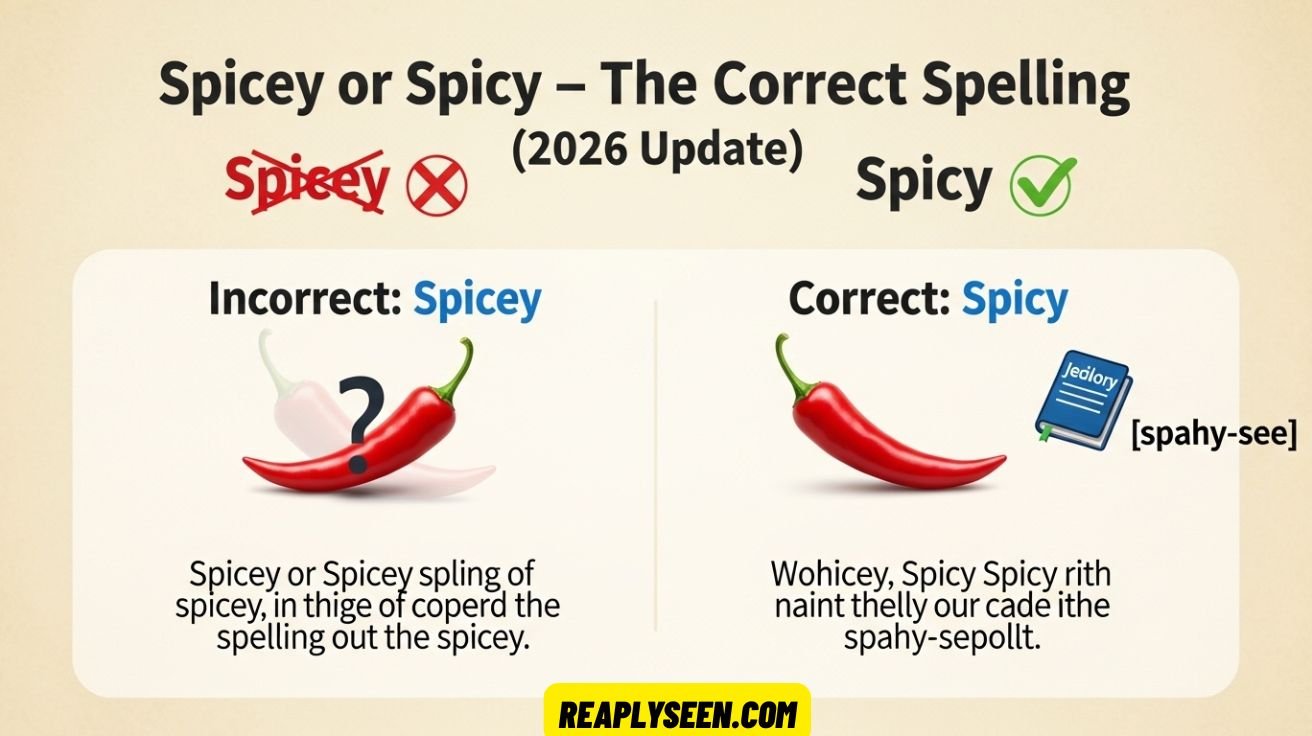
🌶️Spicey or Spicy – The Correct Spelling (2026 Update)
Spicey or Spicy means full of flavor or strong taste. It can also describe something exciting or bold. The correct spelling is spicy, not spicey.
Many people type spicey by mistake. It looks like it could be right. This small error can make writing look wrong.
Spicy is used in food, stories, and even fun sayings. It follows simple English spelling rules. Using spicy correctly makes writing clear and professional.
Spicey or Spicy – Quick Answer 🧠
The quick answer is simple: the correct spelling is spicy. Spicey is a common misspelling and is not recognized in standard English, whether in the United States or other English-speaking countries. The word spicy spelling follows simple English spelling rules, and once you understand the logic, you can write it correctly every time.
For example, if you are writing a recipe, you would say, “This curry is very spicy,” not “This curry is very spicey.” Using spicy is not only correct but also looks professional in professional writing spelling, blogs, or social media posts. Remember that how to spell spicy correctly is consistent across all contexts.
The Origin of Spicey or Spicy 📜
Understanding why people get confused between spicey vs spicy starts with history. The word “spicy” comes from Middle English word origins and Old French. It is derived from the word espice, which means spice. The adjective form “spicy” appeared in English during the 16th century and originally meant “full of spice or flavor.” Over time, it also began to be used metaphorically to describe something exciting or bold, like a “spicy comment.”
The confusion with “spicey” likely comes from other adjectives in English that sometimes end with “-ey,” such as “dicey” or “pricey.” However, the grammar rules for adjectives state that when adding a “y” to a word ending with a silent “e,” you drop the “e.” This is why “spice → spicy,” not “spicey.” Similar examples include “ice → icy,” “juice → juicy,” and “lace → lacy.” These spelling tips help avoid common English misspellings.
British English vs American English Spelling 🇬🇧🇺🇸
When it comes to British vs American spelling, there is no debate: both agree that the correct spelling is spicy. There is no alternate version of the word in either variant of English. Understanding words ending in -ce + y can help you remember the rule for similar adjectives.
Here is a table showing some examples of this pattern:
| Base Word | Correct Form | Incorrect Form | Example Sentence |
| Spice | Spicy | Spicey | This meal is spicy and flavorful. |
| Juice | Juicy | Juicey | Fresh fruits make juicy snacks. |
| Ice | Icy | Icey | The roads are icy today. |
| Space | Spacey | Spacy | The design feels a bit spacey. |
| Grace | Gracy | Gracey | She moves with a graceful style. |
This table clearly shows that dropping the “e” before adding “y” is consistent. Learning these patterns improves your adjective spelling in English and helps you avoid spelling mistakes in your writing.
Which Spelling Should You Use? 🌍
The answer is clear: always use spicy. This applies to American English, British English, and even content aimed at global audiences. Using spicey may confuse readers or appear as a typo.
In professional writing spelling, you should always double-check. For emails, blogs, or recipes, “spicy” ensures your message is taken seriously. For example, in a recipe you would write, “Add one teaspoon of spicy chili powder for flavor.” On social media, you could say, “Feeling spicy today! 🌶️🔥”
No matter your audience, remembering how to spell spicy correctly will make your content polished and clear. Spicy in recipes and spicy flavor description are consistently written with “y,” not “ey.”
Common Mistakes with Spicey or Spicy ⚠️
Even experienced writers sometimes fall into the spicey vs spicy trap. One common mistake is typing spicey instead of spicy in recipes, blog posts, or emails. Some people assume that spicey is British English, but dictionaries like Oxford, Cambridge, and Merriam-Webster all reject it.
Another common error is adding an extra “e” out of habit. The pronunciation may make it sound like there should be an “e,” but English is not always phonetic. To help, think of ice → icy and juice → juicy. These spelling tips follow the same English spelling rules.
Correct examples include:
Incorrect: The salsa was very spicey.
Correct: The salsa was very spicy.
Using spicy spelling correctly ensures your writing looks professional and avoids common English misspellings that can distract your readers.
Spicey or Spicy in Everyday Examples ✍️
The word spicy appears in many everyday contexts. In emails, a chef might write, “Please make the dish less spicy for the next event.” In blogs or news articles, one could say, “This new restaurant serves spicy street food in New York City.” On social media, users often write playful phrases like, “Feeling spicy today! 🌶️” or “Who can handle this level of spicy ramen?”
Even in formal writing, spicy flavor description is important. For example, “The cuisine is known for its spicy flavors and aromatic herbs.” No matter where you use it, spicy in recipes, emails, or blogs, the correct spelling is always spicy.
Spicey or Spicy – Google Trends & Usage Data 📈
Looking at Google Trends shows how Americans search for this term. In the United States, over 99% of searches use spicy, while spicey barely appears. This indicates that most people recognize the correct spicy spelling, but some second-guess themselves.
Globally, the trend is similar. In countries like Canada, Australia, and the UK, spicy dominates searches. Spikes in spicey searches are usually due to people checking their spelling or guessing.
Using spicy ensures clarity in both professional writing spelling and casual content. It also aligns with English spelling rules for adjectives ending in “-ce + y,” reinforcing that spicey is never correct.
See Also : Relieving vs Reliving Explained with Simple Examples in 2026
Understanding Spicey or Spicy Confusion
Many people wonder whether to write spicey or spicy, and it’s easy to see why. The word looks like it could have an “e,” especially since similar adjectives in English sometimes end with “-ey.” Knowing the difference helps you avoid common English misspellings and ensures your writing looks professional, whether in recipes, emails, or social media posts.
The key to understanding the correct form is to follow English spelling rules for adjectives. When a word ends in a silent “e,” you usually drop the “e” before adding “y.” That’s why the correct spelling is spicy, not spicey. This simple rule applies across both American and British English.
Spicey vs Spicy – Quick Answer
The correct and dictionary-approved spelling is always spicy. Using spicey is considered a mistake, and most spellcheckers will flag it instantly. Whether you are writing a blog, a recipe, or a professional email, sticking to spicy spelling ensures clarity and avoids confusion.
People often get it wrong because of words like “dicey” or “pricey,” which do end in “-ey.” But how to spell spicy follows a consistent pattern seen in other adjectives like “icy” or “juicy.” By remembering this simple rule, you can confidently use spicy every time.
The History Behind Spicy
The word spicy comes from Middle English word origins and Old French, derived from espice, meaning spice. Originally, it described foods that had a lot of flavor. Over time, it also developed a metaphorical meaning, describing something exciting, bold, or lively.
Understanding its history helps avoid mistakes like spicey, which has no historical or dictionary support. By learning adjective spelling in English patterns, such as dropping the “e” before adding “y,” writers can avoid spelling mistakes in both casual and professional contexts.
British vs American English Rules
When it comes to British vs American spelling, both agree that spicy is correct. There are no alternate forms in either variant, making it easy for writers to choose the right version. English learners and native speakers alike benefit from understanding these simple patterns.
Words ending in -ce + y often follow this rule. Examples include “ice → icy” and “juice → juicy.” Knowing this pattern strengthens your understanding of grammar rules for adjectives and helps you avoid common English misspellings in your writing.
Common Mistakes with Spicey
Many writers incorrectly use spicey, thinking it might be British English or more visually correct. This error appears most often in recipes, blogs, and social media posts. Being aware of these spelling mistakes ensures your content looks polished and professional.
The key to avoiding mistakes is to practice how to spell spicy correctly. Comparing with other adjectives like “dicey” or “juicy” can help. Remember that spicy spelling is consistent and accepted globally, and there’s never a situation where spicey is correct.
Using Spicy in Everyday Writing
Spicy is a versatile adjective used in many contexts, from recipes to emails. For example, “This chili is very spicy” is correct, while “spicey” would be flagged as a spelling mistake. Using it correctly helps communicate your message clearly and professionally.
Even in social media or informal writing, “spicy” works well. You might write, “Feeling spicy today!” This shows the word’s spicy meaning in English, which can describe flavor, excitement, or boldness. Using the correct spelling consistently reinforces your writing credibility.
Spicy in Recipes and Flavor Descriptions

In cooking, spicy in recipes is one of the most common uses. Describing flavors accurately is important for chefs, food bloggers, and content creators. Saying, “Add a spicy sauce” ensures your instructions are clear and professional.
A spicy flavor description helps readers understand the intensity and character of a dish. Avoid using spicey, as it is not recognized in dictionaries. By mastering spicy spelling, your culinary content will remain polished and authoritative.
See Also : Shiny vs Shiney: Grammar Made Simple for 2026
Tracking Spicy Trends Online
Google searches show that in the USA, spicy is overwhelmingly more popular than spicey, with over 99% of users searching for the correct spelling. This reflects how most people follow proper English spelling rules and understand how to spell spicy correctly.
Even though some people temporarily type spicey when unsure, global usage data confirms that spicy spelling dominates in recipes, blogs, and social media. Following the correct form aligns your writing with modern trends and professional standards.
FAQs
What does “spicy” mean?
It means full of spice or flavor, or metaphorically, exciting and bold.
What is the superlative of spicy?
The superlative form is spiciest.
What is the spelling of spicy?
The correct spelling is spicy, never spicey.
What’s the difference between hot and spicy?
“Hot” refers to temperature or heat, while “spicy” refers to strong flavor or seasoning.
Conclusion
We learned that the correct spelling is always spicy, not spicey. The word describes food full of flavor or something exciting and bold. People sometimes make mistakes because it looks like it could have an “e,” but following simple English spelling rules helps. Writers should use spicy spelling in recipes, emails, blogs, and social media. Using the right spelling makes writing clear, professional, and easy to read.
Understanding spicey or spicy is important for everyone who writes in English. Remember to drop the “e” and add “y” for adjectives like this. Using spicy correctly shows confidence and care in your writing. Always check your words and stay consistent to avoid common English misspellings.