Admitted vs. Accepted – Difference Explained
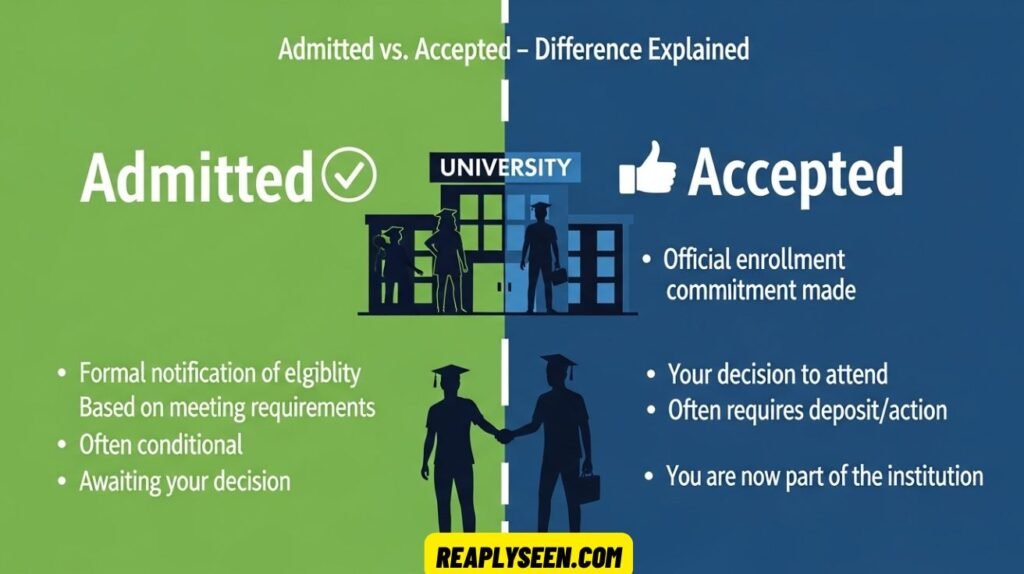
Admitted vs. Accepted means two different things in college admissions. Being admitted means the college gives you a place because you meet all the requirements. Being accepted means you agree to take that place and start the enrollment process.
Many students feel confused when they get college letters. They may celebrate too early or misunderstand the steps. Knowing the difference between admitted vs. accepted makes the process easier and less stressful.
Understanding admitted vs. accepted helps students plan carefully. You can check deadlines, pay deposits, and confirm your college spot. Learning these terms gives confidence and makes your college journey smoother.
Understanding the Basics of College Admission Language

Colleges in the United States carefully choose the words they use in decision letters because each term carries legal and emotional weight. College admission terminology can be confusing for students who are new to the process. Words like admitted, accepted, and enrolled have specific meanings in the context of a college acceptance process. A student who is admitted has been reviewed and offered a place, but until they officially respond and pay their deposit, the college only knows they are qualified.
On the other hand, when a student is accepted, it usually means that they have confirmed their choice and are ready to commit to the enrollment process. Understanding this language is crucial for making informed decisions and avoiding unnecessary stress.
What It Means to Be Admitted
Being admitted means that a college or university has reviewed your application and determined that you meet the necessary admission requirements. You receive an admission letter or college acceptance letter that officially confirms your university admission status. At this stage, you are not yet obligated to attend, but you are recognized as a qualified candidate. This is an important distinction because many students are admitted to multiple colleges and must choose only one to confirm their college spot.
For example, if a student receives a letter saying, “Congratulations! You have been admitted to the Class of 2029,” it means the school has completed its holistic college review and officially recognized the student as eligible. However, it does not yet reflect the student’s personal decision to attend. Many colleges, especially competitive ones, also issue conditional admission letters if certain requirements, like final transcripts or test scores, are still pending.
Table 1: Admitted vs Accepted – Key Features
| Term | Meaning | Status |
| Admitted | College officially offers you a spot | Non-binding; student may accept or decline |
| Accepted | Student confirms the college’s offer | Binding once deposit is paid and enrollment is completed |
| Enrolled | Student completes student enrollment process | Fully registered; ready to start classes |
What It Means to Be Accepted
From a student’s perspective, being accepted often feels like the moment of triumph. Saying “I got accepted to UCLA” is common, even if the technical term for what the college did is “admitted.” In college language, a student is accepted only when they respond to the acceptance notification and commit to the school. This distinction matters because it affects the college acceptance process and the way the student approaches their college admission journey.
For instance, a student may receive offers from three schools: UCLA, the University of Michigan, and Boston College. Being admitted to all three is a success, but the student is only accepted at the school they choose to attend. At this point, the college receives confirmation, and the enrollment process begins. Financial aid packages, scholarships, and personal preferences all influence which college the student ultimately accepts, showing how financial aid and acceptance decisions are closely linked.
Admission Types and What They Really Signify
Not all admissions are the same, and colleges in the USA use different systems with varying levels of commitment. Understanding the distinction between Early Decision vs Early Action and other types of admission is essential for students navigating the college acceptance vs admission landscape. Binding vs non-binding offers are a critical consideration.
Early Decision (ED) is a binding offer. If a student is admitted under ED, they must accept and commit to attending unless financial aid falls short. Early Action (EA) is non-binding, allowing students to apply early and receive an acceptance notification, but they can still compare multiple offers before deciding. Regular Decision follows a standard timeline, and students receive decisions in spring. Rolling Admission evaluates applications as they arrive until all spots are filled, and Open Admission is common in community colleges, where anyone with a diploma or equivalent may be admitted.
Each type of admission affects the student’s college admission journey differently. Students should carefully read their college acceptance letters to understand deadlines, obligations, and whether the offer is binding.
Conditional Admission and Conditional Acceptance
Sometimes a student’s admission letter comes with stipulations, called conditional admission. This means the college has evaluated the student’s application favorably but requires certain conditions to be met, such as maintaining a minimum GPA, submitting final transcripts, or completing prerequisite courses. Conditional admission ensures that the student fulfills all admission requirements before fully joining the college community.
Conditional acceptance is slightly different. It often applies to specialized programs within the school. For example, a student may be conditionally accepted into an honors program, meaning they must complete certain courses or achievements after enrollment to remain in the program. Understanding the difference between conditional admission and conditional acceptance helps students navigate the college acceptance process and ensures they remain eligible for their chosen program.
Deferred, Referred, and Waitlisted: Clearing the Confusion
Not all applications receive a clear yes or no. Many students are placed in deferred, referred, or waitlisted status. Deferred admission occurs when an early application is moved to the regular decision pool for additional review. A referred application is evaluated by a different committee or department, often due to borderline academic metrics. Being a waitlisted student means that admission is possible if space becomes available, but nothing is guaranteed.
For example, a student applying Early Action to Princeton may be deferred. Their application is re-evaluated in the regular pool, and they may later be admitted, denied, or remain waitlisted. Students in these positions must continue strong academic performance and update the college with new achievements, keeping in mind the complexities of student enrollment and the college acceptance process.
Denied, Withdrawn, or Canceled Applications
Rejection is a natural part of the college admission journey. Denied applications indicate that the college has reviewed the file and decided not to offer a spot. Withdrawn applications occur when a student voluntarily removes themselves from consideration before a decision is made. Canceled applications are rare but occur if the college discovers missing documents, false information, or failure to meet conditions.
According to the National Association for College Admission Counseling (NACAC), around 36% of selective US colleges rescind or cancel admission offers annually due to final transcript issues or conduct violations. Understanding these statuses allows students to respond appropriately and plan for alternative options.
See Also : Too Many or To Many? Grammar Explained (With Examples for Clear English Writing)
Evaluating Admission and Acceptance in Today’s Context
The landscape of US college admissions has changed dramatically. Increased competition, holistic college review, test-optional policies, and the link between financial aid and acceptance all influence student decisions. For example, a student admitted to a private university without aid may weigh options differently from a student admitted to a state university with a full scholarship.
The college acceptance vs admission distinction is crucial because the student’s final decision affects confirming college spot, paying deposits, and initiating student enrollment. Understanding trends, policies, and financial implications empowers students to make confident, informed choices.
Practical Advice for Students
Once students understand the difference between admitted vs accepted, they can approach their decisions with clarity. Reading the college acceptance letter carefully for deadlines and conditions is essential. Students should compare offers based on academics, financial aid, and campus culture before committing.
Paying the enrollment deposit secures the student enrollment, while backup plans are necessary for those who are deferred or waitlisted. Maintaining strong grades, updating colleges with achievements, and exploring transfer options are all part of managing the college admission journey. By following these steps, students can turn uncertainty into confidence and fully embrace the next stage of their academic life.
The Common Confusion Between Admitted and Accepted
Many students in the USA often mix up the terms admitted and accepted. While both relate to college offers, their meanings are different. Being admitted means the college has reviewed your application and offered you a spot. Saying you are accepted usually refers to when a student confirms their decision and starts the enrollment process, which is a separate step.
This confusion can create unnecessary stress. Students may celebrate too early or feel unsure about deadlines. Understanding college admission terminology ensures clarity. A clear grasp of these words helps students navigate their college admission journey confidently, avoid mistakes, and make informed decisions regarding college acceptance letters and their chosen universities.
Understanding What “Admitted” Really Means
Being admitted means a college has officially recognized that you meet their admission requirements. You receive an admission letter that states your university admission status, but it is not yet binding. The college is still waiting to see whether you will respond to their offer, pay deposits, and begin the enrollment process.
Many colleges may issue conditional admission if some requirements are incomplete, like final transcripts or test scores. This means students are approved but must fulfill specific conditions before fully joining. Recognizing the admitted meaning helps students plan their next steps carefully and understand the difference from accepted meaning in the college acceptance process.
What Being “Accepted” Signifies for Students

From a student’s viewpoint, being accepted feels like the ultimate achievement. It usually means they have responded positively to the college’s offer and are ready to commit. At this stage, the student begins the enrollment process, confirming their college spot officially. While the college sees this as a formal acceptance, students experience a sense of accomplishment and inclusion.
Students must also consider financial aid, scholarships, and personal preferences when accepting an offer. The difference between accepted meaning and admitted meaning matters because it determines deadlines, deposits, and program commitments. Being aware of these nuances ensures students navigate their college admission journey effectively.
Early Decision, Early Action, and Regular Admissions
Not all admissions are the same, and the type of offer can impact the student’s commitment. Early Decision vs Early Action is a key distinction in the USA. Early Decision is binding, meaning if a student is admitted under this plan, they must accept unless financial aid is insufficient. Early Action is non-binding, allowing flexibility in the college acceptance process.
Regular and rolling admissions also differ in timelines. Students can compare multiple offers before responding, making it essential to understand college admission terminology. By knowing whether an offer is binding or not, students can manage their student enrollment decisions carefully, ensuring they meet deadlines without unnecessary pressure.
Conditional Admission and Conditional Acceptance Explained
Conditional admission occurs when a college approves a student but requires certain conditions, such as maintaining a GPA, completing courses, or submitting missing documents. This ensures the student meets all admission requirements before starting their academic program. Conditional approval is common in specialized tracks or programs.
Conditional acceptance, however, often applies after a student responds positively and joins a program, such as honors or accelerated courses. Understanding this distinction helps students make informed choices in their college acceptance process and ensures they complete the enrollment process successfully without confusion.
Deferred, Referred, and Waitlisted Applications
Sometimes colleges need more time to evaluate an application. Deferred admission means an early application is moved to the regular pool for comparison. A referred application is reviewed by another department or committee, while being waitlisted puts a student in a holding position, waiting for space to open.
Students in these categories should continue strong academic performance, submit updates, and remain proactive. Knowing these terms in college admission terminology prevents misunderstandings. Understanding the college acceptance process at this stage ensures students maintain options and remain prepared for eventual decisions regarding student enrollment.
See Also : Is It Correct to Say “You Are Missed”? A Complete Guide
Denied, Withdrawn, and Canceled Applications
Not every application results in a positive response. Denied means the college reviewed the application and did not offer a spot. Withdrawn applications happen when students remove themselves before a decision is made. Canceled applications are rare, usually due to missing documents or false information.
According to NACAC, approximately 36% of selective US colleges may rescind offers annually due to final transcript or conduct issues. Understanding these distinctions ensures students can plan backup options. Knowing the difference between these statuses helps manage their college admission journey and remain aware of next steps in the enrollment process.
How Students Can Navigate Admission and Acceptance Today
The college admission landscape is evolving. Holistic college review, test-optional policies, and financial aid influence decisions. Students must evaluate offers carefully, considering scholarships, campus culture, and long-term goals. The distinction between admitted vs accepted ensures clarity and confidence in decision-making.
Students should read their college acceptance letters thoroughly, confirm deadlines, and complete deposits for student enrollment. By understanding college acceptance vs admission, they can avoid confusion, make informed choices, and embark on their academic journey with confidence, maximizing opportunities offered by modern US colleges.
FAQs
What is the difference between admit and accept?
“Admit” means a college offers you a spot, while “accept” means you agree to take that spot.
What is the difference between approved and admitted?
“Approved” generally means permission is given, while “admitted” specifically refers to being allowed entry, often in school or formal settings.
How do you use admitted in a sentence?
“She was admitted to Harvard after meeting all the admission requirements.”
What does it mean to be admitted?
Being admitted means an institution officially offers you a place after reviewing your qualifications.
Conclusion
Understanding Admitted vs. Accepted helps students know the steps in college admissions clearly. Being admitted means a college gives you a spot because you meet all requirements. Being accepted means you say yes and confirm your place. This difference is important for every student. It guides you through the enrollment process and helps avoid confusion about deadlines, deposits, or paperwork. Knowing these terms gives confidence and makes your college admission journey easier to manage.
When students understand Admitted vs. Accepted, they can make smart choices about which school to attend. They can compare offers, check financial aid, and plan their future. Following the rules and timelines ensures a smooth start to college. Clear understanding of these terms helps students feel prepared, confident, and ready for success.