Hassle or Hastle? Which Is Correct? (Complete Guide to Spelling, Meaning, and Usage)
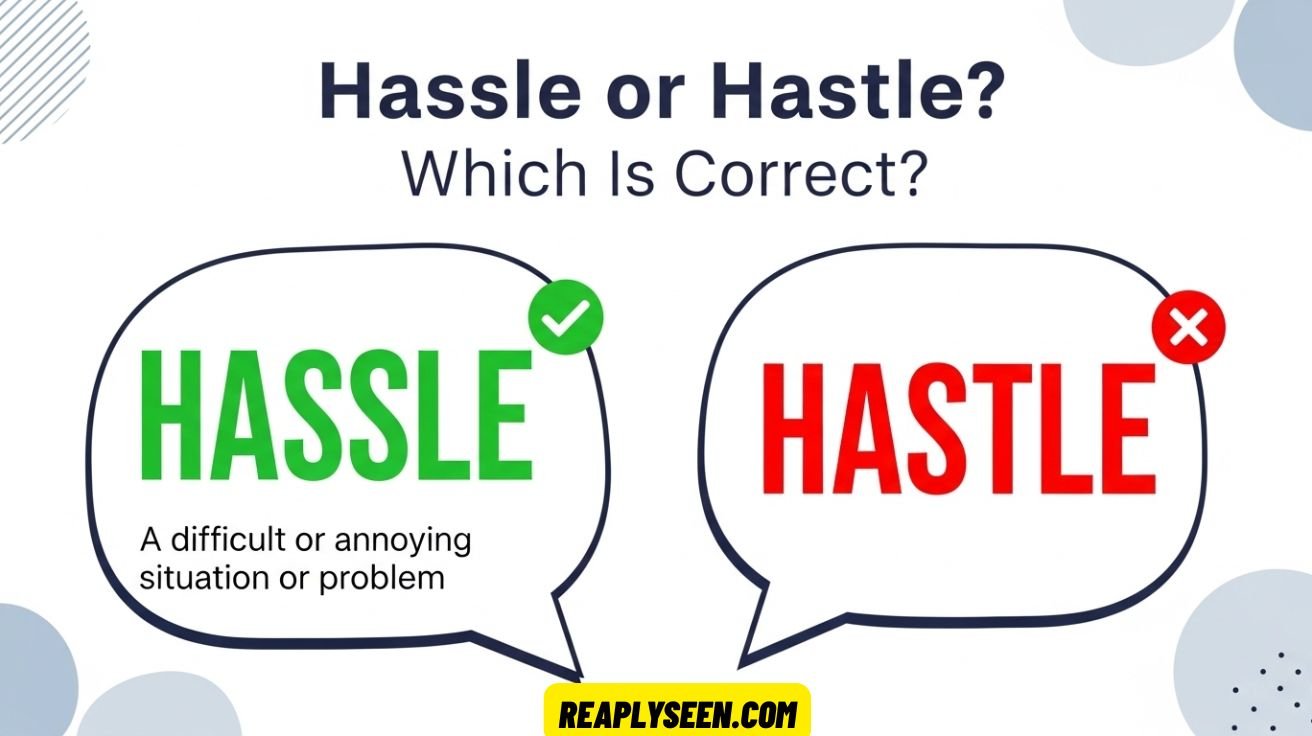
“Hassle or Hastle” is about the correct spelling of a common English word. “Hassle” means trouble, annoyance, or a small problem. “Hastle” is not a real word and has no meaning. People often confuse these two because they sound similar.
Many writers make this mistake without noticing it. A small spelling error can change how others see your writing. It may look careless or unprofessional. Learning the correct form can quickly improve your writing skills.
“Hassle” is used in daily English as both a noun and a verb. It can describe a problem or the act of bothering someone. This word is common in conversations, emails, and social media. Knowing the correct spelling helps you write clearly and correctly every time.
Quick Answer: Is It “Hastle” or “Hassle”?
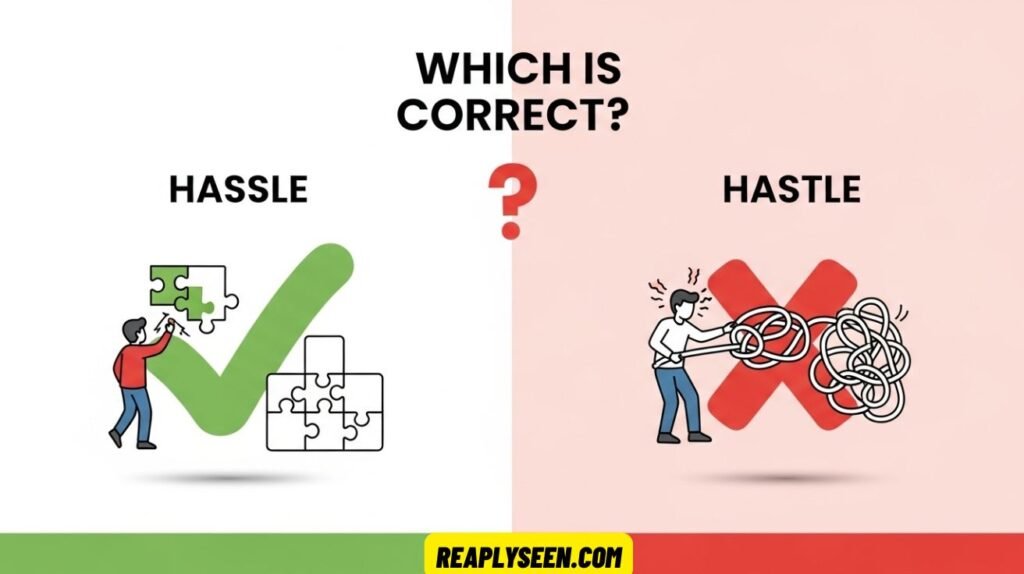
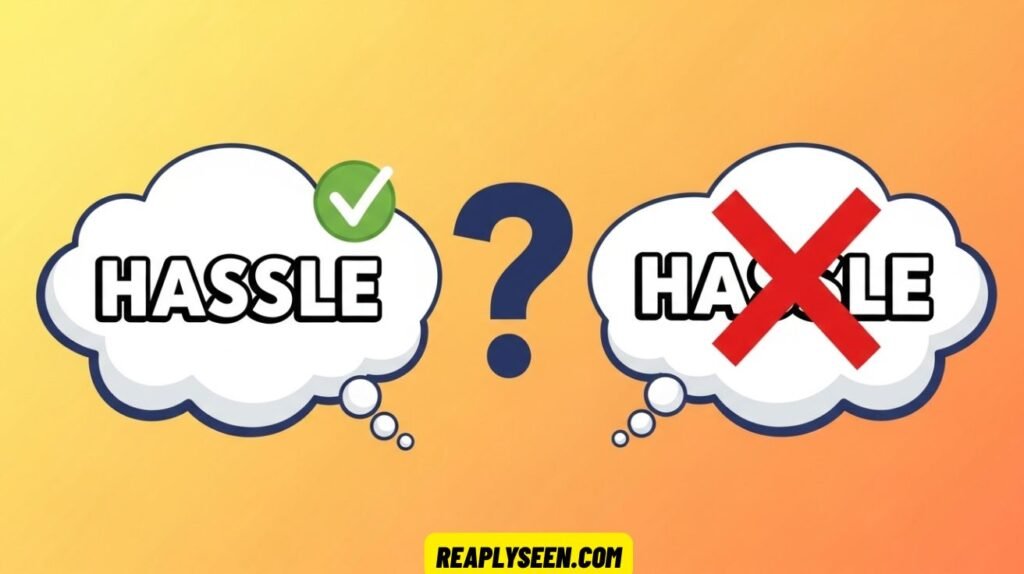
The correct spelling is “hassle”, not “hastle.” If you are comparing hassle or hastle, always remember that “hastle” is just a misspelling and does not exist in standard English dictionaries.
The hassle pronunciation is /ˈhæ.səl/, which explains why people sometimes mistakenly insert a “t.” However, according to dictionary spelling rules, the correct form always uses double “s” without any “t.”
Here are simple examples of hassle in sentences:
“I don’t want any hassle during my trip.”
“Stop hassling me about finishing my work.”
Understanding the difference between hassle and hastle is essential if you want to ensure writing accuracy tips and avoid embarrassing mistakes.
What Does “Hassle” Mean? Clear Definitions and Usage Examples
The hassle definition in English refers to a situation that causes trouble, annoyance, or inconvenience. It can also mean bothering someone repeatedly. This shows the flexibility of hassle meaning and usage in everyday communication.
The word works as both a noun and a verb, making it a perfect example of hassle as noun and verb in English grammar.
| Form | Definition | Example |
| Noun | A problem or inconvenience | “Finding parking was a hassle.” |
| Verb | To annoy or bother someone | “Don’t hassle me right now.” |
These spelling error examples highlight how important correct word usage is in both casual and formal writing.
Noun Usage
When used as a noun, “hassle” describes a difficult or annoying situation. In American English, it is commonly used in daily life, especially when talking about small frustrations.
For example, “Commuting in heavy traffic is a real hassle in big cities like New York.” Another example is, “Dealing with paperwork can be a hassle.” These are practical examples of hassle in sentences that show how natural the word feels in conversation.
Understanding this usage helps improve vocabulary building tips and supports better English grammar tips for learners.
Verb Usage
As a verb, “hassle” means to bother, pressure, or annoy someone repeatedly. This usage is very common in informal conversations and media.
For instance, “The salesperson kept hassling me to buy the product.” Another example is, “Don’t hassle your friends over small things.” These examples clearly show hassle as noun and verb in action.
Learning both forms helps you avoid grammar mistakes to avoid and improves your correct word usage.
Why Do People Spell It “Hastle”?
Many people ask why do people spell hassle wrong, and the answer lies in several common writing habits. One major reason is phonetic spelling confusion, where people write words based on how they sound rather than how they are spelled.
Another reason is common typos in English, especially when typing fast on mobile devices or keyboards. The letters “s” and “t” are close together, which leads to accidental errors. In some cases, autocorrect errors in writing may even replace the correct spelling with the wrong one.
This issue is also common among learners, leading to ESL spelling mistakes, where English is written exactly as it is heard. All these factors contribute to the confusion between hassle vs misspelling words like “hastle.”
The Origin of “Hassle”: Etymology and History
The word “hassle” has an interesting background in American English. It first appeared in the mid-20th century as slang, mainly in the United States. Linguists believe it may have developed from a mix of words like “haggle” and “tussle.”
Over time, it evolved into a widely accepted word used in both formal and informal contexts. This evolution reflects how language changes and adapts, making “hassle” a great example of modern usage influenced by culture.
Understanding its history helps improve English grammar tips and deepens your knowledge of word confusion in English.
See Also : Is It Correct to Say “You Are Always Welcomed?”
Breaking Down “Hassle” as a Noun vs. Verb
The flexibility of “hassle” makes it useful in many situations. Understanding how it changes meaning based on context is important for mastering hassle meaning and usage.
| Usage Type | Meaning | Example |
| Noun | A problem or inconvenience | “That was a hassle.” |
| Verb | To annoy or bother | “He hassled me all day.” |
This distinction helps in improving writing accuracy tips and ensures proper correct word usage.
As a Noun
When used as a noun, “hassle” describes something inconvenient or frustrating. It often appears in phrases like “a minor hassle” or “a big hassle.”
For example, “Travel delays can be a major hassle.” This usage is common in both everyday speech and professional communication.
As a Verb
As a verb, “hassle” focuses on actions that involve bothering someone. For example, “Reporters hassled the actor for comments.”
This usage is especially common in informal conversations, showing the difference between informal vs formal writing.
How “Hassle” Fits Into Everyday English
“Hassle” is widely used in American English in daily life. People use it when talking about problems, delays, or annoying situations. Whether it’s shopping, commuting, or dealing with services, the word fits naturally.
For example, “Online shopping reduces the hassle of going to stores.” This shows how the word is used in real-life situations and helps improve improve English writing skills.
Common Collocations with “Hassle”
Certain phrases frequently appear with “hassle,” making them important for learning natural English.
| Phrase | Meaning | Example |
| Hassle-free | Without trouble | “Enjoy a hassle-free experience.” |
| Minor hassle | Small inconvenience | “It’s just a minor hassle.” |
| Avoid the hassle | Prevent difficulty | “Book online to avoid the hassle.” |
| No-hassle return | Easy return process | “The store offers no-hassle returns.” |
These phrases are useful for vocabulary building tips and help avoid common spelling mistakes in English.
Professional vs. Casual Use
“Hassle” is commonly used in both casual and professional settings. In casual speech, it is used to describe everyday frustrations. In professional writing, it often appears in marketing phrases like “hassle-free service.”
However, in formal writing, words like “inconvenience” may be preferred. Understanding this difference improves your awareness of informal vs formal writing and strengthens your overall communication.
See Also : Whole Day or All Day – Which Is Correct? (With Examples)
Smart Tips to Remember the Correct Spelling of “Hassle”
To master how to spell hassle correctly, simple memory techniques can help. One useful idea is remembering that “hassle” has double “s,” just like “stress,” which is related to its meaning.
Another effective method is applying proofreading techniques such as reading your text slowly or using spell-check tools. These methods help reduce grammar mistakes to avoid and improve writing clarity.
Practicing regularly and paying attention to dictionary spelling rules will help you avoid similar mistakes and strengthen your improve English writing skills.
“Hassle” in Pop Culture and Media
The word “hassle” appears frequently in movies, TV shows, and advertisements in the United States. Phrases like “no hassle” or “hassle-free” are often used in marketing to attract customers.
This widespread use reinforces the correct spelling and helps people naturally learn it through repetition. It also highlights how language evolves through media and daily communication.
Synonyms and Alternatives for “Hassle”
Using synonyms can improve your writing and avoid repetition. Here are some alternatives with their meanings:
| Word | Context | Example |
| Trouble | General use | “It’s not worth the trouble.” |
| Bother | Mild annoyance | “Sorry to bother you.” |
| Fuss | Informal | “Don’t make a fuss.” |
| Inconvenience | Formal | “We apologize for the inconvenience.” |
These options are helpful for avoiding word confusion in English and improving correct word usage.
Understanding the Confusion Between Hassle or Hastle
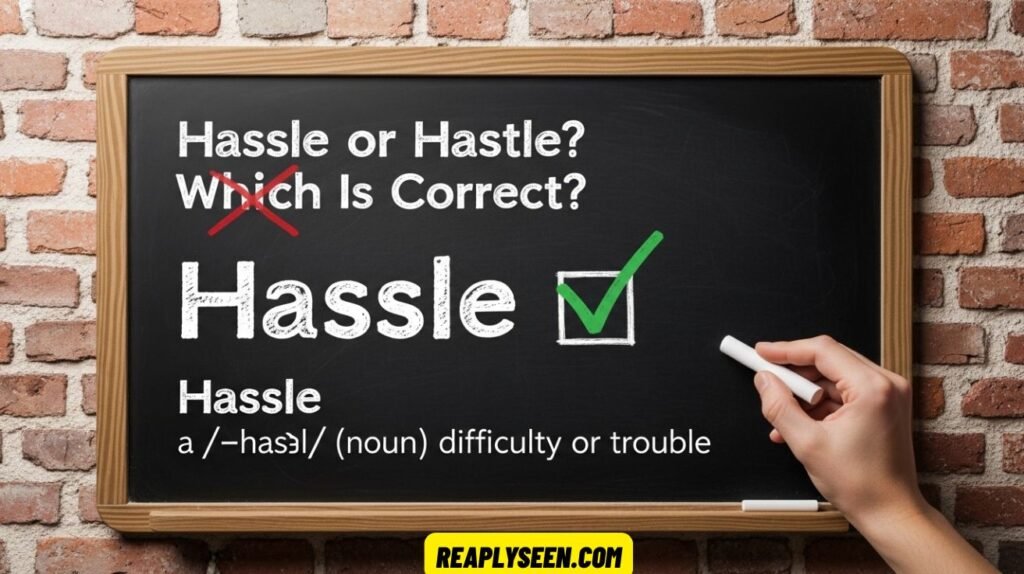
Many people get confused between hassle or hastle because both sound similar when spoken quickly. This is a classic case of English spelling confusion words, where pronunciation does not match spelling. Such confusion often leads to writing errors in emails, essays, and even professional documents.
Learning the correct spelling of hassle helps you avoid mistakes and improves your confidence in writing. When you understand how words are formed, you naturally reduce errors. This is an important step in mastering correct word usage and building strong communication skills in everyday English.
Is Hastle a Real Word in English?
A common question people ask is is hastle a real word, and the answer is simple: it is not. “Hastle” does not appear in any standard dictionary and is considered a misspelling. It usually happens due to common typos in English or fast typing habits.
Understanding this helps you avoid confusion and improves your writing accuracy. Following dictionary spelling rules ensures that you always use the right form. This small habit can make a big difference in your overall writing quality and professionalism.
How to Spell Hassle Correctly Every Time
If you want to learn how to spell hassle correctly, focus on remembering the double “s” in the middle. Many people make mistakes because of phonetic spelling confusion, where they rely on sound instead of correct spelling patterns.
Using simple proofreading techniques like rereading your text can help you catch errors. Over time, practicing correct spelling improves your memory and reduces mistakes. This is one of the best writing accuracy tips for improving your English skills.
Hassle Meaning and Usage in Daily Life
The hassle meaning and usage refers to situations that are annoying or inconvenient. It is commonly used in daily conversations, especially in American English, to describe small problems or frustrations people face regularly.
Understanding this word helps you express your thoughts more clearly. When you use it correctly, your communication becomes more natural and effective. This also helps in improving your vocabulary and avoiding grammar mistakes to avoid in daily writing.
Hassle as Noun and Verb Explained Simply
The word “hassle” is a great example of hassle as noun and verb in English. As a noun, it describes a problem or inconvenience. As a verb, it means to annoy or bother someone repeatedly.
Learning both forms improves your understanding of correct word usage. It also helps you avoid confusion while writing or speaking. This knowledge is useful for anyone looking to improve their English communication skills.
See Also : Unselect or Deselect – Which Is Correct? (With Examples)
Why Do People Spell Hassle Wrong?
Many people wonder why do people spell hassle wrong, and the answer often lies in autocorrect errors in writing and fast typing. When typing quickly, it is easy to press the wrong key and create spelling mistakes.
Another reason is ESL spelling mistakes, where learners write words exactly as they hear them. Understanding these causes can help you avoid similar errors and improve your overall writing accuracy.
Common Spelling Mistakes in English Like Hassle
“Hassle” is just one example of common spelling mistakes in English. Words that sound similar often create confusion, especially when learners rely on pronunciation instead of correct spelling rules.
Recognizing these patterns helps you avoid repeated errors. By practicing regularly and using vocabulary building tips, you can strengthen your spelling skills and become more confident in your writing.
Difference Between Hassle and Hastle Clearly Explained
The difference between hassle and hastle is very simple. “Hassle” is the correct word, while “hastle” is just a misspelling. Despite this, many people still use the incorrect version due to habit or lack of awareness.
Understanding this difference improves your writing clarity and professionalism. It also helps you avoid word confusion in English, which is important for both academic and professional success.
Hassle Pronunciation and Its Role in Spelling
The hassle pronunciation is /ˈhæ.səl/, which can sometimes confuse learners. The soft sound may make people think there is a “t” in the word, leading to spelling mistakes.
This is a perfect example of phonetic spelling confusion. Learning the correct pronunciation along with spelling helps you avoid errors and improves your speaking and writing skills at the same time.
How to Avoid Spelling Mistakes Like Hastle
If you want to learn how to avoid spelling mistakes, start by slowing down while writing. Rushing often leads to errors, especially with tricky words like “hassle.”
Using tools like spell check and following English grammar tips can greatly improve your accuracy. Regular practice and attention to detail will help you avoid mistakes and improve your overall writing skills over time.
FAQs
Is it hastle or hassle?
The correct spelling is “hassle,” while “hastle” is incorrect.
Always use “hassle” in writing to avoid spelling mistakes.
What is the meaning of Hastle?
“Hastle” has no meaning because it is not a real English word.
It is simply a misspelling of “hassle.”
What is the meaning of Hastling?
“Hastling” is also incorrect and not a valid English word.
The correct form is “hassling,” which means bothering or annoying someone.
Conclusion
The confusion between Hassle or Hastle is very common, but the correct spelling is always “hassle.” The word “hastle” is not a real English word and should not be used in writing. When you learn the correct form, you improve your spelling and make your writing clear. Good spelling shows care and helps others understand your ideas without trouble.
You should always check your work and follow simple spelling rules. Practice helps you remember the right form of words like “hassle.” When you write correctly, you build strong communication skills. Over time, these small improvements make your writing better and more professional. Always choose “hassle” and avoid mistakes to keep your work accurate and easy to read.