It’s Called vs It Called: Understanding the Distinction
It’s Called vs It Called are two different English phrases. It’s called shows the name of something. It called shows an action done in the past.
Many people mix these two phrases. Using the wrong one can confuse others. Knowing the difference makes English clear and easy.
It’s Called vs It Called is used in speaking and writing. It’s called names things. It called tells about past actions. Learning them helps you speak better.
Quick Summary
In simple terms, “It’s called” is a passive construction used for naming or defining something. It usually appears in contexts where you introduce a new object, idea, or term. For example, “It’s called photosynthesis” is a correct use because the sentence is about naming a process. On the other hand, “It called” is past tense, meaning the subject “it” performed the action of calling.
An example would be, “It called three times before I answered,” where “it” actively did something in the past. Using the wrong phrase can change the meaning entirely and may cause confusion in both formal writing and casual conversation.
What’s the Difference Between “It’s Called” and “It Called”?
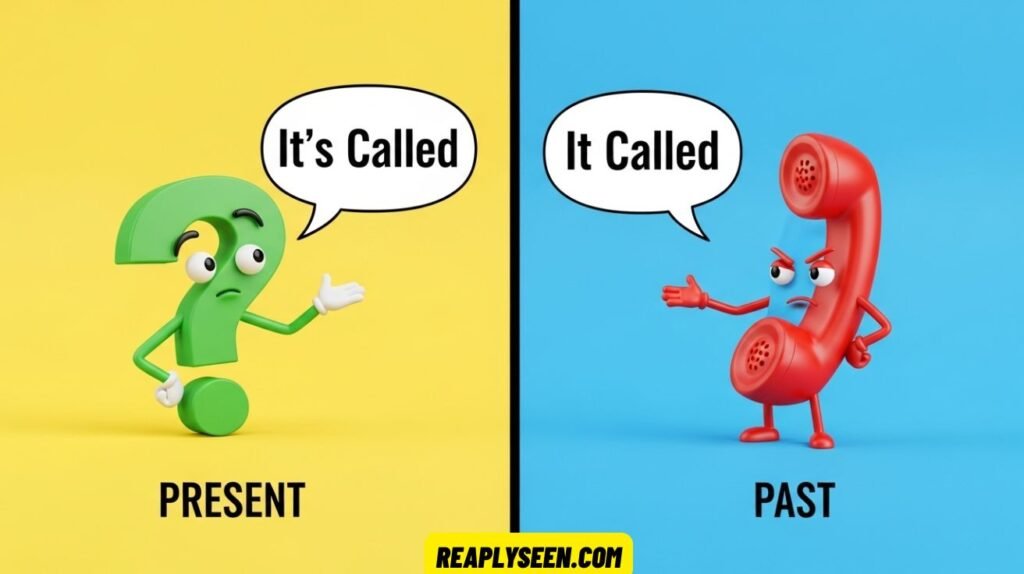
To fully understand, let’s look at the grammar behind these phrases. English grammar rules help us see why one phrase is used in naming and the other in describing actions. The table below summarizes the main differences:
| Phrase | Grammatical Form | Usage Context | Meaning |
| It’s called | Contraction of “It is called” (passive voice) | Naming, identifying, labeling something | Something has a name or title |
| It called | Simple past tense of the verb “to call” (active voice) | Action done in the past by “it” | “It” performed an act of calling |
As shown, “It’s called” focuses on the receiver of the action, making it a passive voice example, while “It called” shows the subject performing an action, which is a common structure in stories or technical descriptions.
Key Concepts
The main reason many English learners confuse these two phrases is that they sound similar. To break it down, “It’s” is a contraction for “It is” or “It has”, which is used in naming or explaining something. When combined with the past participle “called”, it forms a passive voice example. This construction is one of the most important in English language usage, especially for naming things in English or introducing new ideas.
On the other hand, “It called” uses past tense verbs to describe an action that the subject performed. This usage is far less frequent in daily English because “it” rarely acts as a subject that calls something, but it is correct in certain English ESL tips or narrative situations. Understanding the verb tense differences between passive and active constructions is key to avoiding common ESL errors and maintaining English writing clarity.
Understanding “It’s Called” – Meaning and Usage
The phrase “It’s called” is used whenever we want to define or identify something. It is part of common English phrases and is crucial for correct English expressions. In this construction, the subject is not performing the action; rather, the object or concept is being named. For example, when introducing a new concept to students, one might say, “It’s called inquiry-based learning.” This structure highlights how the object is recognized and understood in naming conventions in English.
How to use it’s called becomes particularly important in technical or professional contexts, where clarity is essential. In scientific writing, you may encounter sentences like “It’s called asymmetric encryption,” which clearly defines a technical term for the reader. Similarly, in everyday English, one might say, “It’s called a hammock,” which is a simple way to name an object.
Examples
To make the difference clear, here are some examples of It’s called meaning:
“It’s called a hammock.”
“It’s called recursion—when a function calls itself.”
“That trick is called the ‘inverted drop.’”
These examples demonstrate how the phrase is commonly used to introduce or label something. Using It called in these contexts would be grammatically incorrect and confusing.
Common Use Cases
In real-world English language usage, It’s called is applied whenever naming is involved. This includes introducing new objects, products, or terms in conversation, classrooms, or professional environments. It is also widely used in dictionaries and educational content to explain how to define something. Essentially, any time the goal is to describe or label something, It’s called is the appropriate choice. Understanding this usage reduces grammar mistakes in English and ensures English writing clarity.
Real-World Applications
In Education
In schools or classrooms, educators often use It’s called when introducing concepts. For example, “The teaching method is called project-based learning, and it encourages students to explore ideas actively.” This usage is critical for grammar tips for learners and ensures that the educational content is clear and accessible.
In Technology
In the tech world, clarity in naming is vital. A sentence like “This type of encryption is called asymmetric cryptography” helps beginners and professionals alike understand naming conventions in English within a technical context. Using It called here would not make sense.
In Pop Culture
Popular media also relies on It’s called for clarity. For instance, “It’s called The Mandalorian, and it’s one of Disney’s most-watched series.” Here, the phrase helps in clearly identifying a show and is an example of common English phrases used in everyday conversation.
See Also : Nighttime or Night Time: Unraveling the Correct Spelling
When Is “It Called” Correct?

It called is used when the subject “it” performs an action in the past. This phrase is common in storytelling, technical descriptions, or narrative writing. For example, “The device called home using satellite data” shows the subject performing an action. While this usage is less frequent, it is grammatically correct and important in understanding English ESL tips and past tense verbs in practical contexts.
Examples
“It called three times before I answered.”
“The haunted radio crackled. It called out again, a whisper in the static.”
“It called attention to the problem.”
These sentences show the correct It called meaning, emphasizing actions rather than names.
Use Cases
It called appears mainly in stories, narratives, or technical descriptions where the subject performs an action. For example, writers often use it to describe events in a novel or short story. In technical writing, it may describe devices performing automatic functions, such as “The system called the server at midnight.”
Infrequent but Valid
While It called is not commonly used in everyday conversation, it is valid in certain formal or literary contexts. For instance, in creative writing, using It called can create suspense or an eerie atmosphere: “The wind howled through the abandoned house. It called to the shadows.”
Example in Narrative Writing
A strong example is: “The haunted radio crackled. It called out again, a whisper in the static.” Here, It called functions perfectly in a literary context, demonstrating English writing clarity and showing verb tense differences.
Common Mistakes and Misunderstandings
Even advanced English speakers sometimes mix these phrases. A common grammar confusion is saying “It called a phone” instead of “It’s called a phone.” Another is using It’s called with past time markers, like “It’s called me yesterday,” which is incorrect. Misusing these phrases often leads to common ESL errors and reduces clarity in writing and speaking.
Key Errors to Avoid include:
Using It called to name or define something.
Using It’s called with past time indicators.
Confusing its (possessive) with it’s (contraction).
A helpful pro tip is: whenever you are introducing a term, object, or idea, default to It’s called. Reserve It called for past actions performed by the subject.
Examples in Real-Life Contexts
| Scenario | Correct Use | Incorrect Use |
| Describing a product | It’s called a smartwatch. | It called a smartwatch. |
| Talking about an app | It’s called Duolingo. | It called Duolingo. |
| Narrating a story | It called out to me. | It’s called out to me. |
| Naming a skill | It’s called active listening. | It called active listening. |
This table highlights the importance of context and demonstrates How to use it’s called versus It called effectively.
How to Decide Which One to Use
When deciding which phrase to use, consider two questions. First, are you naming or identifying something? If yes, use It’s called. For example: “It’s called a hoverboard.” Second, is the subject performing an action? If yes, use It called. For example: “It called for help.”
A simple mnemonic device to remember is: “Label it? Use ‘It’s called.’ Did it dial or shout? Use ‘It called.’” This technique is particularly useful for ESL learners and anyone aiming for English writing clarity.
Grammar Tips for ESL and Native Speakers
Understanding active vs passive voice and verb tense differences is crucial. It’s called is a passive voice example, focusing on the object or idea being named, while It called is active and focuses on the subject performing the action. The table below summarizes important verb forms:
| Form | Structure | Function |
| Present Simple | calls | Repeated/general action |
| Past Simple | called | Completed past action |
| Present Perfect | has called | Action with relevance to the present |
| Passive Voice | is called | Focus on the receiver of action |
Using these grammar tips for learners ensures correct English usage and improves confidence in writing and speaking.
Quiz: Test Your Understanding
- “What’s that snack?”
a) It called mochi
b) It’s called mochi ✅ - “Yesterday, the system ___ me three times.”
a) It called ✅
b) It’s called - “This method ___ reverse engineering.”
a) It’s called ✅
b) It called - “Back in 1999, it ___ out a warning.”
a) It’s called
b) It called ✅ - “___ a type of muscle cramp.”
a) It called
b) It’s called ✅
Taking quizzes like this helps reinforce understanding and reduces common ESL errors, improving both English writing clarity and conversational skills.
The Basics of “It’s Called” and “It Called”

Understanding the difference between It’s called and It called is essential for clear English communication. It’s called meaning shows that something is named or identified, while It called meaning refers to an action performed by the subject in the past. Learning these basics prevents common mistakes in writing and speaking.
Many learners confuse these phrases because they sound similar. Knowing English grammar rules, especially verb tense differences and active vs passive voice, helps learners use the correct form. Mastering this distinction improves English writing clarity and helps both ESL learners and native speakers communicate more accurately.
How “It’s Called” Works in English
It’s called is a passive structure formed from “It is called.” It is used for naming things in English and explaining concepts. For example, in classrooms or technical writing, you might say, “It’s called asymmetric encryption,” which clearly defines the term for the reader.
This construction is part of common English phrases and is crucial for correct English expressions. It helps learners understand how to define something effectively. Using It’s called correctly ensures clarity in communication and avoids grammar mistakes in English, especially for ESL students learning proper naming conventions.
See Also : Gluing or Glueing: Which Spelling Is Correct and Why It Matters
Understanding “It Called” in Context
It called uses past tense verbs and describes an action performed by the subject. For instance, “It called three times before I answered” shows that the subject actively performed the action in the past. This phrase is less common but correct in specific contexts.
Using It called properly requires understanding English language usage and narrative flow. Writers often use it in stories, technical examples, or instructions. Recognizing verb tense differences and when the subject is performing the action helps prevent common ESL errors and improves English writing clarity.
Common Mistakes in Using These Phrases
A frequent mistake is using It called to name or define something, such as “It called a phone,” which is incorrect. Another is combining It’s called with past time markers, like “It’s called me yesterday.” Knowing English grammar rules prevents these errors.
Confusing its and it’s is another common problem. It’s called should never be used for possession. Learning these rules is part of English ESL tips for learners. Correct usage ensures English writing clarity and helps avoid confusion in spoken and written English.
Real-Life Examples of “It’s Called”
In everyday English, It’s called appears in many contexts. For example, “It’s called a hammock” names an object, and “It’s called recursion” defines a programming concept. These examples illustrate naming conventions in English and how to use it’s called correctly.
Educational materials, media, and technology descriptions often use It’s called. For instance, “It’s called The Mandalorian” clearly identifies a popular TV series. Using this phrase properly enhances English writing clarity and ensures learners understand correct English expressions when naming or defining something.
Narrative Uses of “It Called”
Writers often use It called in storytelling or descriptive writing. For example, “The haunted radio crackled. It called out again, a whisper in the static.” Here, the phrase shows the subject performing an action, not naming something.
In technical or literary contexts, It called meaning can describe devices or events in the past. For example, “The device called the server automatically.” Understanding these scenarios helps learners apply active vs passive voice correctly and avoid common ESL errors.
Deciding Which Phrase to Use
To choose between It’s called and It called, ask yourself: Are you naming or identifying something, or is the subject performing an action? This simple question clarifies usage. Proper understanding of English grammar rules ensures accuracy in writing and speaking.
A helpful mnemonic device is: “Label it? Use It’s called. Did it dial or shout? Use It called.” This strategy helps ESL learners remember how to use it’s called and reinforces English writing clarity. Practicing this method reduces mistakes over time.
Tips for ESL Learners and Native Speakers
Learning It’s called vs It called improves fluency and avoids grammar mistakes in English. Focus on past tense verbs, active vs passive voice, and naming conventions in English. Using these phrases correctly makes communication clear and professional.
Teachers often advise practicing with real-life examples, quizzes, and stories. Following English ESL tips and studying common English phrases helps learners remember the correct usage. Mastering these distinctions ensures confidence in both spoken and written English, improving English writing clarity overall.
FAQs
What does “It’s called” mean?
It means something is named or identified; it introduces the name or label of an object, idea, or concept.
What is “It’s” vs. “It is called”?
“It’s” is a contraction of “It is,” so “It’s called” and “It is called” mean the same thing in naming or defining something.
Is “called” a past tense?
Yes, “called” is the past tense and past participle of the verb “call,” used for actions or passive constructions.
How is “It called” correct?
“It called” is correct when the subject “it” performs an action in the past, like “It called me yesterday.”
Conclusion
It’s Called vs It Called is very important to understand in English. It’s called helps you give names to things, like “It’s called a hammock” or “It’s called photosynthesis.” You use it when you explain what something is. It called shows an action in the past, like “It called three times yesterday.” Using the right phrase makes your speaking and writing clear.
Learning the difference between It’s Called vs It Called helps you avoid mistakes in English. You can read, write, and speak more correctly when you remember the rules. Practice using both phrases in sentences every day. Following this guide makes learning English easier, and you will feel more confident in class and at home.