Of Course or Ofcourse: Which One Should You Use?
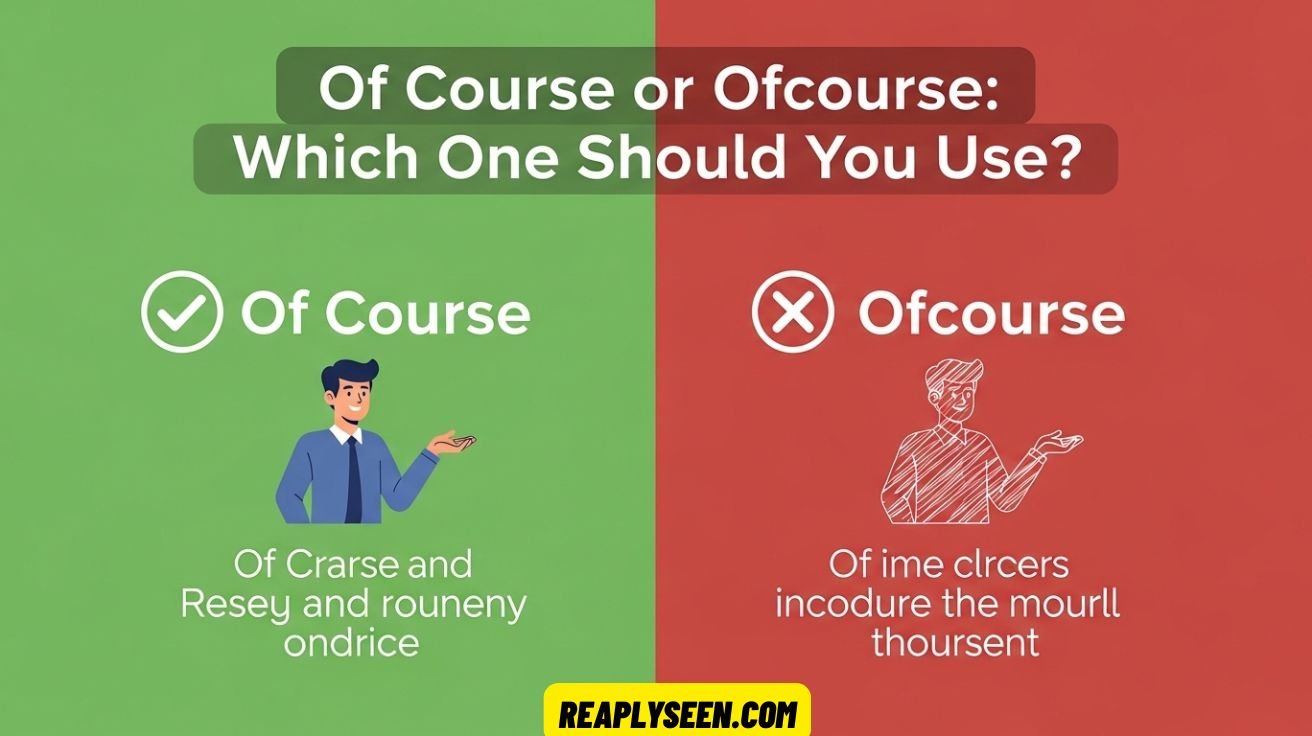
Of Course or Ofcourse means using the correct way to write a common English phrase. The right form is two words: of course. It shows agreement, certainty, or politeness in writing and speaking. Writing ofcourse as one word is wrong and should be avoided.
Many people type ofcourse by mistake. It looks like one word because we speak quickly. This mistake happens a lot in texts, social media, and emails. Using the correct form makes your writing clear and correct.
Of Course or Ofcourse is easy to learn. You should always write two words: of course. It is useful in school, emails, and casual chats. Learning it helps you write better and sound smart in English.
Of Course or Ofcourse – Which One Is Actually Correct?
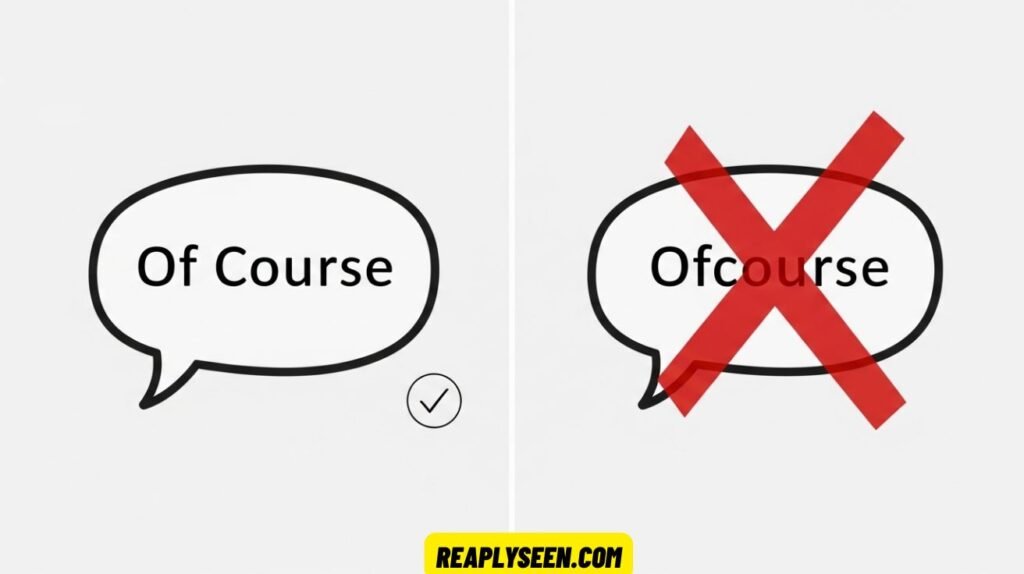
Let’s get straight to the point: “Of course” is always correct. The one-word version, “ofcourse”, is never correct in standard English. Dictionaries like Merriam-Webster, Oxford, and Cambridge do not recognize “ofcourse” as a legitimate word. When you write professionally or academically, using ofcourse can make your writing look careless, and it may distract readers from your message.
Using correct usage of of course shows that you understand English writing rules and are serious about writing confidently in English. Even though “ofcourse” appears frequently online, it is considered a common English mistake. Knowing this difference is the first step toward English writing improvement.
Why “Ofcourse” Seems Right — But Isn’t
Many people feel like ofcourse spelling is correct because it is commonly used in informal settings. When we speak, “of course” often sounds like a single word because we say it quickly. Auto-correct, texting shortcuts, and casual typing also encourage merging words. For example, people often write “wanna” instead of “want to” or “gonna” instead of “going to.”
The rise of social media and messaging apps encourages fast typing, which makes commonly misused words like ofcourse feel natural. Non-native speakers sometimes assume it’s a compound word, just like “everyday” or “because.” However, the correct form is always two words. Recognizing this helps you avoid English grammar mistakes and ensures your communication is professional and clear.
What Does ‘Of Course’ Really Mean?
The phrase “of course” is a small but powerful part of English phrases and idioms. It is used to show agreement, expectation, or obviousness. When someone asks a question or makes a statement, replying with “of course” signals certainty, politeness, or emphasis. Understanding how to use of course correctly is essential for both spoken and written English.
Here’s what it means in plain English:
Of course can mean:
Certainly
Naturally
As expected
Without a doubt
Absolutely
Using polite English expressions like of course helps make conversations smooth, professional, and clear. For learners, this phrase is a cornerstone of casual vs formal English distinctions.
Examples:
“Can you help me with this?”
→ “Of course!” (meaning “Yes, absolutely.”)
“Did you remember to lock the door?”
→ “Of course I did.” (meaning “Obviously.”)
In these examples, of course example sentences show how the phrase can be used in different tones, from casual chats to formal communication.
Where Did ‘Of Course’ Come From? (Origin & Etymology)
The phrase “of course” has a rich history dating back to at least the 18th century. It originates from Latin and French and was initially used in formal writing. The word “course” originally referred to the natural path or expected direction of something, like a river flowing along its course. Saying something is “of course” meant it followed the natural or expected path.
In old nautical terms, sailors used “of course” to mean along the intended route. Over time, the meaning evolved into the common phrase we use today. Understanding this origin can help you remember the importance of using the phrase correctly and distinguish it from English language mistakes like ofcourse.
Is ‘Of Course’ Formal or Informal?
The tone of of course depends on the context. In academic writing, it is neutral to formal. In professional emails, it is polite and agreeable. In casual conversations, it is friendly and natural. When used sarcastically, it can be snarky or dismissive.
| Context | Tone | Use It? |
| Academic writing | Neutral to Formal | Yes |
| Professional emails | Polite | Yes |
| Casual conversation | Friendly | Definitely |
| Sarcasm | Snarky, dismissive | Sometimes |
Learning the tone is crucial to writing confidently in English and mastering proper English phrases.
How to Use ‘Of Course’ in Sentences
You can place of course at the beginning, middle, or end of a sentence. In professional or academic writing, when used in the middle of a sentence, it is important to surround it with commas.
“She will, of course, attend the meeting.”
“Of course, we value your feedback.”
“Can you help me move? Of course.”
These examples show how two-word expressions like of course can fit naturally in any sentence.
Grammar Tips: Using ‘Of Course’ Correctly
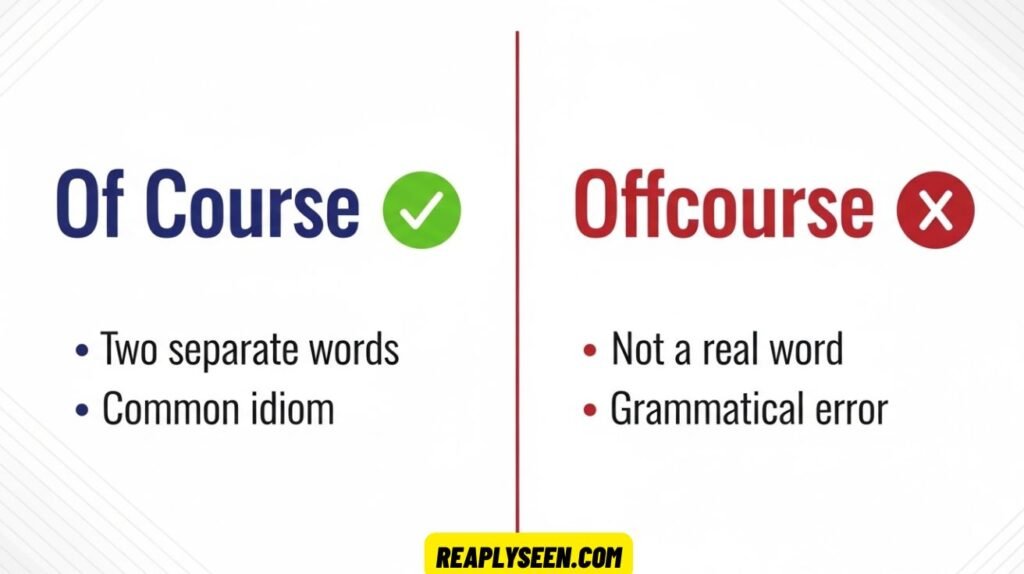
Grammar tips for of course emphasize that it is always two words. Overusing it can make your writing sound sarcastic or insincere. Be mindful of tone and placement. Correct punctuation helps maintain clarity, especially in English writing improvement. Avoid shortcuts like ofcourse spelling errors, as these are frequent English language mistakes that can impact your professionalism.
Why Do People Write ‘Ofcourse’?
People often write ofcourse due to fast typing habits, lack of proofreading, and influence from other languages. Mobile keyboards encourage shortcuts, and casual texting merges commonly used phrases. Non-native speakers may also misinterpret the phrase as a compound word.
Main reasons:
Auto-typing habits make people write quickly. Lack of proofreading can let errors slip through. Mobile keyboards often autocorrect to merged words. Influence from languages with compound words increases confusion.
Real Data:
According to Grammarly’s 2024 report, “ofcourse” was flagged as incorrect over 120,000 times weekly in U.S. academic and business documents. This demonstrates that even native speakers frequently make this common English mistake, reinforcing the importance of learning correct usage of of course.
‘Of Course’ vs. Other Similar Phrases
You can often replace of course with similar phrases, depending on tone and formality.
| Phrase | Meaning | Can Replace “Of Course”? | Formality |
| Certainly | Confident agreement | Yes | High |
| Naturally | Expected outcome | Sometimes | Medium |
| Sure | Casual agreement | Yes | Low |
| Obviously | Clearly understood | Rarely | Varies |
| Without a doubt | Total certainty | Yes | Medium |
Using these phrases strategically helps you maintain professional writing tips and English idioms and phrases accuracy.
Using ‘Of Course’ for Sarcasm or Humor
Of course in texts or of course in conversations can also be used sarcastically. Tone is critical.
Examples of sarcasm:
“Oh, of course you forgot my birthday. No surprise.”
“You broke it? Of course you did.”
In emails or formal writing, sarcasm may be misunderstood. Understanding tone is part of casual vs formal English mastery.
‘Of Course’ in Pop Culture and Media
Of course in pop culture appears in movies, TV shows, books, and social media. Famous quotes include Obi-Wan Kenobi in Star Wars: “Of course I know him. He’s me.” In Friends, Ross often hears: “Of course not, Ross!” Sarcastic usage is common in social media memes.
Books like Jane Austen’s Pride and Prejudice use variations of of course to emphasize social expectations. Seeing these examples helps learners understand English writing improvement in real-life contexts.
See Also : Envolved or Involved – Which Is Correct?
How to Remember ‘Of Course’ Is Two Words
Remembering that of course is always two words is easier with simple tricks. Think of the mnemonic: “Of ten, a course is split into parts—so is the phrase!” Compare it to other miswritten phrases like alot or aswell. Saying it aloud slowly—“Of… course”—also helps. Using these tips reduces English grammar mistakes and promotes writing confidently in English.
For Teachers and Students: Teaching the Correct Usage
Teachers can create exercises where students fill in blanks, e.g., “___ I’ll help you with your homework.” Correct answer: Of course. Using real-world examples, such as screenshots from texts or memes, helps learners spot errors. Flashcards with phrases like of course, all right, or a lot reinforce proper usage. Classroom roleplay, including sarcastic or polite dialogues, strengthens understanding of polite English expressions and common English mistakes.
Teaching Tips:
Practice with daily conversations and written exercises. Encourage reading aloud to hear natural flow. Highlight differences between casual and formal settings. Track errors in writing to improve English writing rules comprehension.
Understanding the Difference: Of Course vs Ofcourse
Many people confuse “of course” and “ofcourse”, especially when texting or posting on social media. The one-word form, ofcourse, is not recognized in standard English and is considered a spelling mistake. Using the correct two-word version ensures your writing is professional, clear, and free from English language mistakes, which is essential for academic, business, or casual communication.
Knowing the correct usage of of course can prevent common errors. It is a small phrase, but it carries significant weight in writing. Using it properly shows attention to English writing rules and helps convey certainty, politeness, or agreement in your sentences. Even experienced writers sometimes need reminders to write it correctly.
Why ‘Ofcourse’ Feels Right but Isn’t Correct
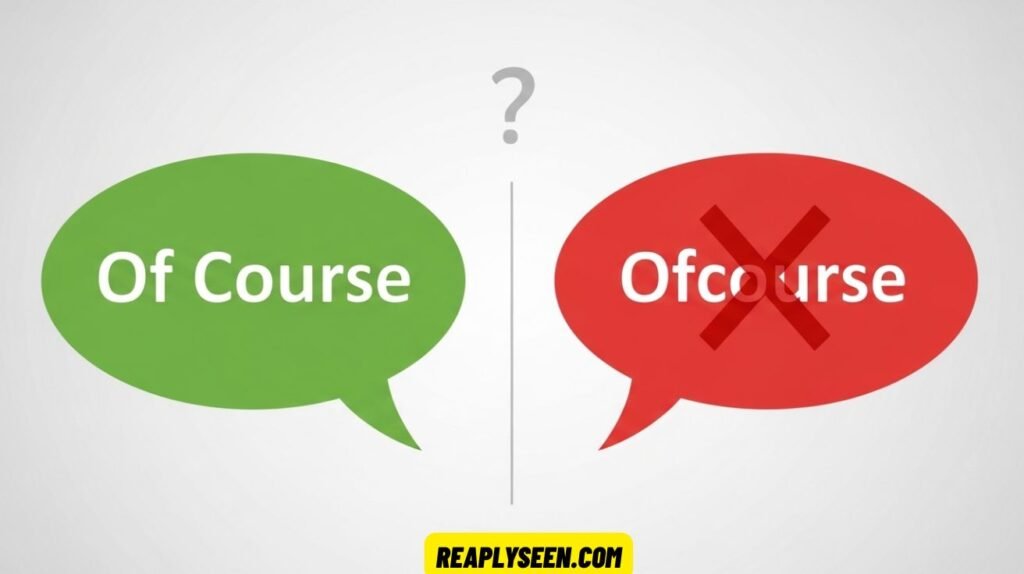
The spelling “ofcourse” seems natural because people often speak quickly and write even faster. Typing shortcuts and autocorrect in phones also encourage merging words, making it appear correct. Additionally, casual texting culture promotes combining words like “gonna” or “wanna,” which leads to mistakes when writing proper English phrases.
Non-native English speakers may assume ofcourse is a compound word, just like “everyday” or “because.” This misunderstanding results in repeated English grammar mistakes. Being aware of these habits is important for anyone aiming for English writing improvement and avoiding careless errors in emails, essays, or social media posts.
What ‘Of Course’ Really Means
Of course is a versatile phrase used to show agreement, certainty, or politeness. It functions as a discourse marker in conversations, emphasizing that something is obvious or expected. Its usage is essential for writing confidently in English because it adds clarity and professionalism to your communication.
The phrase also serves to soften responses in casual or formal settings. Whether in emails, texts, or conversations, knowing the of course meaning helps writers and speakers convey agreement naturally. Using it incorrectly, such as writing ofcourse, can confuse readers or diminish your message’s credibility.
Examples of ‘Of Course’ in Everyday Use
In casual conversations, of course can confirm willingness or understanding. For example, “Can you pass the salt?” → “Of course!” demonstrates politeness and agreement. Similarly, in professional emails, “Of course, we will review your feedback” shows courtesy and attention to detail.
The phrase can also indicate obviousness, such as, “Did you remember to lock the door?” → “Of course I did.” Using of course example sentences in daily practice helps learners understand tone, context, and proper placement in sentences, strengthening both formal and informal English usage.
See Also : What Does “Gimme” Mean? Definition, Usage & Examples in English
The History and Origin of ‘Of Course’
The phrase of course has been in use since the 18th century, originating from Latin and French. Originally, course referred to the natural path of something, such as a river flowing along its course. Saying something was of course meant it followed the expected or natural order.
Nautical terms also contributed to its meaning, as sailors used of course to indicate following the intended route. Understanding this origin reinforces the distinction between correct usage and ofcourse spelling errors, while emphasizing the richness and history of English phrases and idioms.
Formal vs Informal Uses of ‘Of Course’
In academic writing, of course is neutral to formal, signaling agreement or expectation without sounding casual. In professional emails, it demonstrates politeness and professionalism. In everyday conversation, it can appear friendly or casual. Context determines tone, so awareness is key to writing confidently in English.
When used sarcastically, of course can appear dismissive or ironic. Knowing these nuances helps avoid common English mistakes and maintain proper tone in any communication. Balancing casual and formal English ensures clarity and prevents misunderstanding in both personal and professional contexts.
Common Mistakes to Avoid When Using ‘Of Course’
A frequent mistake is writing ofcourse as one word. This is an English language mistake that can lower credibility in writing. Overusing of course can also make your tone sound sarcastic or insincere. Paying attention to placement and punctuation helps maintain clarity and professionalism.
Other mistakes include misplacing of course within sentences without commas when needed. For example, “She will of course attend” should be written as “She will, of course, attend.” Understanding English writing rules and practicing grammar tips for of course can prevent these errors effectively.
Tips to Remember ‘Of Course’ Is Always Two Words
One way to remember the correct form is by using a simple mnemonic: “Of ten, a course is split into parts—so should the phrase.” Saying of course slowly aloud also reinforces its two-word structure and helps avoid English grammar mistakes.
Teachers can use exercises like fill-in-the-blank quizzes or classroom roleplay to strengthen understanding. For instance, students can correct ofcourse spelling in memes or texts. Repeated practice improves English writing improvement, reinforces proper English phrases, and ensures learners use the phrase correctly in conversations, emails, and essays.
FAQs
Which is correct, of course or ofcourse?
“Of course” is correct; “ofcourse” is always incorrect.
Is it correct to say “of course yes”?
No, the proper phrase is “Of course” or “Yes, of course.”
Is it ofcourse or of cause?
The correct form is “of course”; “of cause” is wrong in standard English.
Why are of course two words?
Because it’s a two-word expression meaning something follows the natural or expected course.
Conclusion
Of Course or Ofcourse is a simple but important topic. The correct form is always of course, written as two separate words. Using the right form helps students, teachers, and everyone communicate clearly. Writing ofcourse as one word is wrong and can make your work look careless. When you use of course, it shows you follow English writing rules and can speak or write confidently in English.
Learning the correct way also helps in emails, essays, and classroom work. Saying or writing of course politely shows agreement or understanding. Practicing it often makes it easier to remember. Paying attention to small phrases like Of Course or Ofcourse builds better writing skills and improves overall communication.