
Any Problem or Any Problems – Which Is Correct?
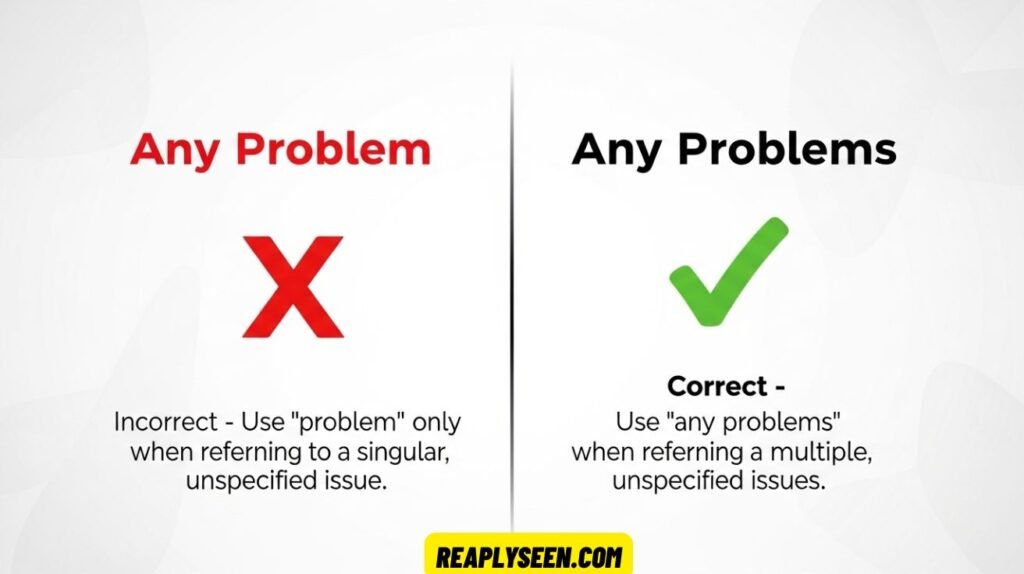
Any Problem or Any Problems is about asking if there is a difficulty. Any Problem means one single issue. It is used when you talk about one specific problem.
Sometimes choosing the right word can be tricky. People often get confused between singular and plural forms. Using the wrong one can make your sentence unclear.
Any Problem or Any Problems helps you speak and write clearly. Any Problems is for more than one issue. Knowing the difference makes your English better and easier to understand.
What’s the Difference Between “Any Problem” and “Any Problems”?

At first glance, the difference seems simple. One phrase is singular, the other is plural. However, the choice between any problem vs any problems often depends on context and tone. Any problem is usually used when referring to a single, specific issue. It might be something formal or serious, such as a technical error or an abstract concept in a discussion. For example, you might ask, “Does anybody see any problem with this proposal?” Here, you are expecting one particular obstacle.
On the other hand, any problems is used when multiple issues are possible or when the scope is more general. In casual or practical situations, it is more natural to ask, “Did you experience any problems during the installation?” This implies that there could be several issues rather than just one. Understanding this subtle distinction will help you avoid common errors and improve clarity in your writing.
Understanding “Any” – Is It Singular or Plural?
The word any is an indefinite determiner, and its function changes depending on whether it is paired with a singular or plural noun. When used with singular countable nouns, any usually implies one item or none. For instance, “Is there any problem with this plan?” asks about a single issue that may or may not exist. When any is paired with plural countable nouns, it implies zero or more items, often multiple. For example, “Are there any problems we should be aware of?” Here, the speaker is open to the possibility of several issues.
Knowing how to use any with singular or plural nouns is essential for avoiding common English mistakes. The correct usage of any problem and any problems depends not only on the number of issues but also on whether you are writing formally or informally. Grammar tips for English learners suggest that this is one of the most frequent points of confusion in conditional sentences in English and troubleshooting phrases in English.
When Is “Any Problem” Correct?
Any problem is correct when you are talking about a single, specific issue. It often appears in formal or professional writing, such as reports, policies, or corporate emails. For instance, a manager might write, “Please let us know if there is any problem with the submission.” The expectation is that there may be one specific issue that needs attention.
You can also use any problem in abstract or conceptual discussions. For example, in a meeting, a participant might ask, “Does anyone see any problem with this strategy?” Here, the singular form conveys precision and seriousness. Using any problem in such contexts signals professionalism and attentiveness to detail, which is a key aspect of formal vs informal grammar.
✅ Use Cases for “Any Problem”:
Any problem is ideal for formal writing, situations where one issue is expected, and abstract or conceptual discussions. In emails or official documents, choosing any problem over any problems can make your language more precise and polished. Writers should remember that when pinpointing one obstacle, this singular form is preferred. Common English mistakes often occur when people default to the plural form even though only one issue is under consideration.
When Is “Any Problems” Correct?
Any problems is the more flexible and casual form. It is used when multiple or potential issues may exist, or when the tone is informal. For example, in everyday conversation, you might ask a coworker, “Hey, did you run into any problems with the new software?” Similarly, customer service emails often use any problems to cover a range of possible difficulties: “Let us know if there are any problems with your order.”
This plural form is also more common in practical, hands-on contexts where several hiccups could occur. Using any problems in these cases makes your writing approachable and natural, especially in team chats, casual emails, and general correspondence.
✅ Use Cases for “Any Problems”:
Any problems works best in informal settings, when multiple issues are possible, and when you want a conversational tone. It conveys friendliness and accessibility while still being correct grammatically. Lists of examples or sentences in English sentence structure tutorials often recommend this plural form for casual or general communication to avoid sounding overly stiff.
Contextual Usage in Real Life (Side-by-Side)
To illustrate the difference, consider this table showing how context affects word choice:
| Sentence | Correct Phrase | Reason |
| “Do you have ___ understanding this?” | any problem | Refers to one misunderstanding |
| “Were there ___ during the install?” | any problems | Could be multiple installation issues |
| “You should report ___ immediately.” | any problems | General instruction for any number of issues |
| “Let us know if you face ___ later.” | either works | Tone guides the choice |
By studying real-life examples like these, English learners can see how proper word choice in English depends not just on grammar rules for problem/problems, but also on the situation and audience.
Formal vs Informal Settings – Which One to Use Where?
The choice between any problem and any problems often depends on whether your context is formal or informal.
Formal Environments:
In professional or academic settings, any problem elevates the tone. It signals that you are focused, precise, and aware of the nuances of English grammar. For example, in a corporate report, a manager might write, “Please let us know if there is any problem with the contract draft.” This formal usage aligns with grammar tips for English learners and avoids common English mistakes related to pluralization.
Informal Contexts:
In casual communication, any problems sounds warmer and more accessible. Whether in team chats, emails to colleagues, or everyday conversations, using the plural form helps maintain a friendly, relaxed tone. For instance, asking, “Hey, any problems with your laptop today?” feels natural and conversational, fitting well into formal vs casual English guidance.
See Also : Born in or Born On – Which Is Correct? (With Examples)
Common Mistakes and Misuses
A common mistake is defaulting to any problems in all situations. This often happens because people are used to plural forms in casual speech. Another error is using any problem in overly casual contexts, which can sound stiff or unnatural.
Additionally, regional differences in American and British English affect usage. In American English, plural forms are more common in spoken conversation, while British English often prefers singular forms in formal writing. By understanding these subtleties, you can avoid common English mistakes and improve your clarity in both written and spoken English.
How Native Speakers Use It in Conversation
Native speakers often rely on tone and context to decide between any problem and any problems. In formal meetings, someone might ask, “Please tell me if there’s any problem with the contract draft.” In casual conversation, a coworker might say, “Hey, any problems with your laptop this morning?” These examples show how context, audience, and medium shape word choice. Observing these patterns can help learners understand correct usage of any problem and using any problems in sentences naturally.
“Any Issue” vs “Any Problem” – Is There a Difference?
Another common question is the difference between issue vs problem. The word “issue” is softer and more neutral, suitable for professional or corporate contexts, while “problem” is stronger and often implies urgency or an immediate concern. Understanding this distinction helps with proper word choice in English, particularly in emails, customer support, and formal documents.
✅ Comparison Table:
| Phrase | Tone | Best for… |
| any issue | Neutral | Corporate emails, customer support |
| any problem | Urgent/Specific | Serious errors, immediate concerns |
Quick Grammar Rules to Remember
When deciding between any problem and any problems, remember these rules. Use any problem in formal or individual scenarios, when referring to a single issue, or when the tone is serious. Use any problems in informal, general, or casual contexts, especially when multiple issues could exist. These simple rules align with grammar rules for problem/problems, singular and plural nouns, and how to use any with singular or plural.
Case Study: Office Email vs Team Chat
Let’s see these rules in action. Imagine you are a project lead. In an email to a client, which is a formal medium, you would write: “Please let us know if there’s any problem with the new layout.” The singular form conveys professionalism and precision.
Now, in a casual Slack message to your team, you might say: “Hey folks, any problems deploying the update?” The plural form fits the informal context and invites multiple responses. This example shows how formal vs casual English affects your word choice and why context is key to mastering English sentence structure and troubleshooting phrases in English.
Why Choosing the Right Form Matters
Using the correct phrase between any problem or any problems is more than grammar; it affects clarity and tone. Writing the wrong form can confuse readers or make your message sound less professional. Understanding the difference ensures that whether you are sending emails, reports, or casual messages, your English communicates exactly what you intend.
Many English learners struggle with singular vs plural problem usage. This choice often confuses people because plural forms feel more natural in casual contexts. However, using the singular form in formal writing demonstrates precision. Mastering this distinction is a small step that greatly improves your fluency, helping you avoid common English mistakes and awkward phrasing.
How “Any” Works with Singular and Plural Nouns

The word any can be tricky because it changes meaning depending on whether the noun is singular or plural. With singular nouns, it implies one possible issue, like in “Is there any problem with the project?” When paired with plural nouns, it suggests multiple potential issues, as in “Are there any problems with the new system?”
Learning how to use any with singular or plural nouns is essential for proper English sentence structure. Using the wrong form can make your writing confusing or incorrect. Paying attention to grammar rules for problem/problems helps you write clear emails, reports, and messages that sound natural in both formal and informal English.
When to Use “Any Problem”
Any problem is best when referring to a single issue or obstacle. You might see it in formal writing, academic papers, or professional emails. For example, “Please inform us if there is any problem with the submission” clearly points to one issue, showing professionalism and careful attention to language.
This singular form also works in abstract discussions or conceptual debates. Using any problem signals that you are precise and serious about potential errors. It is particularly useful in conditional sentences in English and troubleshooting phrases in English, where clarity is more important than casual tone.
See Also : Input or Imput: Which One Is Actually Correct?
When to Use “Any Problems”
Any problems is the plural form used when multiple issues could exist or when speaking casually. For example, in a friendly email or team chat, “Did you face any problems with the installation?” allows for more than one issue and sounds approachable and natural.
Using the plural form is common in informal contexts. Whether in troubleshooting phrases in English, casual emails, or everyday conversation, any problems communicates flexibility. It also avoids sounding overly stiff, making it suitable for practical communication, customer support, or general advice in both formal and casual English.
Common Mistakes to Avoid
Many people default to any problems even when only one issue is expected. This can make writing in formal settings appear careless. Conversely, using any problem in informal contexts may sound awkward or stiff, which is a frequent error for learners.
Understanding context is essential. Observing correct usage of any problem and using any problems in sentences ensures clarity. Paying attention to singular and plural nouns and avoiding these mistakes strengthens both written and spoken English, helping learners communicate confidently in any situation.
Comparing “Issue” and “Problem”
While problem is strong and often urgent, issue is softer and neutral. In professional contexts, saying “Let me know if there is any issue” is less harsh than “any problem,” making it suitable for corporate emails and formal customer communications.
Choosing between issue vs problem helps with proper word choice in English. Using the wrong word can unintentionally change the tone. By understanding nuances, you can write clear emails and messages that fit formal or casual English perfectly, avoiding common English grammar mistakes in everyday communication.
Real-Life Examples in Emails and Chats
In formal emails, you might write: “Please tell us if there is any problem with the new layout,” signaling professionalism. In casual team chats, “Hey, any problems deploying the update?” invites multiple responses in a relaxed tone.
These examples show how formal vs casual English guides word choice. Observing native speakers and using practical examples in real-life emails, Slack messages, or troubleshooting phrases in English helps learners master the difference between any problem and any problems naturally.
Quick Grammar Tips for Everyday Use
Use any problem when addressing one specific issue in formal writing. Use any problems when expecting multiple issues or speaking casually. This simple rule covers most scenarios in emails, chats, and professional reports.
Regular practice with these forms helps learners internalize singular vs plural problem rules. Paying attention to context, audience, and tone strengthens English fluency. Following grammar tips for English learners ensures fewer common English mistakes and improves overall confidence in writing and conversation.
FAQs
What is the meaning of any problem?
It refers to one specific issue or difficulty that may occur in a situation.
How to solve a big problem?
Break it into smaller parts, analyze each carefully, and tackle them step by step.
How do I solve all my problems?
Prioritize issues, focus on actionable solutions, and seek help when needed.
How to face the problems in life?
Accept challenges, stay positive, and approach them with patience and persistence.
Conclusion
Any Problem or Any Problems helps you speak and write English clearly. Any Problem is for one single issue, and Any Problems is for more than one. Using the right form shows that you know English well and makes your writing or talking easier for others to understand. Following these rules also helps you avoid mistakes that many learners make.
Learning the difference between Any Problem or Any Problems makes your English stronger. It works in emails, school work, or talking with friends. Paying attention to whether the issue is one or many helps you choose the correct word. This simple skill improves your writing, speaking, and confidence in English every day.