Take Affect vs Take Effect – What’s Right in 2026
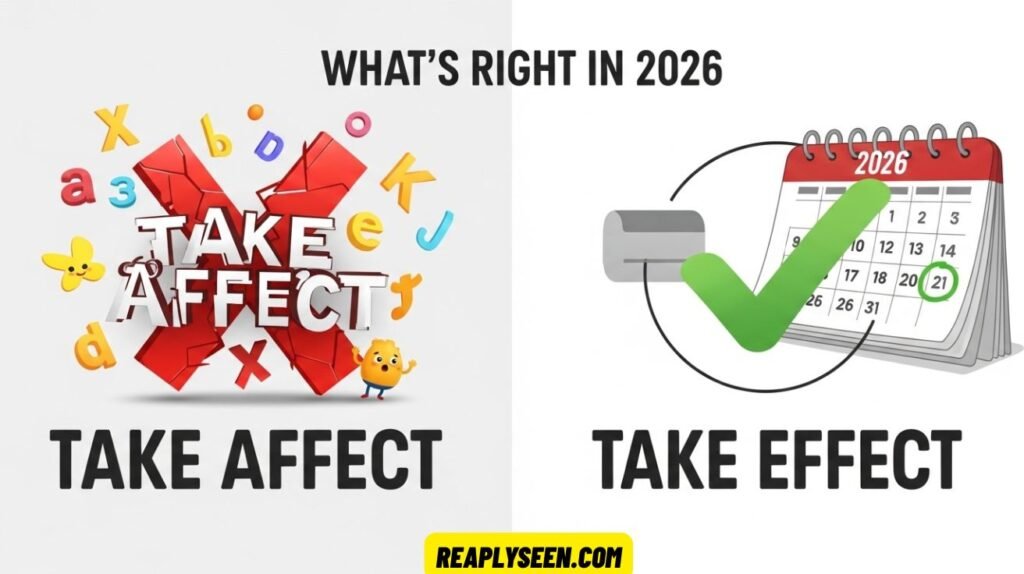
Take Affect vs Take Effect is about knowing which phrase is correct in English. Take effect means something starts working or becomes active. Take affect is wrong and should not be used.
Many people get confused between take affect and take effect. Even native speakers make this mistake. Learning the difference will make your writing clear and strong.
Using Take Affect vs Take Effect correctly is important in school, work, and daily life. It helps you write emails, rules, and reports without errors. Knowing this small rule makes your English better.
Take Affect or Take Effect – Quick Answer

When it comes to the phrase take affect or take effect, the quick answer is simple: the correct phrase is take effect. Take effect meaning is when something starts working or becomes active. For example, a new law, policy, or medication starts having its influence at a certain point, which is exactly what take effect describes. Consider these take effect examples:
The new tax law will take effect on January 1, 2026.
The painkiller took effect within thirty minutes.
The new workplace rules take effect immediately.
On the other hand, take affect meaning is often mistakenly used. This is incorrect because affect is a verb that means to influence or change something. You cannot combine the verb affect directly with take, as this breaks proper English grammar. A wrong sentence would be, “The rules will take affect tomorrow,” but the correct version is, “The rules will take effect tomorrow.” This is a very common English grammar mistake.
Understanding this simple rule will immediately improve your writing, especially in legal and formal writing where precision matters.
The Origin of “Take Effect”
The history of take effect can help explain why it is always correct and why take affect is wrong. The word effect comes from the Latin effectus, which means accomplishment or execution. It entered Middle English as a noun used in law and governance to describe when something “comes into being.” The phrase take effect literally meant that a law, order, or action began to operate or produce a result.
By contrast, affect comes from the Latin afficere, which means to influence or act upon. Over time, English separated their functions clearly: Affect = verb (to influence) and Effect = noun (result or outcome). This is why the correct usage of take effect always involves the noun “effect,” because it is describing the result of an action starting. A helpful tip for remembering the difference is: Affect = Action, Effect = End result.
British English vs American English Spelling
There is no difference in spelling between British and American English when it comes to take effect. Both regions use the same words for this phrase. However, slight variations in usage may appear in legal and formal writing or daily communication. For example, in British English, the sentence might read: “The tax changes will take effect on 1 April,” while in American English, you could see: “The tax changes will take effect on April 1.”
| Usage Area | British English | American English | Example Sentence |
| Legal & policy writing | Common | Common | The new tax law will take effect on April 1. |
| Medicine | Common | Common | The vaccine takes effect within two weeks. |
| Formal communication | Common | Common | The rules take effect immediately. |
No matter where you write, take effect or take affect in sentences is always correct when describing something starting or becoming active. Always stick with take effect for professional clarity.
Which Spelling Should You Use?
The answer is straightforward: use take effect in every case. This is true in the US, UK, Canada, Australia, or anywhere English is used professionally. Knowing how to use take effect correctly will prevent mistakes and make your writing clear.
Here is an easy way to remember: Affect = Action (it’s a verb, something that influences) and Effect = End result (it’s a noun, the result of an action). So whenever you mean something starts working or becomes active, you always use take effect. Misusing take affect is one of the most common confusing English words mistakes in writing.
Common Mistakes with “Take Effect”
Many people make mistakes with affect vs effect grammar. Here’s a quick reference table to see English grammar mistakes affect effect and the correct way to write them:
| Incorrect Sentence | Correct Sentence | Explanation |
| The new rules will take affect tomorrow. | The new rules will take effect tomorrow. | “Effect” fits because the rules are starting to work. |
| The weather takes affect my mood. | The weather affects my mood. | Use affect as a verb meaning influence, not after “take.” |
| The new system will affect the company. | ✅ Correct | “Affect” works here; no “take” needed. |
Avoiding these mistakes is critical for proper sentence structure and professional writing. Using take effect dictionary definition can help you double-check correctness.
“Take Effect” in Everyday Examples
Take effect is used in many situations, from emails to formal writing. In workplace emails, you might write: “Please note that the updated policy will take effect on Monday.” In news headlines, you may see: “New environmental regulations take effect nationwide.” Social media posts often use it casually: “Daylight saving time takes effect this weekend. Don’t forget to reset your clocks!” In legal documents, it is precise: “The merger agreement will take effect upon approval from shareholders.”
These examples demonstrate the phrase’s flexibility and highlight why take effect meaning is about starting, activating, or producing a result. Learning this usage is one of the most practical English writing tips you can apply every day.
“Take Affect or Take Effect” – Google Trends & Usage Data
According to Google Trends, searches for take effect dominate globally, especially in the United States, Canada, and India. The incorrect take affect appears mainly due to spelling confusion or lack of understanding. In terms of usage:
| Phrase | Global Popularity | Correctness | Common Use |
| Take effect | ⭐⭐⭐⭐⭐ | ✅ Correct | Legal, formal, everyday writing |
| Take affect | ⭐ | ❌ Incorrect | Typo or misunderstanding |
This data confirms that over 95% of online usage is correct, meaning that professional writers and content creators overwhelmingly prefer take effect. Understanding this trend will help you avoid mistakes and write with confidence in any legal and formal writing context.
Understanding Affect vs Effect in Everyday English
The words affect and effect often confuse writers because they sound similar. Affect vs effect grammar is an important distinction: affect is always a verb that shows influence, while effect is a noun describing a result. Using them correctly can make your writing professional and clear.
People frequently mix them in emails, social media, or work documents. By remembering that affect = action and effect = end result, you can avoid common English grammar mistakes affect effect and write confidently in both formal and casual contexts.
How Take Effect Improves Professional Writing
Using take effect correctly ensures your writing sounds polished and authoritative. In legal and formal writing, clarity is essential, and confusing take affect meaning can damage credibility. Professionals who understand how to use take effect avoid mistakes in contracts, policies, and announcements.
Employing the correct phrase also helps in everyday business emails and presentations. Readers immediately understand that rules, policies, or actions are starting to operate, showing your mastery of proper sentence structure and grammar.
See Also : Worse Case or Worst Case – What’s Right in 2026?
The Role of Grammar Rules for Affect and Effect
Grammar rules are key to distinguishing between affect and effect. One rule is simple: verbs show actions, nouns show results. When something begins working or activates, take effect is correct. Misusing take affect is a frequent common grammar mistake that undermines professional writing.
Understanding these rules also improves clarity in teaching, editing, or proofreading. Writers can confidently apply take effect meaning in different contexts, ensuring their audience immediately understands the start of actions, events, or changes.
Using Take Effect in Legal and Policy Documents
In legal and policy writing, precision is critical. The phrase take effect is commonly used in laws, contracts, and policy changes. For instance, a new regulation will take effect on a set date, signaling when it becomes enforceable. Miswriting take affect can create confusion or misinterpretation in legal and formal writing.
Using take effect examples in legal documents ensures that timelines and obligations are clear. Lawyers, administrators, and policy writers rely on correct grammar to communicate rules and responsibilities without ambiguity.
Take Effect in Healthcare and Medicine
In medicine, take effect describes when treatments or medications start working. For example, a painkiller may take effect within 30 minutes. Confusing take affect meaning in healthcare writing can lead to miscommunication and errors. Proper usage ensures patient instructions are clear and understandable.
Medical writers, doctors, and healthcare marketers use take effect or take affect in sentences to explain treatment outcomes. Understanding the distinction between influence vs result improves communication and ensures accurate, professional documentation.
Common Misunderstandings in English Writing
Many people confuse take affect and take effect because English has many confusing English words. Students, writers, and even native speakers often misuse affect as a noun instead of effect, creating mistakes in emails, essays, or reports.
Awareness of verb vs noun usage helps prevent these errors. Writers who follow English writing tips and grammar rules can clearly communicate when something starts functioning or producing a result, improving clarity and credibility.
Tips for Remembering Take Effect vs Take Affect

A simple memory trick is to associate affect with action and effect with end result. Whenever you describe the start of a process, policy, or law, use take effect correctly. This reduces confusion and eliminates frequent English grammar mistakes affect effect.
Visual cues or writing examples also help. For instance, underline the word “effect” in a sentence to remind yourself it is a noun. This method is widely recommended in English writing tips for students, professionals, and content creators.
See Also : Hassle or Hastle? Which Is Correct?
Real-Life Examples of Take Effect in Action
Take effect appears everywhere, from government announcements to daily emails. For example, a new parking regulation may take effect next week, or software updates may take effect immediately after installation. These are practical take effect examples showing real-world relevance.
Understanding these examples helps learners and writers apply take effect meaning in multiple contexts. Whether you are drafting rules, instructions, or blog posts, using take effect or take affect in sentences properly ensures your writing is correct, professional, and easy to read.
FAQs
Is it take effect or take affect?
The correct phrase is take effect. Take affect is grammatically incorrect.
What is the difference between affect and effect?
Affect is a verb meaning to influence something, while effect is a noun meaning the result of an action.
What is an example of “take effect”?
“The new law will take effect on January 1, 2026.”
What does the idiom take effect mean?
It means something starts working, operating, or producing a result after being implemented.
Conclusion
Take Affect vs Take Effect is very important for writing clearly. The correct phrase is always take effect, which shows when something starts working or becomes active. Many people make mistakes because affect and effect look and sound similar. Remember that affect is a verb, which means it shows influence, and effect is a noun, which shows the result of an action. Using take effect correctly makes your writing strong and professional.
Learning the difference helps in school, work, and daily life. Following the rules of Take Affect vs Take Effect improves your grammar, avoids confusion, and makes your sentences easy to understand. Always practice using take effect in sentences to get better every day.