Natzi or Nazi – The Correct Spelling Explained Simply for 2026
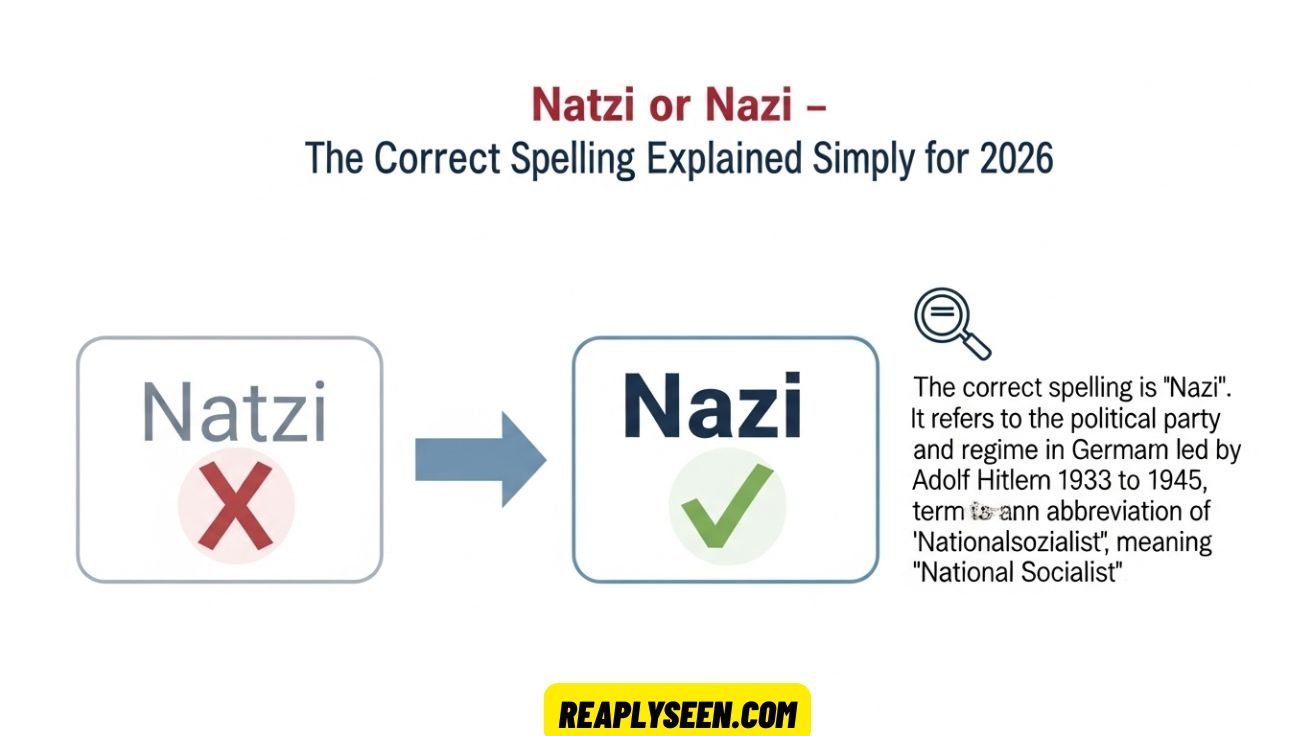
Natzi or Nazi is a question about spelling. The correct word is Nazi. It means a member of the National Socialist German Workers’ Party in Nazi Germany.
Many people write Natzi by mistake. They hear the word and spell it wrong. This mistake happens a lot online and in school work.
The word Nazi has a clear history. It comes from Germany in the 1930s. It relates to Adolf Hitler, Nazi ideology, and World War II events.
Natzi or Nazi – Quick Answer ⚡
The quick and simple answer is that the only correct spelling is Nazi, not Natzi. Nazi refers to a member of the National Socialist German Workers’ Party (NSDAP), which was led by Adolf Hitler during the 1930s and 1940s. The party controlled Nazi Germany, implementing policies that led to the Holocaust, Fascism in Germany, and the devastation of World War II.
Natzi appears only as a result of phonetic spelling errors by English speakers. Despite sounding similar, it has no historical or official basis. Using Natzi in any historical or formal context is incorrect and should be avoided. Correct usage includes phrases like “Nazi Germany,” “Nazi ideology,” and “Nazi regime.”
Here is a simple table for clarity:
| Term | Correct Usage | Incorrect Usage | Notes |
| Nazi | Nazi Germany, Nazi ideology | Natzi Germany | Official historical term |
| Plural | Nazis | Natzis | Always add “s” for plural |
| Adjective | Nazi regime, Nazi policies | Natzi regime | Used for descriptive purposes |
The Origin of Nazi (and Why “Natzi” Appears) 📜
The term Nazi comes from the German word Nationalsozialist, a shortened form of Nationalsozialistische Deutsche Arbeiterpartei, or National Socialist German Workers’ Party (NSDAP). This political party rose to power in 1930s Germany under the leadership of Adolf Hitler. Nazi party members promoted Nazi ideology that centered around nationalism, anti-Semitism, and authoritarian control.
The spelling “Natzi” often appears because English speakers tried to write what they heard. The German pronunciation of Nazi is “Naht-see,” which can easily be misheard. These historical spelling mistakes became more common with the rise of social media, informal writing, and online discussions about Nazi history.
Nazi symbols, Nazi propaganda, and references to the Nazi occupation of Europe during World War II are all part of why the term needs to be written correctly. Historical documents from the Nazi era show no instance of the word being spelled as “Natzi.” Using the correct spelling ensures accuracy when discussing Nazi soldiers, Nazi policies, or the Nazi rise to power.
British English vs American English Spelling 🇬🇧🇺🇸
Unlike many words in English, the spelling of Nazi is the same in both British vs American English spelling. There is no variation between the two. Both regions use Nazi for singular, plural, and adjective forms.
| Form | British English | American English | Notes |
| Singular | Nazi | Nazi | Correct in both |
| Plural | Nazis | Nazis | Always add “s” |
| Adjective | Nazi regime | Nazi regime | Describes policy or government |
| Incorrect | Natzi | Natzi | Never correct |
Even though the spelling is the same, pronunciation may vary slightly depending on the region, but the written form should always be Nazi. Whether writing for a US audience or referencing Nazi era documents, always use the standardized spelling.
Which Spelling Should You Use? ✍️
For any type of writing, the correct choice is always Nazi. In the United States, dictionaries like Merriam-Webster and historical sources confirm this spelling. The same applies to UK and Commonwealth readers, as seen in the Oxford Dictionary.
When writing about Nazi Germany, Nazi ideology, or the NSDAP, using Natzi makes your content appear inaccurate. For international readers or academic work, the universally accepted form is Nazi. Avoid using Natzi in professional writing, historical essays, or online content where credibility matters. Accuracy also matters when discussing Nazi symbols, Nazi propaganda, and the Holocaust history, where misrepresentation can cause misunderstandings.
Common Mistakes with Natzi or Nazi ⚠️
One of the most frequent errors is writing Natzi instead of Nazi. This happens due to phonetic spelling errors, lack of knowledge of Nazi history, or careless typing. Other mistakes include using lowercase “nazi” in formal writing or applying the term as slang without understanding its historical weight.
Some writers also make errors when referencing Nazi party members, Nazi soldiers, or Nazi policies, forgetting to capitalize the term. Online, hashtags like #NatziHistory often appear, which affects SEO and credibility. Writers should always double-check spelling and context when discussing the Nazi regime, Nazi era documents, or Nazi rise to power.
Mangoes vs Mangos — What’s the Difference?
Just like Natzi vs Nazi, English has other spelling differences that confuse writers. For example, in the US, both mangoes and mangos are acceptable plurals, but “mangoes” is more common. These small spelling differences in British vs American English spelling highlight the importance of knowing the correct form in context.
When it comes to historical terms, there is no flexibility. Unlike mangoes, the word Nazi has one correct spelling. Using “Natzi” is always incorrect, which emphasizes the need for precise spelling when dealing with sensitive historical topics like Nazi Germany, Nazi ideology, or Nazi occupation.
Nazi in Everyday Examples 💬
The term Nazi is still used in modern contexts, but writers should handle it with care. In academic writing, one might say, “Our research project explores the rise of the Nazi regime in Germany.” In journalism, reports might include, “The museum exhibits Nazi era documents and artifacts from the Nazi occupation of France.”
In informal settings, expressions like “grammar Nazi” are common but potentially offensive. Despite casual usage, the spelling must remain Nazi. Natzi does not appear in credible writing, history books, or official documents. Proper usage respects Nazi history, the experiences of victims during the Holocaust, and the seriousness of Nazi ideology.
Goodmorning or Good Morning: Which Is Correct?
English has many spelling rules, such as with compound words. Just as “Good Morning” is correct while “Goodmorning” is informal or incorrect, Nazi is the only correct form for this historical term. Minor mistakes can affect readability and accuracy. By understanding the rules of British vs American English spelling and historical terminology, writers can avoid common errors in sensitive topics.
See Also : Authorization or Authorisation: Which Spelling Is Correct?
Natzi or Nazi – Google Trends & Usage Data 📊
Search data shows that Nazi overwhelmingly dominates over Natzi in all regions, including the United States. Google Trends indicates that searches for Nazi are extremely high due to historical interest, academic research, and educational content. Searches for Natzi are much lower and mostly come from people seeking clarification on the spelling.
| Keyword | Global Search Volume | Accuracy | Common Use |
| Nazi | Extremely High | ✅ Correct | Academic, Historical, News |
| Natzi | Very Low | ❌ Incorrect | Typo, Social Media Mistake |
Using Nazi ensures that your writing is credible, historically accurate, and easy for readers to understand.
Time Flies or Time Flys: Common Mistakes For 2026
English is full of common spelling mistakes, such as “Time Flys” instead of “Time Flies.” Similarly, Natzi is an incorrect form of Nazi. Awareness of these mistakes helps writers maintain accuracy. For 2026, it is essential to double-check historical terms, educational content, and professional writing to ensure clarity and trustworthiness. Whether referencing Nazi soldiers, Nazi policies, or the Nazi rise to power, correct spelling is a mark of credibility.
Understanding Natzi or Nazi Confusion
Many people wonder whether it is Natzi or Nazi, especially when reading online posts or history books. The confusion usually comes from phonetic spelling errors, where English speakers try to write what they hear. Despite sounding similar, only Nazi is correct, referring to members of the National Socialist German Workers’ Party (NSDAP) in Nazi Germany.
The term Natzi appears mostly in informal online writing and social media. Using it in academic or historical content about World War II, Nazi ideology, or Nazi soldiers can mislead readers. Understanding the difference is crucial for accuracy, respect, and credibility when writing about the Nazi regime or Holocaust history.
The Historical Origin of Nazi
The word Nazi comes from the German abbreviation of Nationalsozialist, a short form of National Socialist German Workers’ Party (NSDAP). The party rose to power in 1930s Germany, led by Adolf Hitler, and implemented Nazi policies and Nazi propaganda that shaped the Nazi regime and Fascism in Germany.
Natzi is not part of any historical records. It likely came from English speakers mishearing the pronunciation “Naht-see.” When discussing Nazi symbols, Nazi occupation, or Nazi era documents, writers should always use the correct spelling. Proper terminology preserves the accuracy of Nazi history and prevents misleading readers.
Why Natzi Is Always Incorrect
Despite appearing frequently online, Natzi is a historical spelling mistake. It has never been recognized in dictionaries or academic writing. Using this term for Nazi party members or discussions of the Nazi rise to power diminishes the credibility of your content.
Correct spelling is essential when referencing sensitive topics like Holocaust history or Nazi Germany. Writers who use Nazi ideology, Nazi policies, or historical events need to avoid Natzi, ensuring clarity and respect for the victims of the Nazi regime and those affected by the Nazi occupation.
British vs American English Spelling of Nazi
Interestingly, both British vs American English spelling agree on the term Nazi. There is no variation between the two, making it one of the few words consistent across English dialects. Capitalization rules are slightly different, but the spelling remains the same.
In professional writing about Nazi Germany, NSDAP, or Nazi soldiers, following correct spelling is crucial. Even in the UK, using Natzi is considered a phonetic spelling error, which can misrepresent Nazi ideology or Nazi propaganda. Correct terminology preserves historical accuracy in both formal and casual writing.
Choosing the Correct Spelling for US Audiences
For USA writers, the only correct form is Nazi. Dictionaries like Merriam-Webster confirm this spelling for all contexts, including historical and modern references. Natzi is considered wrong, regardless of pronunciation.
Using Nazi ensures credibility when discussing Nazi era documents, Nazi policies, or the Nazi rise to power. It is especially important in educational content, news articles, and social media posts about Nazi Germany, Holocaust history, or Fascism in Germany, where readers expect accuracy and precision.
See Also : Flys or Flies – Correct Spellings with Examples (2026)
Common Mistakes with Natzi or Nazi
Many writers accidentally add an extra “t,” producing Natzi instead of Nazi. Lowercase “nazi” in formal writing is another frequent error, as is using the term as slang without understanding its historical significance.
Other mistakes include misspelled hashtags like #NatziHistory or incorrect references in essays about Nazi symbols and Nazi propaganda. Avoiding these errors ensures your writing accurately reflects the Nazi regime, Nazi soldiers, and Nazi party members, while preserving the integrity of Nazi history.
Nazi in Everyday Life Examples
The term Nazi still appears in modern contexts, such as casual expressions like “grammar Nazi,” though these should be used carefully. In formal writing, you might reference “Nazi Germany” or “Nazi occupation of France” to describe historical events.
Academic examples include discussions of Nazi ideology, NSDAP policies, and Nazi era documents. Using Natzi in these contexts is incorrect. Correct spelling ensures your content is accurate, whether for history assignments, educational articles, or journalistic reporting.
Why Historical Accuracy Matters
Discussing Nazi Germany, Adolf Hitler, or Nazi propaganda requires precise terminology. Misusing Natzi may confuse readers or misrepresent serious historical events, especially topics like Holocaust history or Fascism in Germany.
Accuracy also helps preserve the memory of Nazi party members, victims, and the societal impact of Nazi policies. Scholars, journalists, and content creators must use Nazi when analyzing the Nazi rise to power, Nazi regime, and Nazi soldiers, to avoid spreading misinformation.
Google Trends and Online Usage of Natzi vs Nazi
Search trends reveal that Nazi overwhelmingly dominates over Natzi globally and in the United States. Most people searching for Natzi are looking to verify the spelling. This shows that Nazi is both historically and socially recognized.
Content that uses Natzi risks losing credibility in search engines and with readers. Writers referencing Nazi era documents, Nazi occupation, or Nazi symbols should prioritize the correct term to align with historical spelling accuracy and maintain trustworthiness online.
How to Avoid Spelling Mistakes in 2026
Spelling mistakes like “Natzi” mirror other common errors in English, such as “Time Flys” instead of “Time Flies.” Writers must double-check all historical terms, including Nazi ideology, Nazi Germany, and NSDAP policies.
Regularly reviewing reputable sources and dictionaries ensures accuracy. Using Nazi consistently across your content, whether discussing Nazi propaganda, Nazi soldiers, or the Holocaust history, strengthens credibility and prevents miscommunication. Avoiding phonetic spelling errors is key to writing professionally in 2026.
FAQs
Why do people say Natzi?
People say Natzi due to phonetic spelling errors or mishearing the German pronunciation of Nazi. It is always incorrect in historical or formal contexts.
What was Hitler’s original name?
His full birth name was Adolf Hitler, born on April 20, 1889, in Braunau am Inn, Austria. There was no different “original” name.
What was Hitler’s nickname?
Hitler was sometimes called “Führer,” meaning “leader” in German, which became the official title during his rule in Nazi Germany.
What were Hitler’s last words before he died?
Hitler’s last known words were written in his suicide note, expressing loyalty to the Nazi ideology and blaming Jews for Germany’s downfall.
Conclusion
We learned that the correct spelling is Nazi. The word Natzi is a common mistake that comes from hearing the German pronunciation wrong. Nazi refers to members of the National Socialist German Workers’ Party (NSDAP), led by Adolf Hitler in Nazi Germany. Writers should use the word carefully in history, school work, and news. Using Nazi correctly shows respect for Nazi history, Nazi ideology, and the people affected by World War II.
Always remember that Natzi or Nazi is not the same. Only Nazi is correct for writing, speaking, or learning about the Nazi regime and Nazi soldiers. Checking spelling and using the right words keeps writing clear, accurate, and trustworthy. Using Natzi makes your work look wrong.